Childhood adversity patterns linked to poorer aging in China
The odds of persistently low successful aging were 1.97 times as high with widespread childhood adversity as with low adversity.
Limit: Low education and rural residence could partly explain the link with poorer aging
Edited by Boris Djordjevic · AgingResearch.News
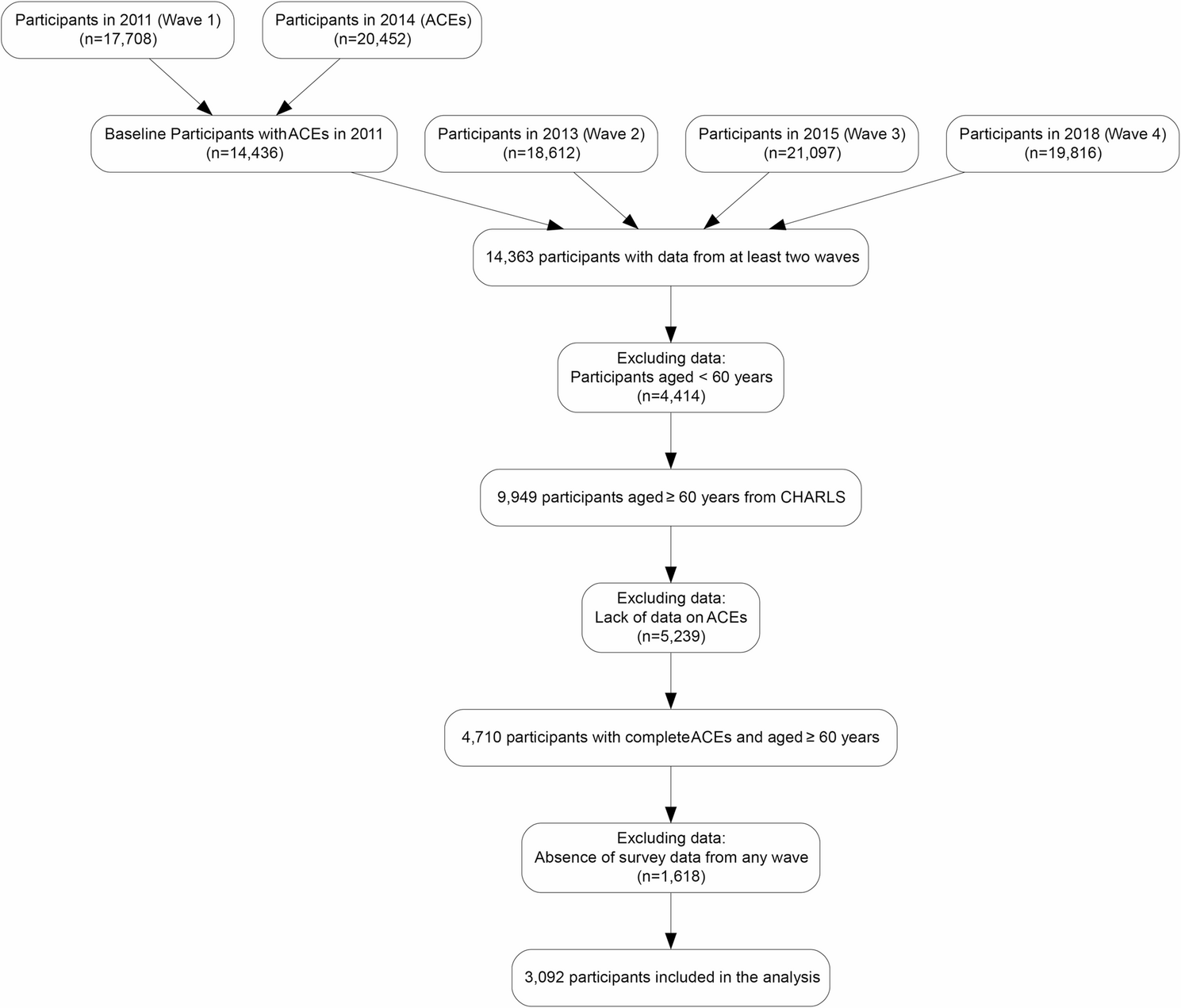
A prospective cohort study used 2011–2018 data from 3,092 community-dwelling adults aged 60 or older in China. Researchers identified four childhood-adversity patterns and tracked “successful aging” over eight years. They evaluated five areas: absence of chronic disease, no disability, strong thinking ability, no depressive symptoms and active social engagement.
Widespread childhood adversity and household dysfunction were associated with higher odds of a persistently low successful-aging trajectory than low adversity. The odds were 1.97 times as high for widespread adversity and 1.36 times as high for household dysfunction. The maltreatment pattern showed no statistically significant association over time. Low educational attainment was the strongest predictor of the adverse trajectory.
Why it matters
The study addresses how childhood circumstances and lifelong social inequalities relate to different paths of physical, mental and social health in later life. The authors called for policy-level efforts to address these inequalities.
Caveats
This observational study could not establish cause and effect. Its findings may not extend to younger adults, people outside China or those not living in the community.
The paper
Southern Medical University; Zhujiang Hospital
BMC Geriatrics, Jul 24, 2026, Open access