Blocking an ion channel reduced cartilage damage in mice
Experiments in mice with osteoarthritis found that inhibiting or removing the channel also reduced bone hardening and senescence, a state in which cartilage cells stop dividing.
Our read
Mechanisms- Studied:
- Experiments in mice with osteoarthritis
- What changed:
- Blocking or removing TRPM7 reduced cartilage degeneration in mice with osteoarthritis
- The catch:
- Cartilage damage was assessed structurally; pain and joint function were not reported
- In the record:
- One of 10 papers on TRPM7 on record: 2 with results in people, 3 in animals.
Editor of record: Boris Djordjevic · AgingResearch.News
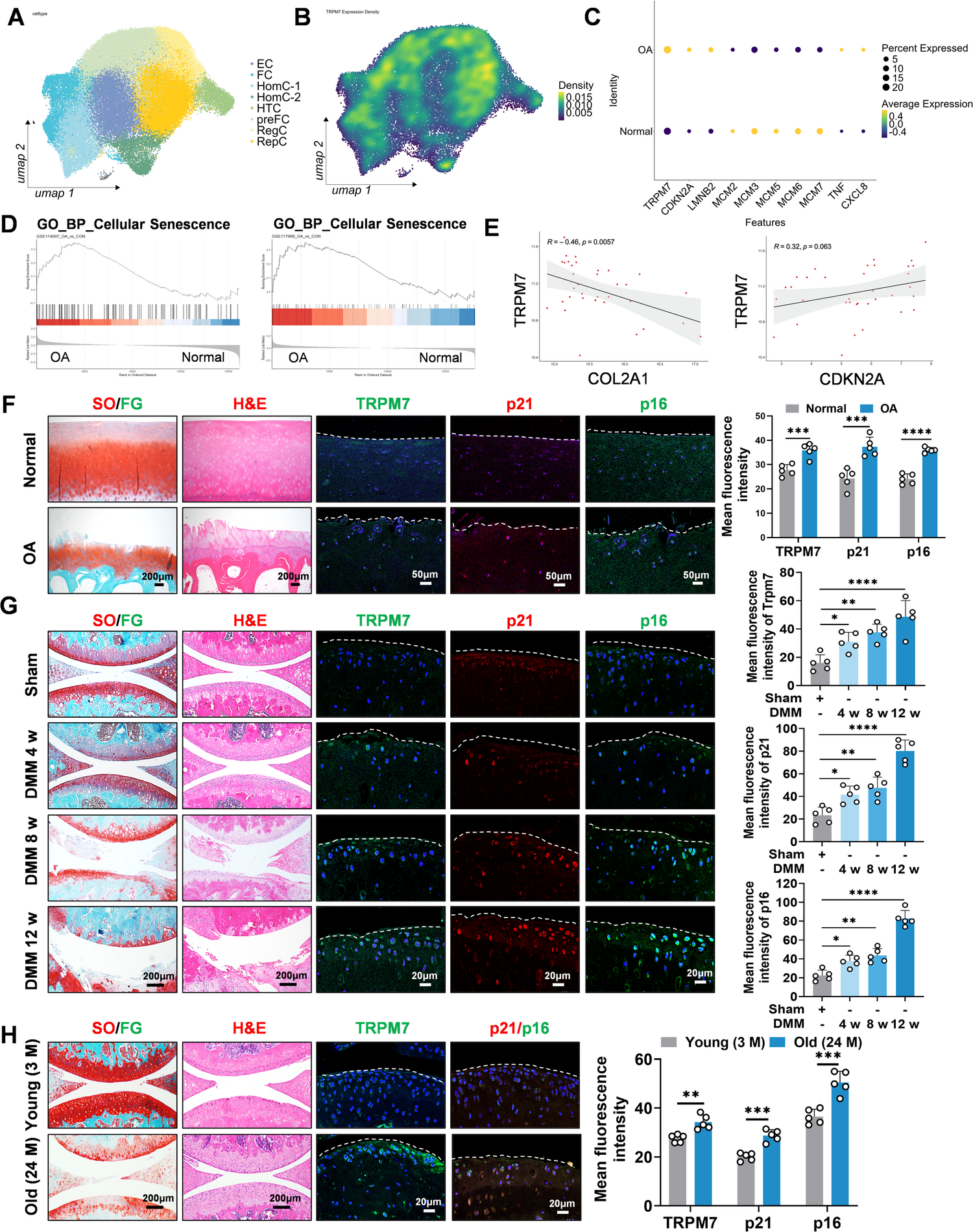
Mice with osteoarthritis underwent animal experiments that blocked TRPM7, a channel that lets calcium into cells, or deleted its gene specifically in cartilage cells. Blocking or removing the channel reduced cartilage-cell senescence, a state in which cells stop dividing. It also reduced cartilage degeneration and hardening of the bone beneath cartilage.
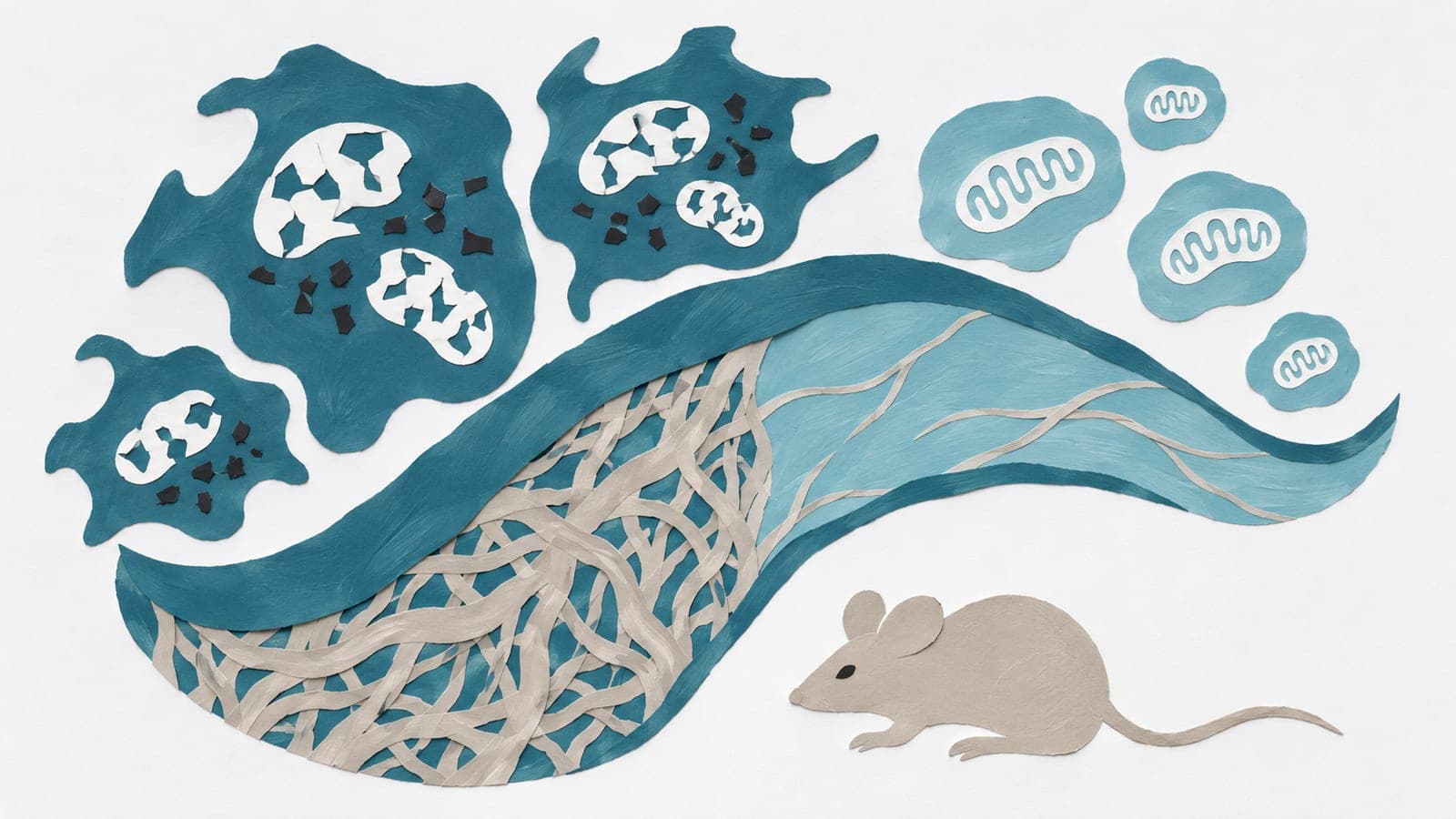
TRPM7 levels were higher in senescent cartilage cells from people with osteoarthritis, aged mice and mice with experimentally induced osteoarthritis. In cartilage-cell experiments, the channel promoted contacts between mitochondria, the cells’ energy-producing structures, and an internal membrane network. This required PDK4, an enzyme. TRPM7 activation led through PDK4 to mitochondrial DNA release and activation of a DNA-sensing pathway that promoted senescence. The findings suggested that TRPM7 helps mediate cartilage-cell senescence.
Why it matters
Cartilage-cell senescence is a feature of age-related osteoarthritis. The authors suggest that targeting TRPM7 channel function may offer a strategy for limiting age-related cartilage degeneration.
Caveats
The mouse experiments do not show whether blocking TRPM7 would reduce cartilage degeneration in people with osteoarthritis.
The paper
Cellular & Molecular Biology Letters, Nov 11, 2026, CC BY-NC-ND
Comments
Be the first to comment.