Blocking a fuel carrier may reduce kidney scarring in mice
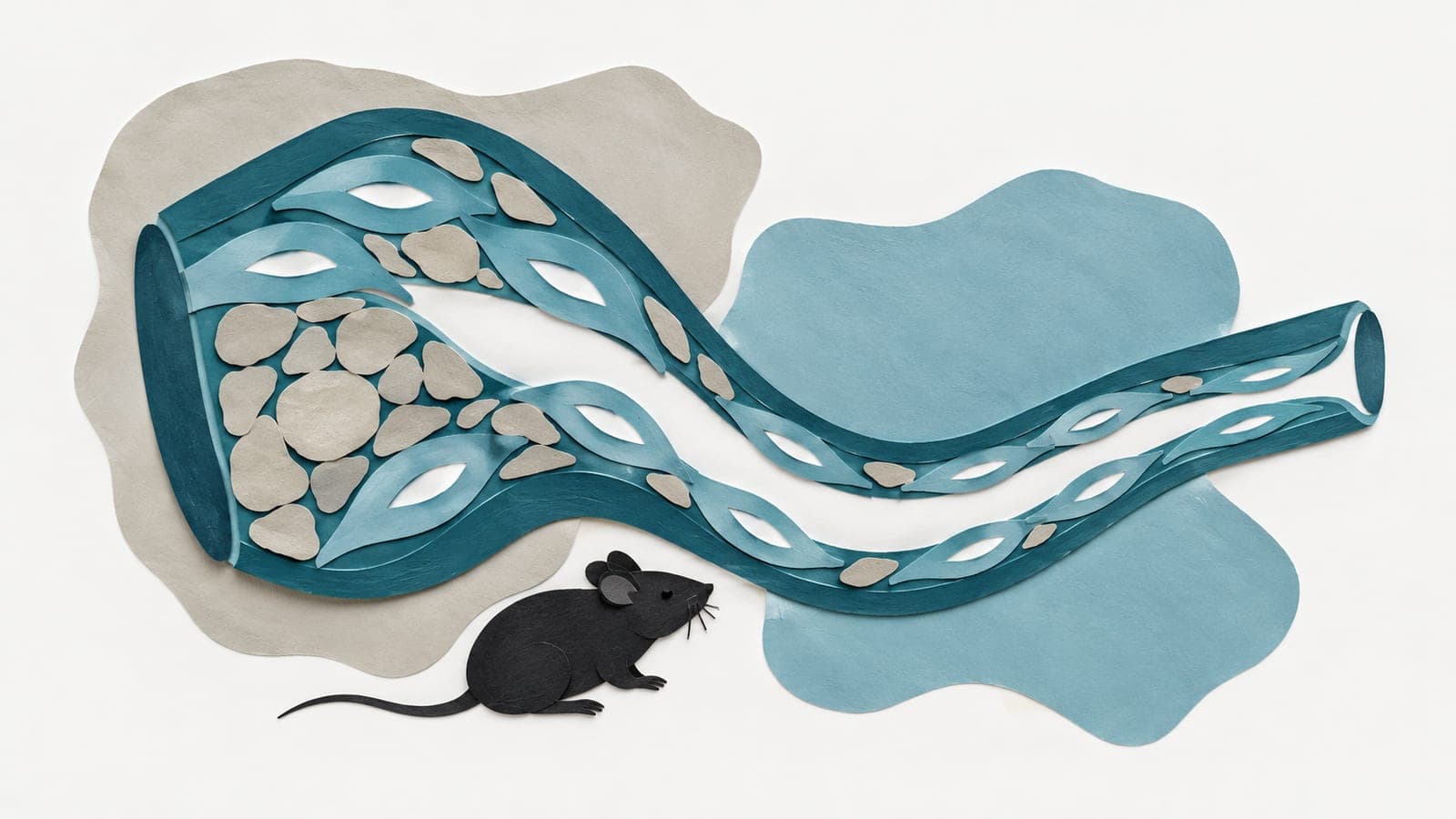
In experiments with 22-month-old mice, a drug reduced kidney scarring and restored activity of genes involved in using fat for energy.

Our read
Mechanisms- Studied:
- Experiments in aged mice, against untreated aged mice
- What changed:
- MSDC-0160 decreased kidney fibrosis in aged mice compared with untreated mice
- The catch:
- The conference abstract does not give group sizes, drug doses, or treatment duration
Editor of record: Boris Djordjevic · AgingResearch.News
Kidneys from 22-month-old mice were studied in experiments testing MSDC-0160, a drug that blocks the mitochondrial pyruvate carrier. This protein complex moves pyruvate, a product of glucose breakdown, into mitochondria, the cell’s energy-producing structures. The drug reduced fibrosis, or tissue scarring, and restored activity of genes involved in using fat for energy. Treated kidney tissue also showed increased mitochondrial respiration, a process that releases energy from nutrients.
Separate experiments in mice found that the drug increased mitophagy, the cellular recycling of mitochondria. Kidney tubules from mice genetically altered to lack a component of the carrier used more fat for energy. The authors suggested that increased activity of AMPK, an energy-sensing protein, likely helped explain the effects.
Why it matters
Age-related declines in kidney function increase vulnerability to chronic kidney disease and high blood pressure. The work points to fuel handling as a possible target for limiting kidney injury with age.
Caveats
The kidney benefits were tested in mice, not people. The conference abstract does not give group sizes, drug doses or treatment duration, limiting assessment of the effects.
The paper
Mitochondrial Pyruvate Carrier Inhibition Protects the Aging Kidney
Nephrology; Washington Univ in St. Louis
AHA Scientific Sessions 2026 Abstract, Nov 2, 2026
Presented at AHA Scientific Sessions 2026, abstract 8244

Comments
Be the first to comment.