Gut microbes from old mice impaired young mice’s hearts
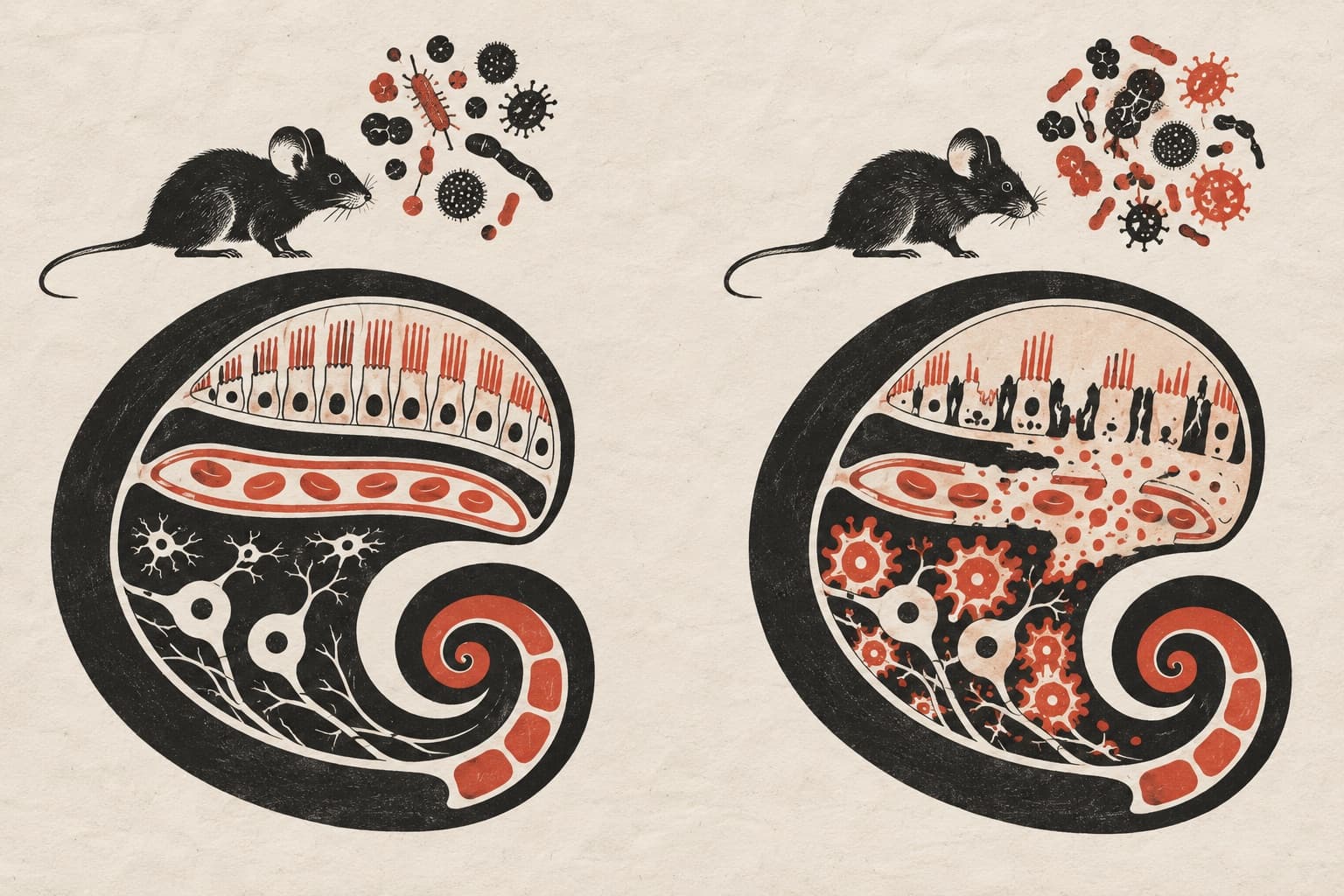
In transplant experiments, microbes from young donors partly reversed heart dysfunction in old mice aged 18–24 months.
Our read
Mechanisms- Studied:
- Experiments in young and old mice
- What changed:
- Transfer of microbiota from old donors induced cardiac dysfunction in young recipients
- The catch:
- How long the transplant effects lasted was not reported
- In the record:
- One of 269 papers on fecal microbiota transplantation on record: 6 with results in people, 130 in animals.
- Why it’s aging research:
- It studies organisms or tissues that aged naturally.
Editor of record: Boris Djordjevic · AgingResearch.News
Mice aged 4–6 months and 18–24 months received fecal transplants from young or old donors in an animal experiment. The researchers studied both mice with an intact Akap1 gene and mice missing one copy. This gene encodes a protein that helps maintain mitochondria, the cell’s energy-producing structures.
Older mice had poorer heart function, leakier intestines and more inflammation throughout the body. These changes were worse in mice missing one gene copy. Microbes from old donors caused gut leakage, inflammation and heart dysfunction in young recipients. Microbes from young donors partly reversed these changes in old recipients. Transplant effects were strongest in mice missing one gene copy.
Why it matters
Age-related heart dysfunction may be a target for interventions aimed at gut microbes, the authors suggest.
Caveats
These were mouse experiments, not tests of heart benefits in people. The conference abstract does not report group sizes or how long the transplant effects lasted.
The paper
Federico II Univ Hosp; Univ Federico II
AHA Scientific Sessions 2026 Abstract, Nov 2, 2026
Presented at AHA Scientific Sessions 2026, abstract 17507



Comments
Be the first to comment.