Vessel-cell enzyme helped drive artery plaque buildup in mice
Mice with high cholesterol developed less artery plaque when researchers deleted an enzyme from blood-vessel lining cells in experiments on disturbed blood flow.
Our read
Mechanisms- Studied:
- Experiments in hypercholesterolemic mice
- What changed:
- Deleting endothelial protein kinase C zeta reduced artery plaque buildup in mice
- The catch:
- The abstract does not give mouse group sizes or the plaque reduction size
- In the record:
- One of 4 papers on disturbed flow on record: 1 with results in people, 1 in animals.
- Why it’s aging research:
- It studies something that builds up in the body with age.
Editor of record: Boris Djordjevic · AgingResearch.News
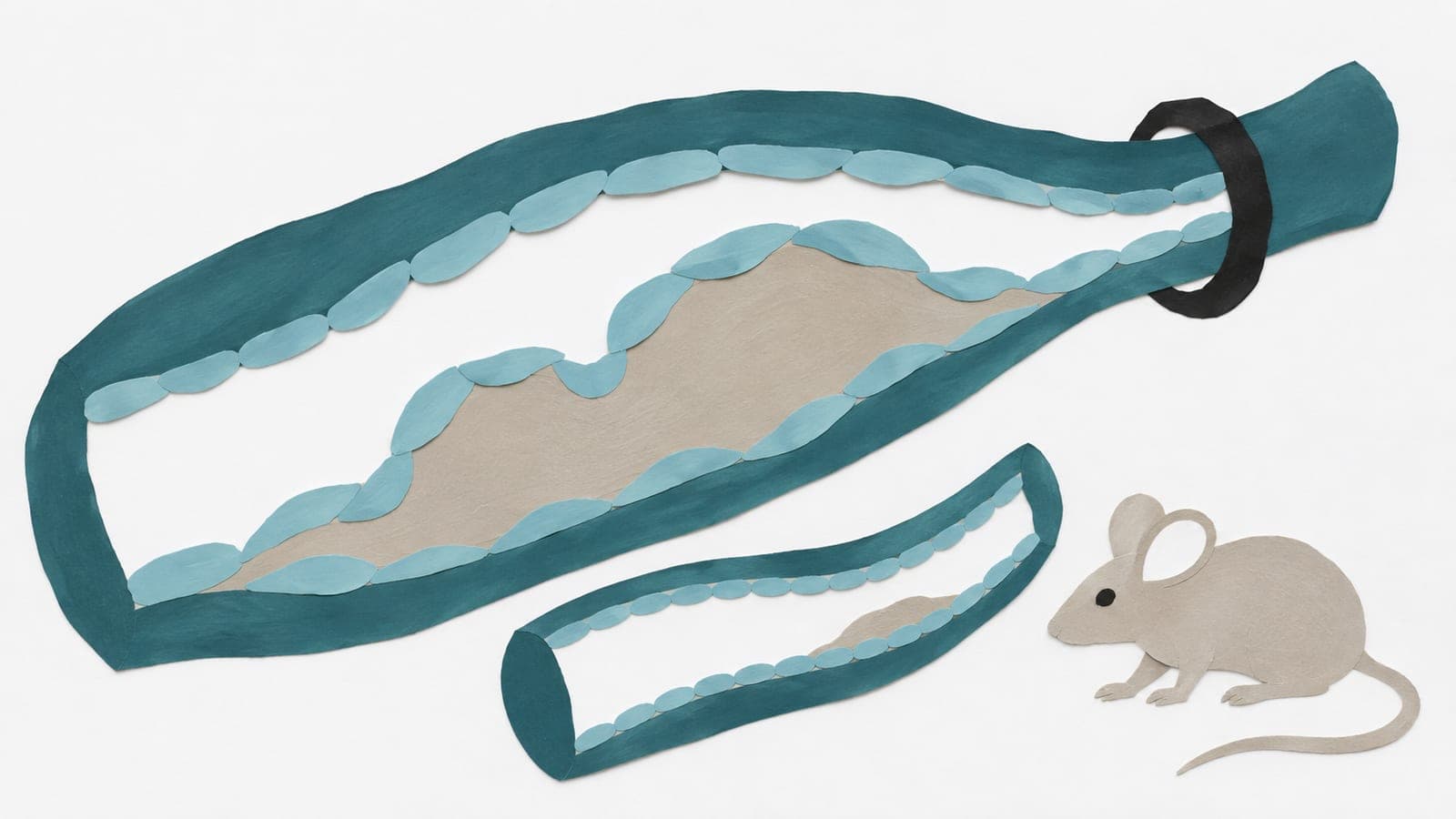
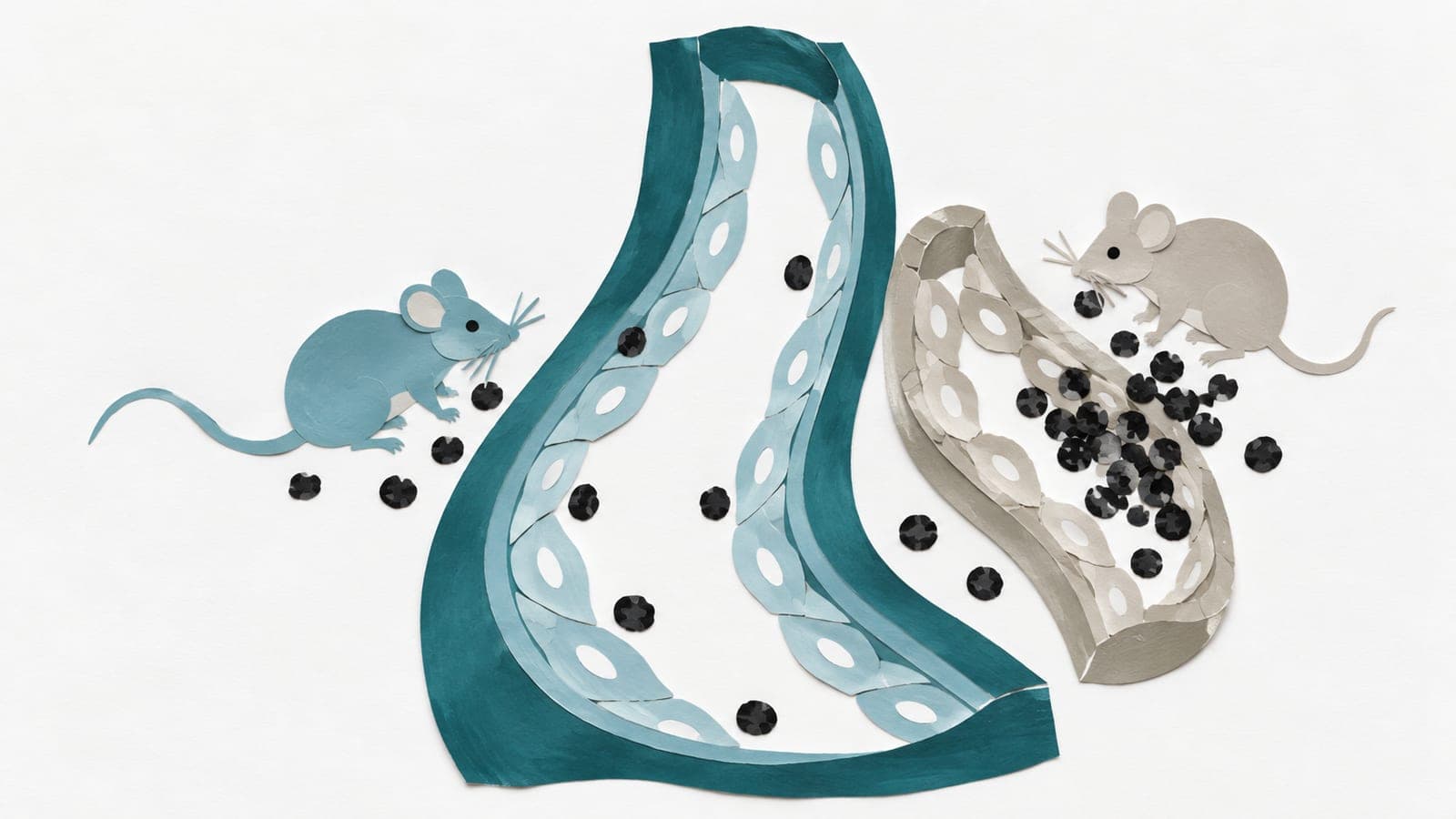
Mice with high cholesterol underwent surgery to partly tie off a carotid artery in an animal experiment on disturbed blood flow. The researchers also examined endothelial cells—the cells lining blood vessels—in the lab. In mice, deleting protein kinase C zeta, an enzyme, specifically in endothelial cells reduced artery plaque buildup.
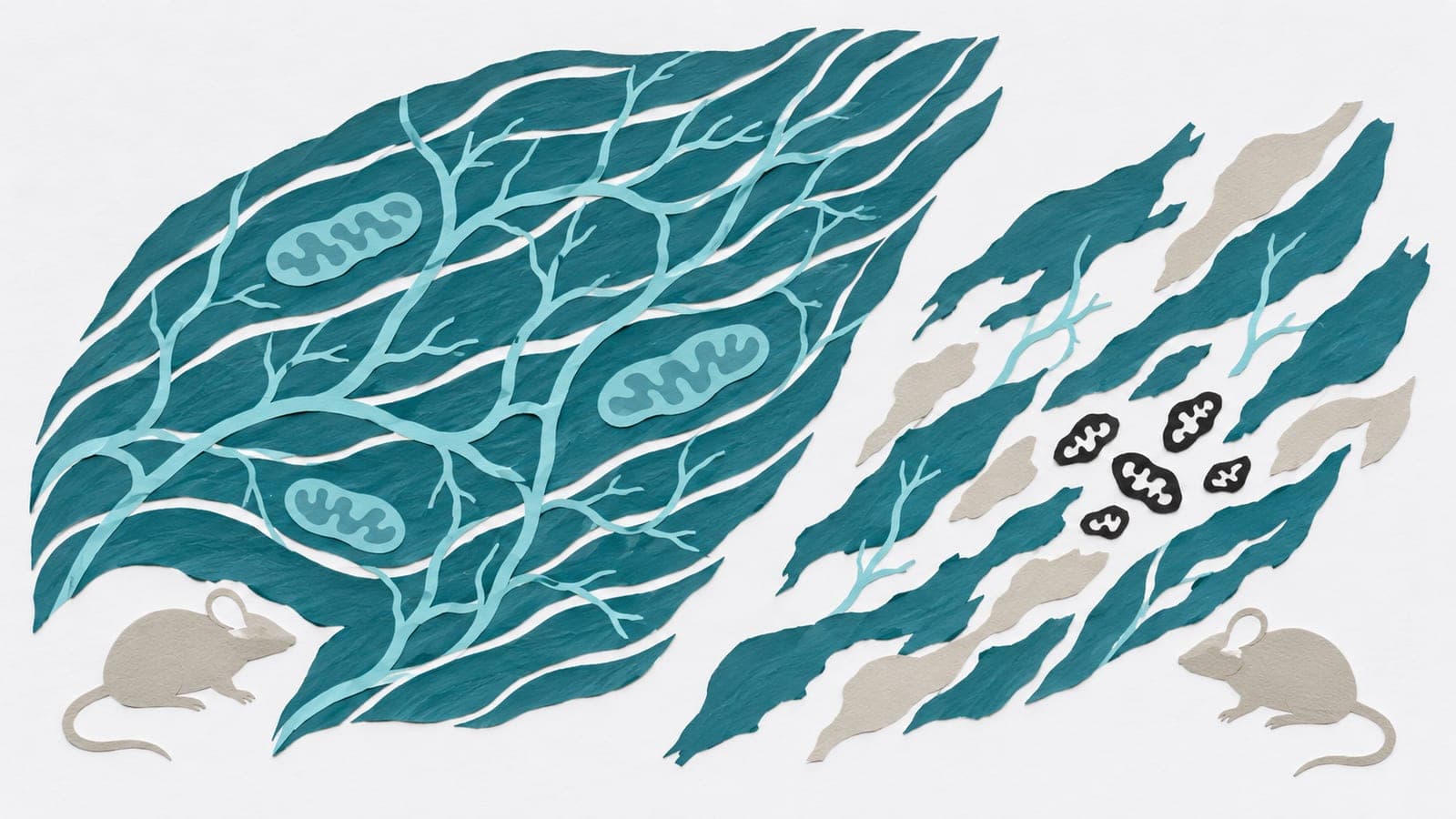
The authors concluded that the enzyme added a chemical tag to TERF2IP, a protein involved in protecting chromosome ends. This tagging promoted the breakdown of signaling proteins called LATS1/2 and promoted senescence, a state in which cells stop dividing. The authors concluded that this pathway linked disturbed flow to vessel-lining cell dysfunction and atherosclerosis, the buildup of fatty plaques in arteries.
Why it matters
Senescence in vessel-lining cells connects this work to vascular aging. The authors suggested that targeting the pathway may offer a strategy for vascular disease linked to disturbed blood flow.
Caveats
The experiments involved cells grown in the lab and mice with high cholesterol, not people. The conference abstract does not give mouse group sizes or the size of the plaque reduction.
The paper
The University of Texas MD Anderson Cancer Center
AHA Scientific Sessions 2026 Abstract, Nov 2, 2026
Presented at AHA Scientific Sessions 2026, abstract 13398
Comments
Be the first to comment.