Excess glucose breakdown hampers blood vessel repair in mice
Mice engineered to increase glucose breakdown in blood vessel–lining cells showed poorer blood-flow recovery and lower capillary density after hindlimb blood supply was restricted.
Our read
Mechanisms- Studied:
- Experiments in EC-Glyco-Hi mice
- What changed:
- Limb perfusion recovery was markedly reduced (52%) in EC-Glyco-Hi mice following hindlimb ischemia
- The catch:
- The conference abstract gives no mouse group sizes
- Why it’s aging research:
- It studies something that builds up in the body with age.
Editor of record: Boris Djordjevic · AgingResearch.News
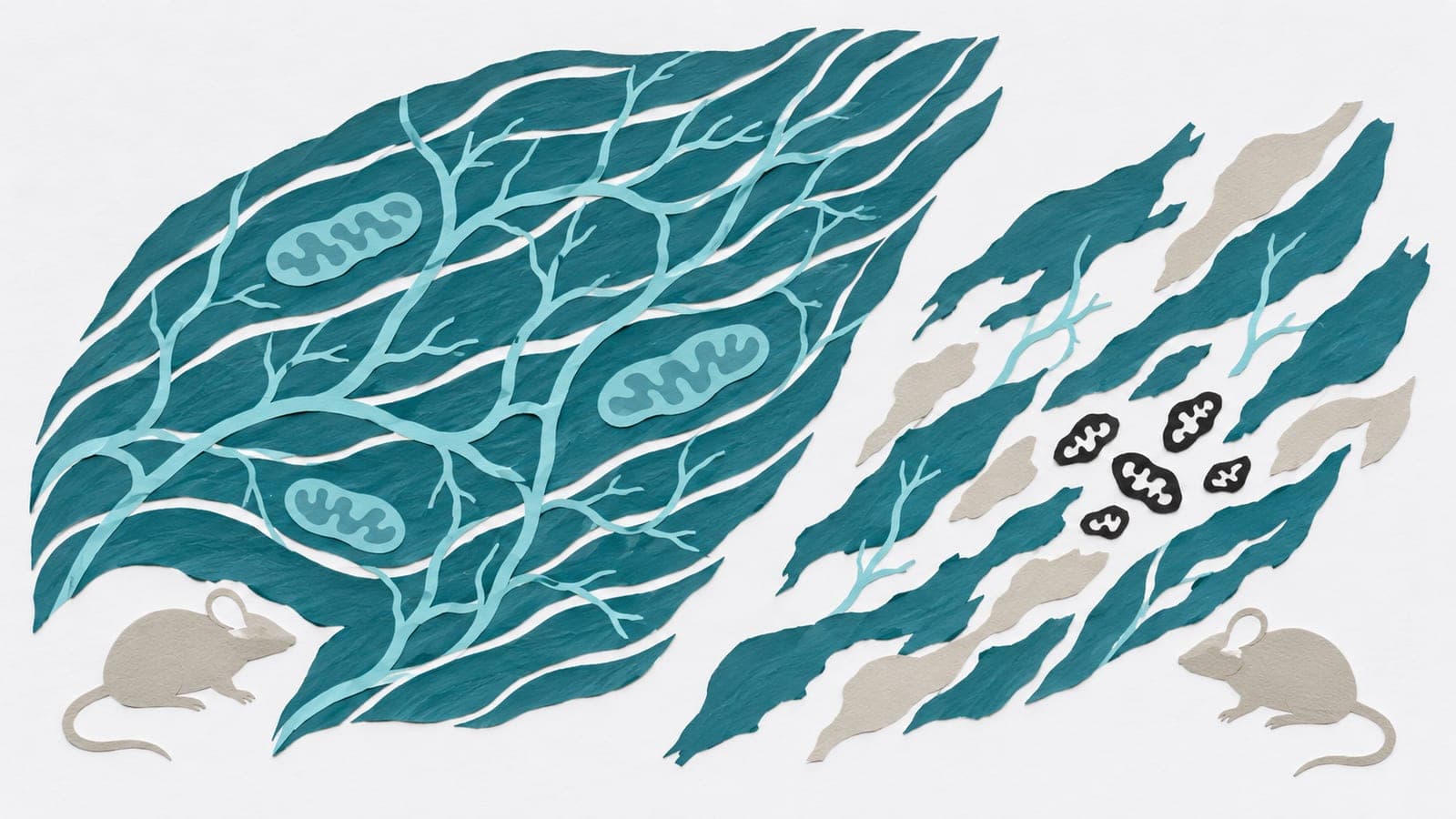
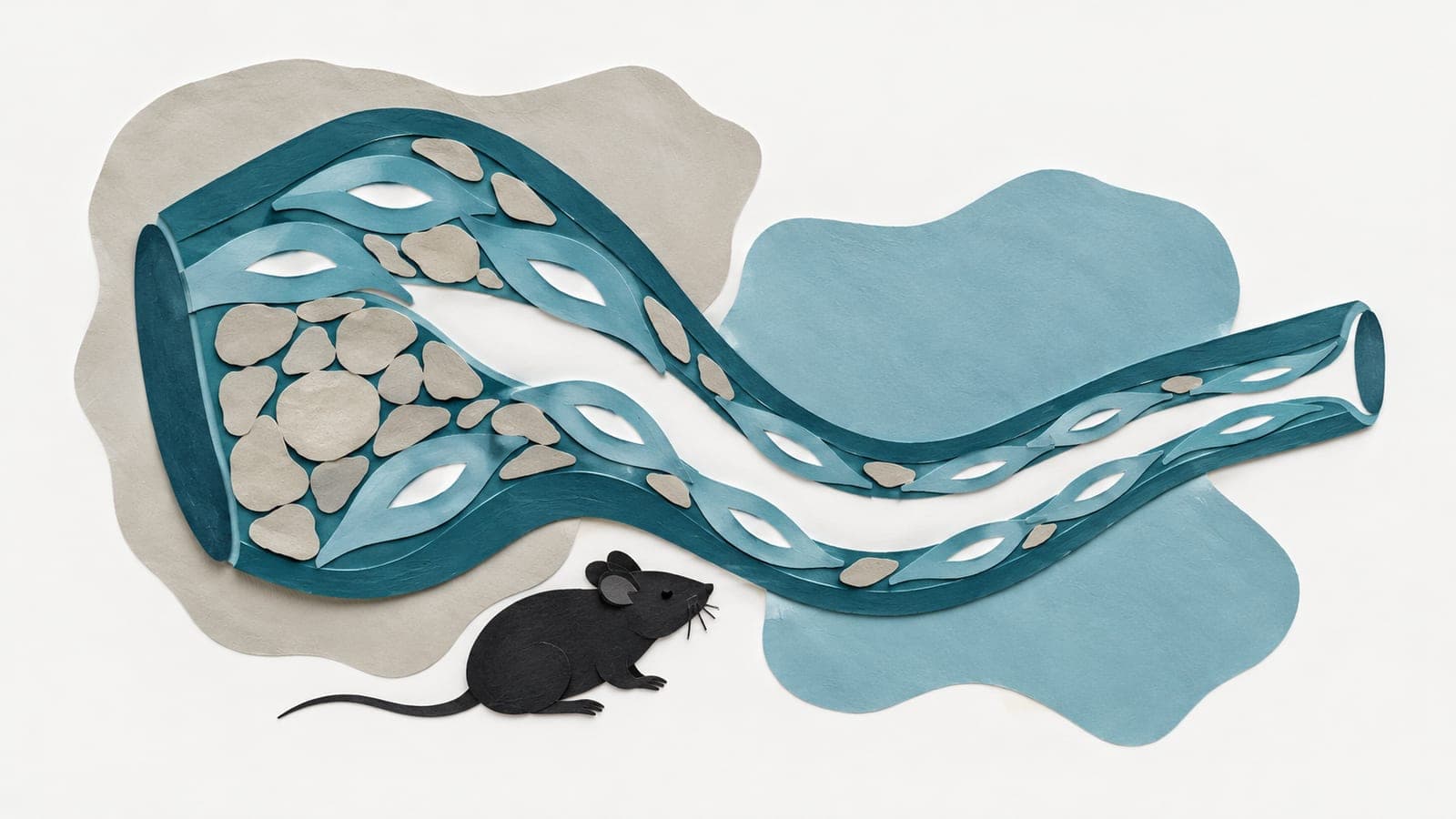
Mice genetically engineered to increase glycolysis, the breakdown of glucose, in endothelial cells that line blood vessels underwent an experiment restricting blood supply to a hindlimb. Blood flow recovered less well, and capillaries, the smallest blood vessels, were less densely packed. The affected muscle also showed increased markers of senescence, a state in which cells stop dividing, and signs of damage.
In separate experiments in human endothelial cells grown in the lab, increased glycolysis raised levels of reactive oxygen molecules. These caused chemical changes to proteins involved in blood-vessel growth and mitochondrial shape. Signals supporting vessel growth weakened. Mitochondria, the cells’ energy-producing structures, became fragmented and produced more reactive oxygen molecules, promoting senescence.
Why it matters
Defective blood-vessel repair is a feature of diabetic peripheral arterial disease. The authors propose that glucose metabolism connects this failure with age-associated inflammation.
Caveats
The evidence came from engineered mice and lab-grown human cells, not people with diabetic peripheral arterial disease. The conference abstract gives no mouse group sizes and does not clarify whether its 52% figure refers to blood-flow recovery or its reduction.
The paper
Augusta University
AHA Scientific Sessions 2026 Abstract, Nov 2, 2026
Presented at AHA Scientific Sessions 2026, abstract 17038

Comments
Be the first to comment.