A protein helped limit aging-related changes in stem cells
Experiments in stem cells found that increasing a protein preserved the structure of their DNA-containing nuclei and counteracted senescence, a state in which cells stop dividing.
Limit: Senescence staining used a subjective endpoint: completion depended on observing several blue cells
Edited by Boris Djordjevic · AgingResearch.News
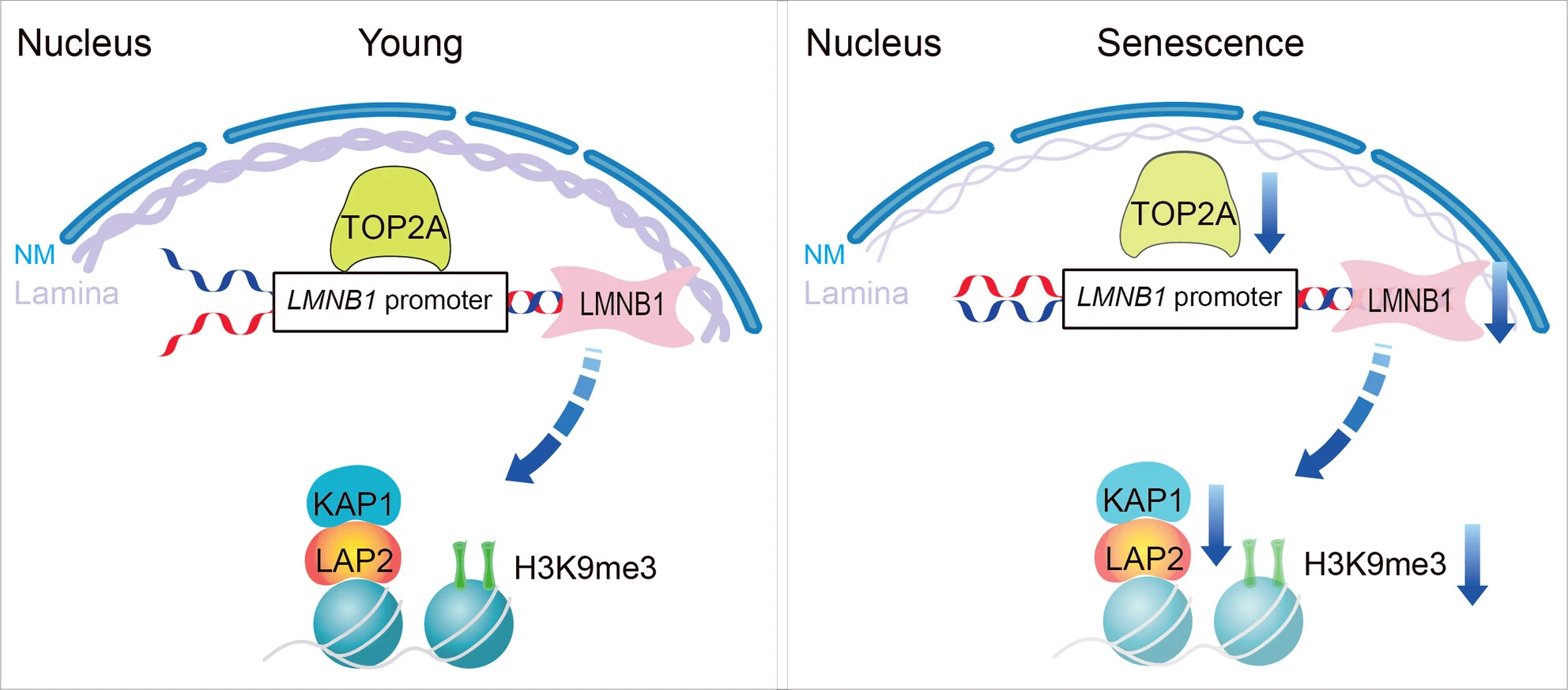
Experiments in mesenchymal stem cells, which can develop into several tissue cell types, examined how TOP2A, a protein that helps resolve twists in DNA, affected senescence. The researchers found that TOP2A levels progressively fell in senescent cells.
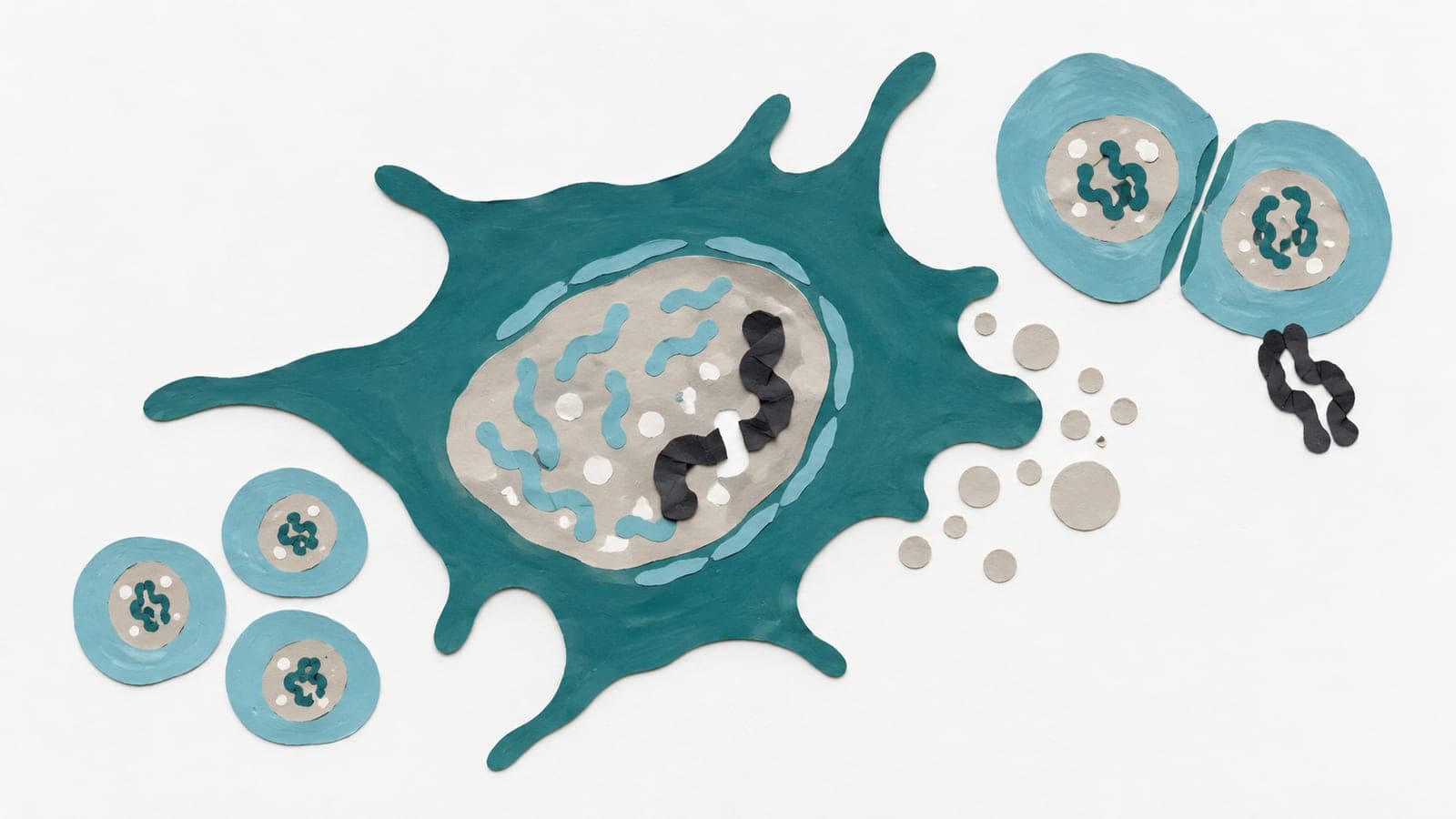
Depleting TOP2A reduced levels of Lamin B1, a protein that supports the nucleus, the cell’s DNA-containing compartment. It also caused rupture of the membrane surrounding the nucleus, disrupted heterochromatin—tightly packed DNA—and accelerated senescence. The researchers reported that TOP2A directly regulated production of Lamin B1. Increasing TOP2A restored Lamin B1 levels, reduced the loss of nuclear proteins, preserved nuclear integrity and counteracted senescence.
Why it matters
The authors point to the organization of DNA as a potential focus for research aimed at age-related cellular decline.
Caveats
The main evidence came from cell experiments, not studies in people. The abstract’s mouse finding involved inhibiting TOP2A, not showing benefits from increasing it.
Where the evidence stands
TOP2A
- 2 independent labs in 1 country
- 10 trials, 5 with no results posted
- Funder: Natural Science Foundation of Jiangxi Province
- 9 of 10 trials sponsored by developers of drugs on it
LMNB1
- 25 independent labs in 15 countries
- 1 finding against
- Funders: National Institutes of Health and others
- 2 of 32 findings with company ties
The paper
TOP2A Maintains Heterochromatin Stability by Sustaining LMNB1 Expression to Counteract Senescence
Stem Cell Research Center Shantou University Medical College Shantou China
Aging Cell, Nov 2, 2026, Open access, CC BY
Comments
Be the first to comment.