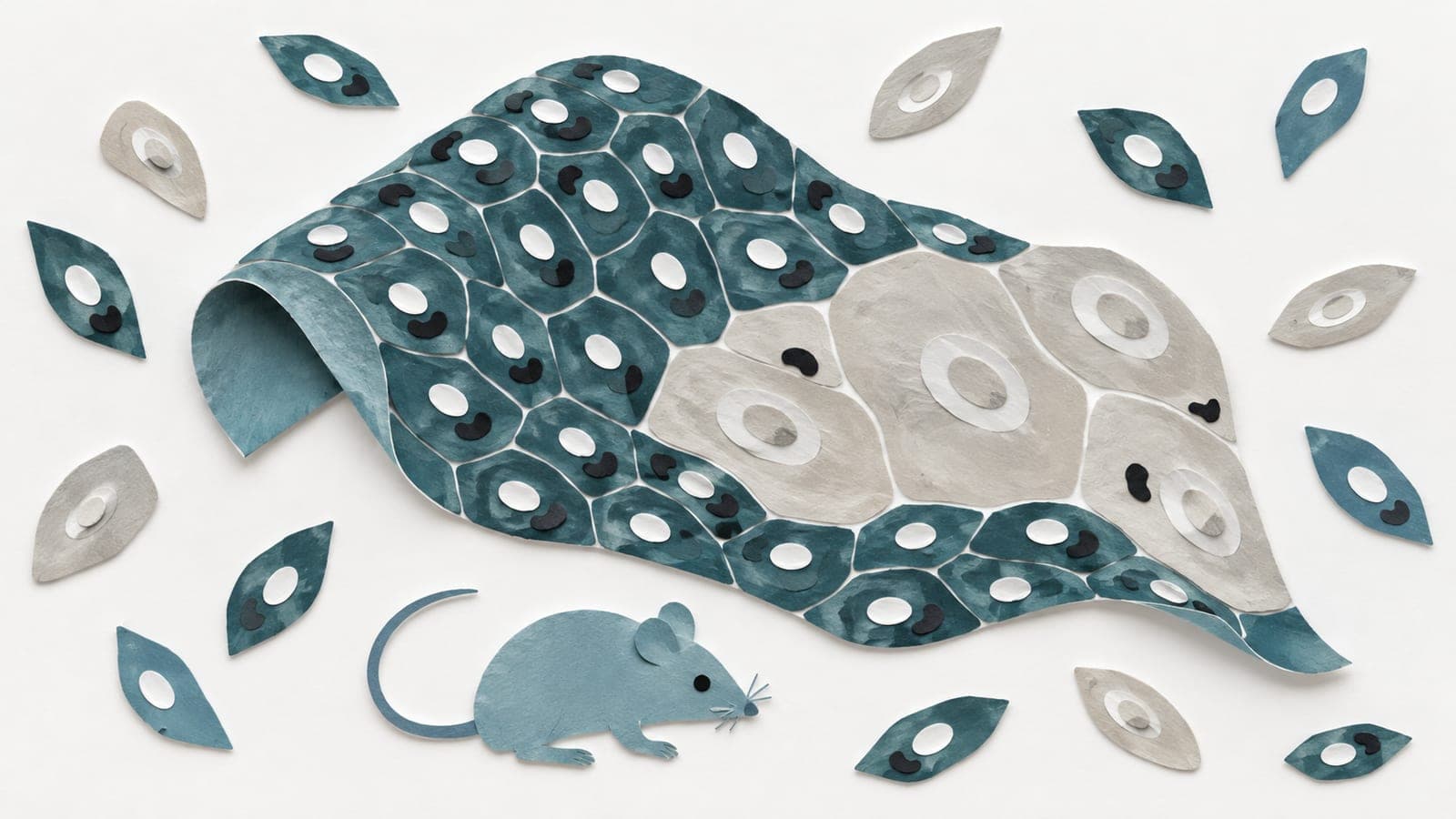
Human valve cell map links one cell group to aging
An observational study of 21 non-diseased human valves from people aged 6–63 mapped age-related differences among cells that help maintain valve tissue.
Limit: The proposed sequence of changes was computationally reconstructed using Slingshot pseudotime
Edited by Boris Djordjevic · AgingResearch.News
Researchers analyzed 224,412 valvular interstitial cells, which help maintain valve tissue, from 21 non-diseased human aortic valves from people aged 6–63. In this observational study, they measured gene activity in individual cells and identified 10 groups with distinct patterns.
One group was more common at older ages and showed the strongest signs of senescence, a state in which cells stop dividing. Another group represented a youthful state of normal tissue maintenance. A computational reconstruction of possible cell-state changes placed the age-linked group at the end of the sequence. The researchers described a shift toward inflammation-related and senescent states.
Why it matters
Understanding age-related changes in cells that maintain aortic valves may help identify targets for preventing degenerative valve disease.
Caveats
This observational map cannot establish that the age-linked cell group caused valve aging; the proposed sequence of changes was computationally reconstructed. The congress abstract covered only non-diseased valves from people aged 6–63.
The paper
Landscape of the aortic valve interstitial cell senescence atlas