MTR4 protein restores youthful traits in human blood vessel cells
In laboratory experiments, depleting the protein triggered premature senescence, a state in which cells stop dividing, in human umbilical vein cells.
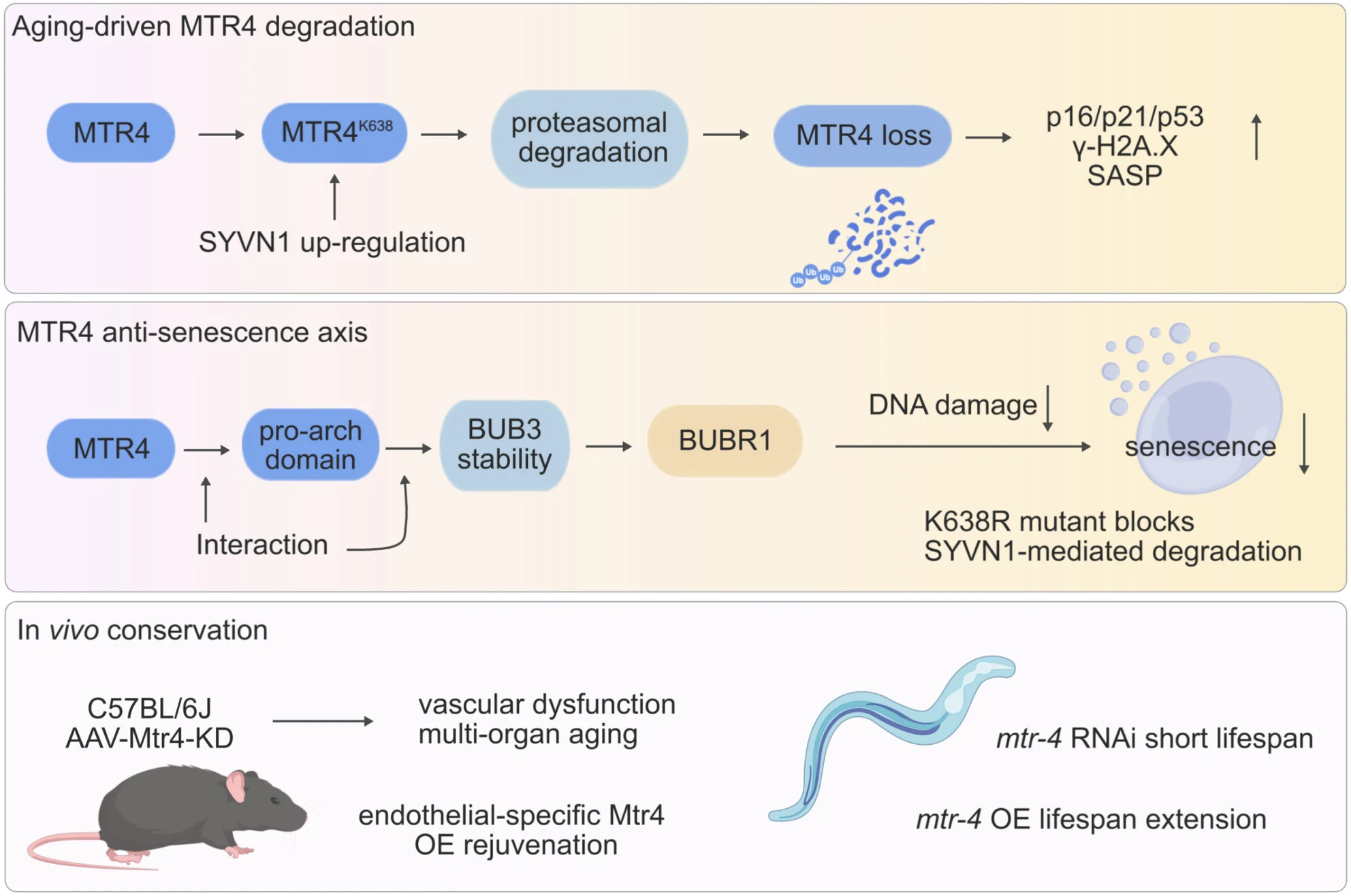
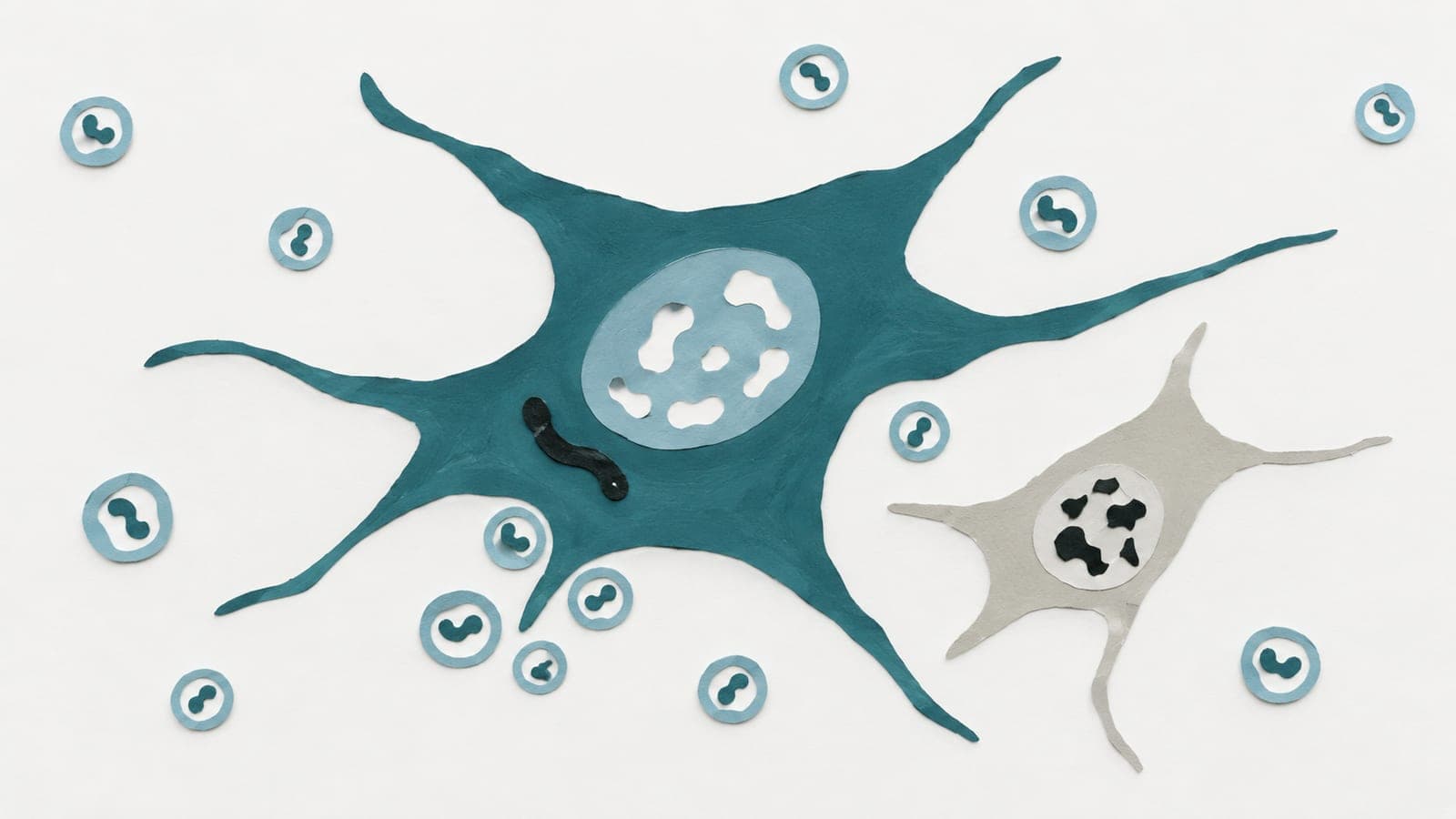
Researchers studied human umbilical vein endothelial cells—cells lining a vein in the umbilical cord—in laboratory experiments on senescence, a state in which cells stop dividing. MTR4, a protein that unwinds RNA, declined in senescent cells. Depleting it triggered premature senescence, while increasing it restored youthful cell traits.
In mice, lowering MTR4 in blood vessel lining cells impaired blood vessel function and promoted aging across several organs. Increasing it in these cells eased those changes. MTR4 also declined in aged mouse aortas, the body's main arteries. In worms, boosting production of the corresponding protein extended lifespan; reducing it accelerated aging.
Why it matters
The work points to MTR4 as a possible focus for research on age-related blood vessel dysfunction.
Caveats
These were experiments in cells, mice and worms, not studies in people. The abstract did not report sample sizes or experiment durations.