Blood-cell gene loss impairs heart recovery in mice
In mouse experiments, blocking an immune signal counteracted the harmful heart effects of losing KDM6A in blood-forming cells.
Limit: Heart function follow-up stopped at day 28; later recovery was not measured
Edited by Boris Djordjevic · AgingResearch.News
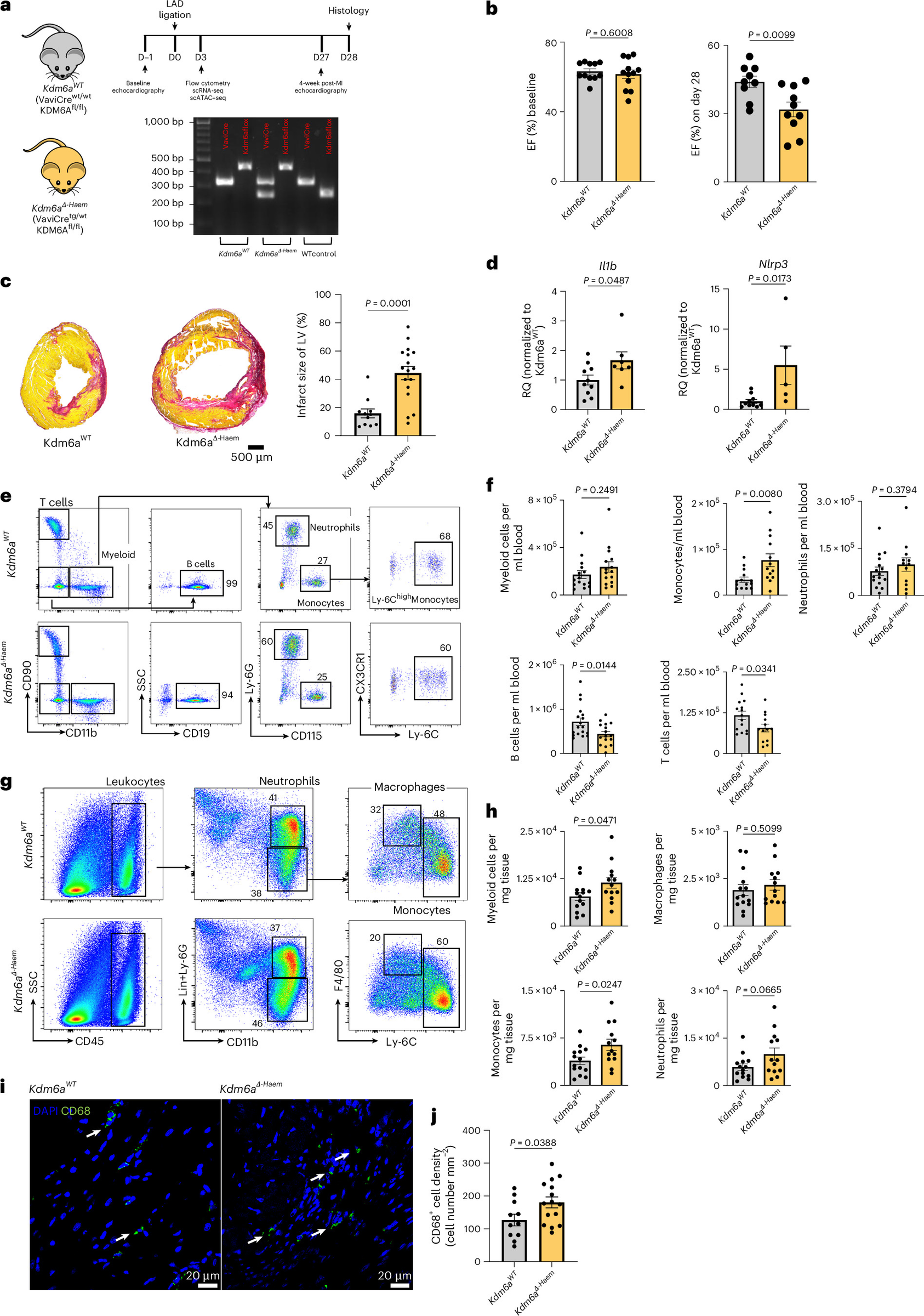
In mouse experiments, loss of the KDM6A gene in blood-forming cells impaired heart recovery after a heart attack. The loss increased recruitment of myeloid cells, a group of immune cells, to the injured heart. It also shifted several types of these cells toward states marked by inflammation, movement and sugar breakdown for energy.
Data from people with heart failure and expanding blood-cell groups carrying KDM6A mutations showed similar inflammation-related patterns in monocytes, a type of immune cell. Blocking interleukin-1 beta, an immune signaling protein, after a heart attack counteracted the harmful heart effects of KDM6A loss in mice.
Why it matters
Clonal hematopoiesis—the expansion of blood-cell groups carrying acquired mutations—is a cardiovascular risk factor. The authors identify interleukin-1 beta signaling as a potential treatment target for heart failure associated with this process.
Caveats
The recovery and blockade results came from mice. Similar immune-cell patterns in people do not establish that blocking this signal would benefit patients.
From the paper
- Limitation
First, the relatively small patient cohort for scRNA-seq analysis may restrict the generalizability of our findings; larger, diverse cohorts would strengthen our conclusions.
Quoted word for word from the full text on nature.com.
The paper
Nature Cardiovascular Research, Nov 3, 2026, Open access, CC BY

Comments
Be the first to comment.