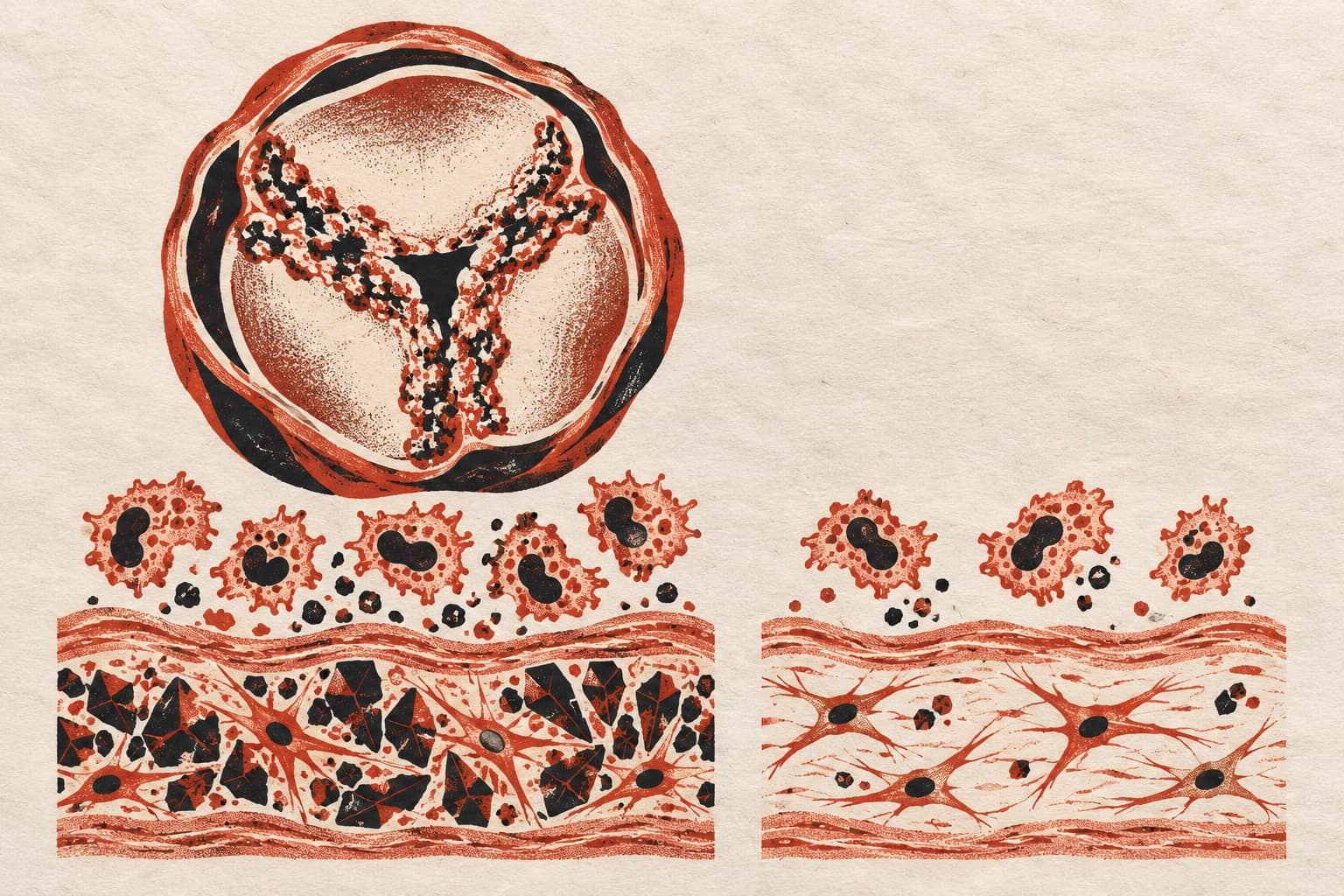
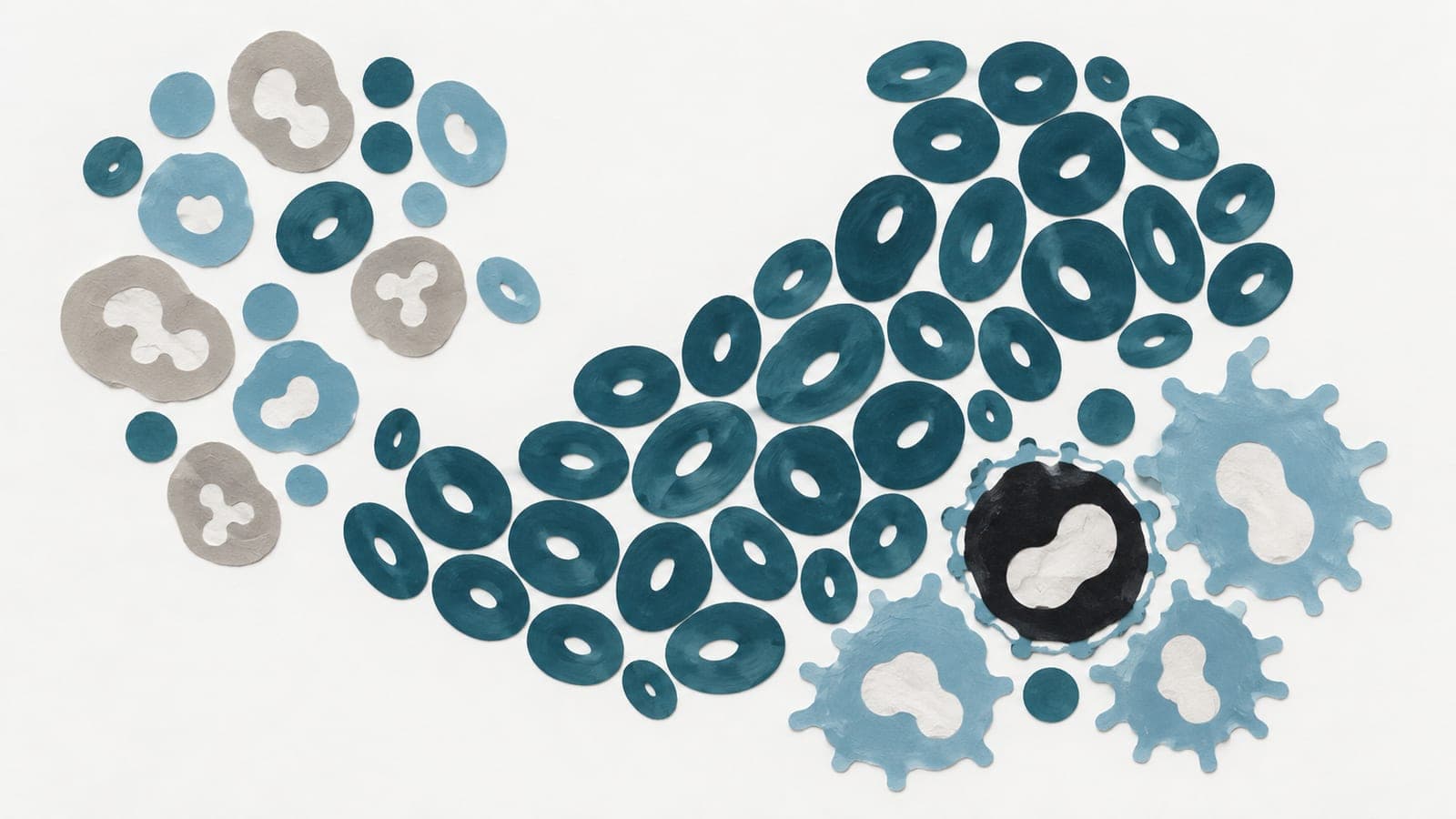
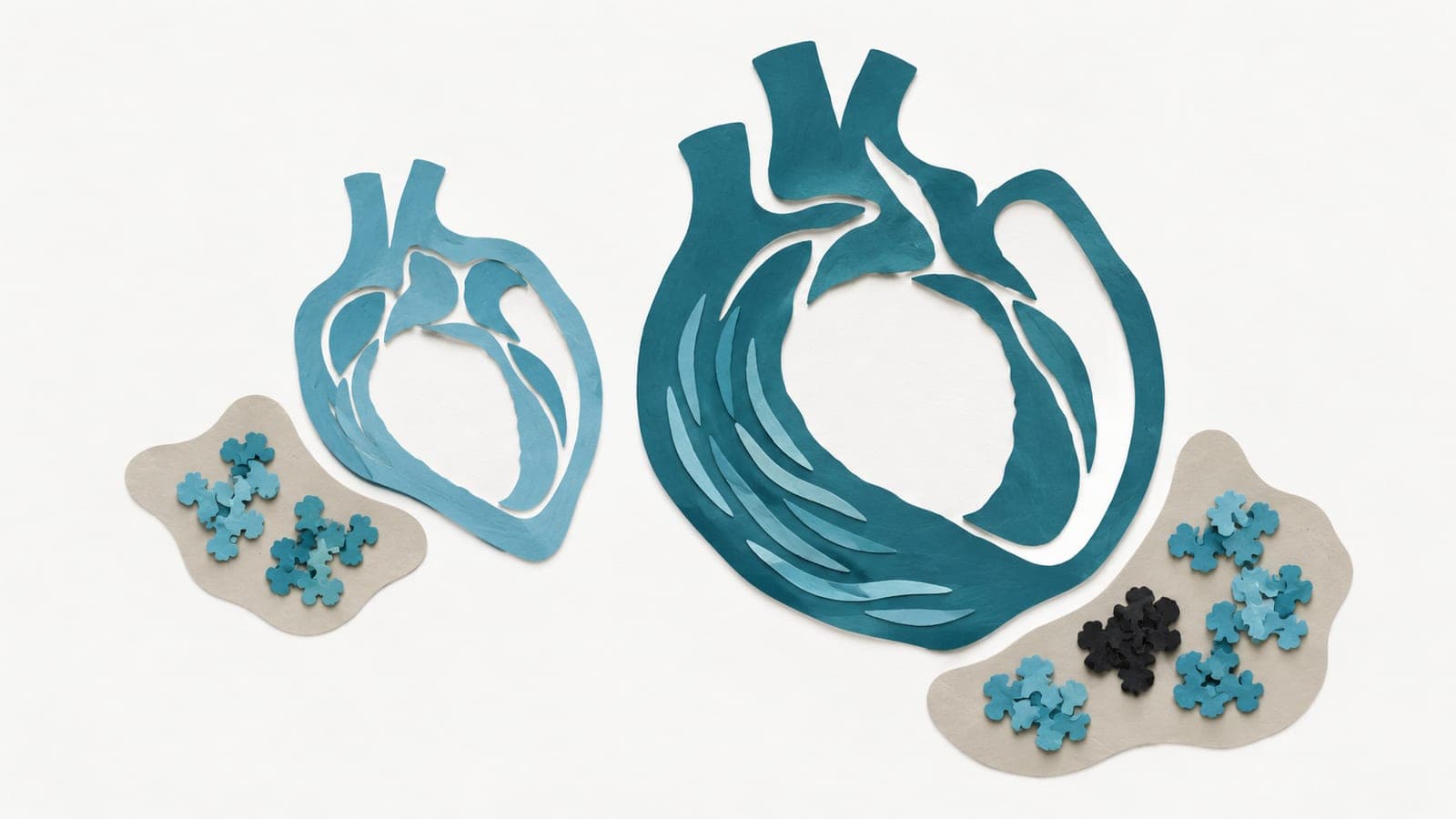
Large groups of mutated blood cells linked to cardiovascular death
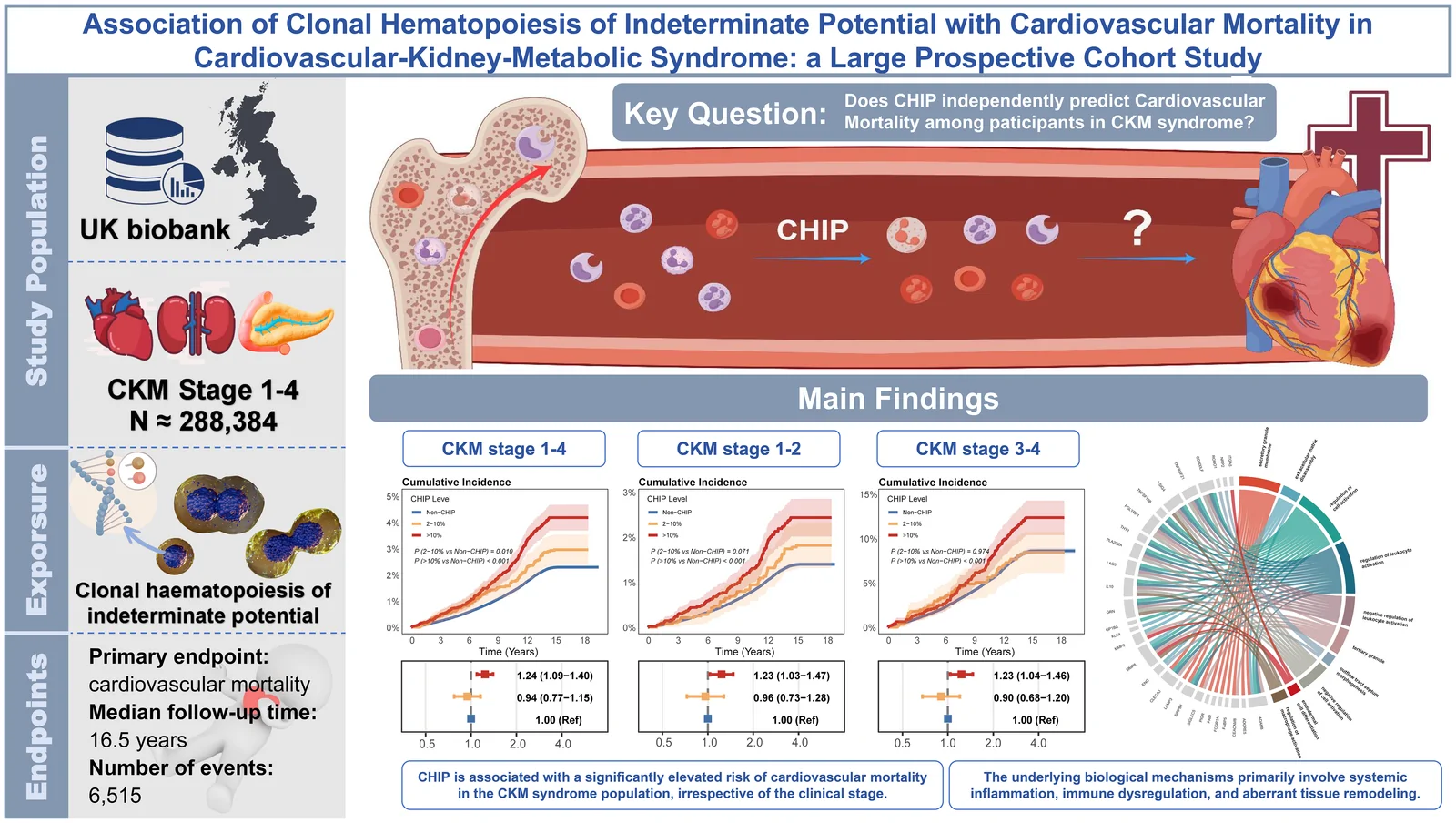
Large mutated blood-cell groups were linked to a higher relative rate of cardiovascular death: a hazard ratio of 1.24 versus people without the condition.
Limit: CHIP was measured only at baseline, missing mutations acquired during follow-up
Edited by Boris Djordjevic · AgingResearch.News
The prospective observational study followed 288,384 UK Biobank participants at stages 1–4 of cardiovascular-kidney-metabolic syndrome, which covers heart, kidney and metabolism-related problems. Researchers assessed clonal hematopoiesis of indeterminate potential, a condition in which blood-forming cells with acquired mutations produce groups of related blood cells. During a median follow-up of 16.5 years, 6,515 participants died from cardiovascular disease.
People in the category called “large” clonal hematopoiesis had a higher relative rate of cardiovascular death than people without the condition, after adjustment for other factors. The association held across the syndrome’s stages. Analyses of circulating proteins pointed to possible roles for inflammation, altered immune activity and changes in tissue structure.
Why it matters
Cardiovascular disease is an age-related illness. This work addresses whether acquired changes in blood-forming cells mark additional risk across stages of overlapping heart, kidney and metabolic problems.
Caveats
The observational design cannot show that the blood-cell condition caused cardiovascular deaths or that the identified proteins mediated the association. The findings concern UK Biobank participants at syndrome stages 1–4.
From the paper
- Participants
… 1,183 participants …
- Follow-up
Over a median follow-up of 16.5 years, 6,515 cardiovascular deaths were documented among the 288,384 participants with CKM stages 1-4.
Results, 3.2 Association of CHIP and gene-specific CHIP subtypes with cardiovascular mortality
- Result
As illustrated in Figure 4A, overall large CHIP, encompassing mutations across any driver gene, emerged as a robust and independent predictor of cardiovascular death, retaining statistical significance even in the fully adjusted Model 4 (HR and 95% CI: 1.24 [1.09−1.40]).
Results, 3.2 Association of CHIP and gene-specific CHIP subtypes with cardiovascular mortality
- Limitation
First, while the use of population-scale WES provides high fidelity for detecting candidate gene mutations, it possesses limited sensitivity for detecting smaller clones with a low VAF (e.g., VAF <5%) compared to targeted deep sequencing.
Quoted word for word from the full text on frontiersin.org.
- Inflammation
- Immune response
- CD300C
- Cardiovascular-kidney-metabolic syndrome
- Clonal hematopoiesis of indeterminate potential
- Humans
The paper
Capital Medical University
Frontiers in Endocrinology, Oct 7, 2026, Open access