Multidimensional continuous glucose monitoring metrics enable digital risk stratification across the diabetes spectrum
Abstract
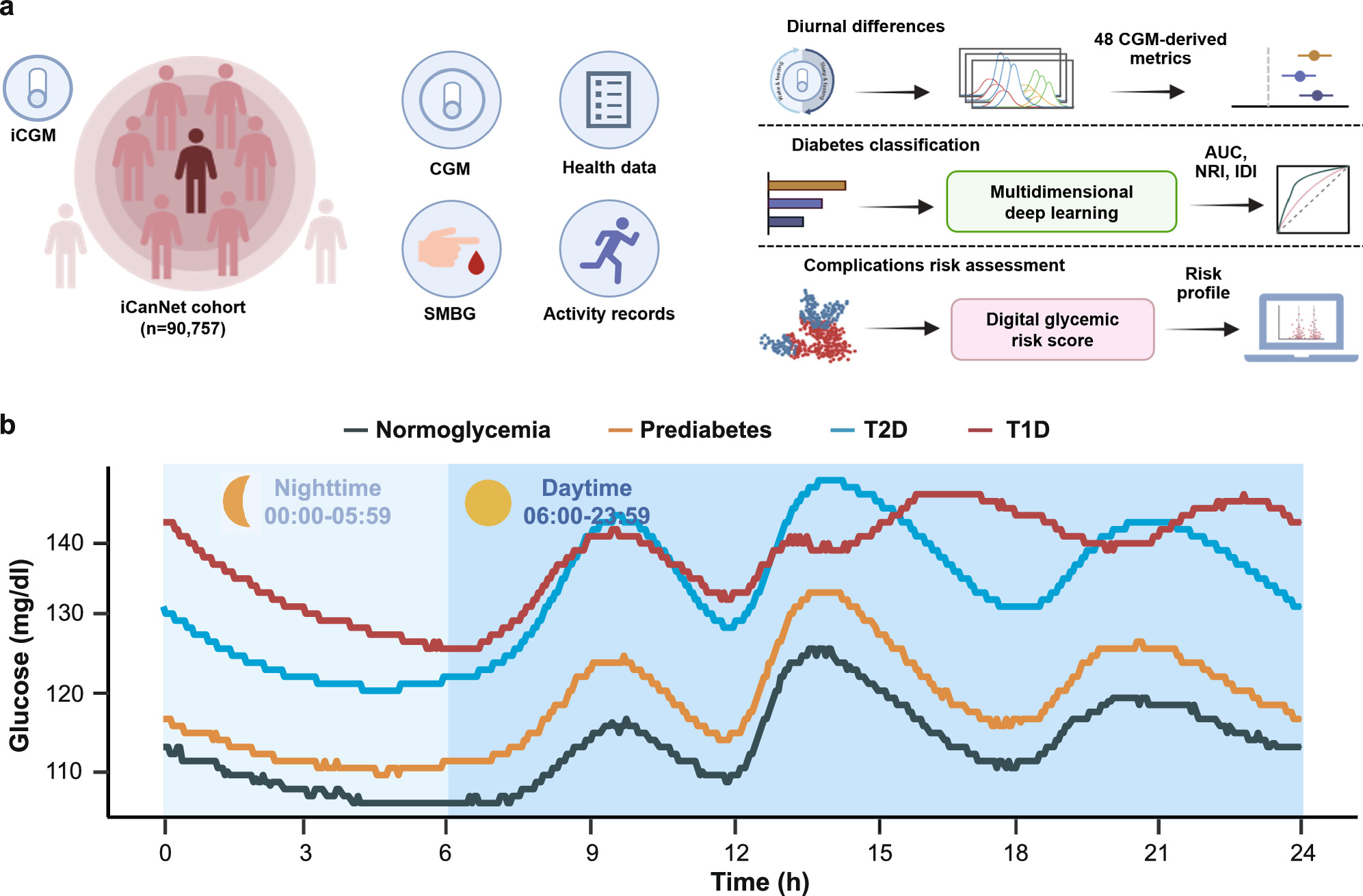
Although continuous glucose monitoring (CGM) provides high-dimensional data, the usefulness of multimodal and diurnal glycemic profiles for disease characterization and risk stratification remains unknown. Here, in the iCanNet cohort of 90,757 participants, we examined the associations of 48 CGM-derived metrics with prediabetes, T2D, and T1D, compared to normoglycemia. We further employed Gaussian Mixture Model to define glycemic phenotypes and established digital glycemic risk score (DGRS) to quantify complication risks in T2D. Participants with prediabetes, T2D, or T1D exhibited distinct CGM signatures compared to normoglycemic individuals (all P < 0.001). Integration of top five metrics significantly improved diabetes classification, and calibration analyses showed agreement between predicted and observed risks. Four glycemic phenotypes were identified in T2D, with sustained hyperglycemia associated with a 59% increased risk of acute complications, and high glycemic variability associated with 75% and 41% higher risks of acute and chronic complications, respectively. The DGRS identified residual risk among patients achieving time in range ≥70%, reclassifying 25.0% and 22.3% of these individuals to high-risk groups for acute and chronic complications, respectively. In summary, this study revealed distinct CGM-derived signatures across diabetes statuses and established a multimodal framework for identifying high-risk individuals with T2D who may be overlooked by conventional biomarkers.
The paper
NPJ Digital Medicine, 13 Oct 2026, CC BY