Patients’ diagnosis histories modestly improved disease forecasts
The model improved prediction for 93 of 131 disease groups compared with a model based on existing disease burden.
13 years
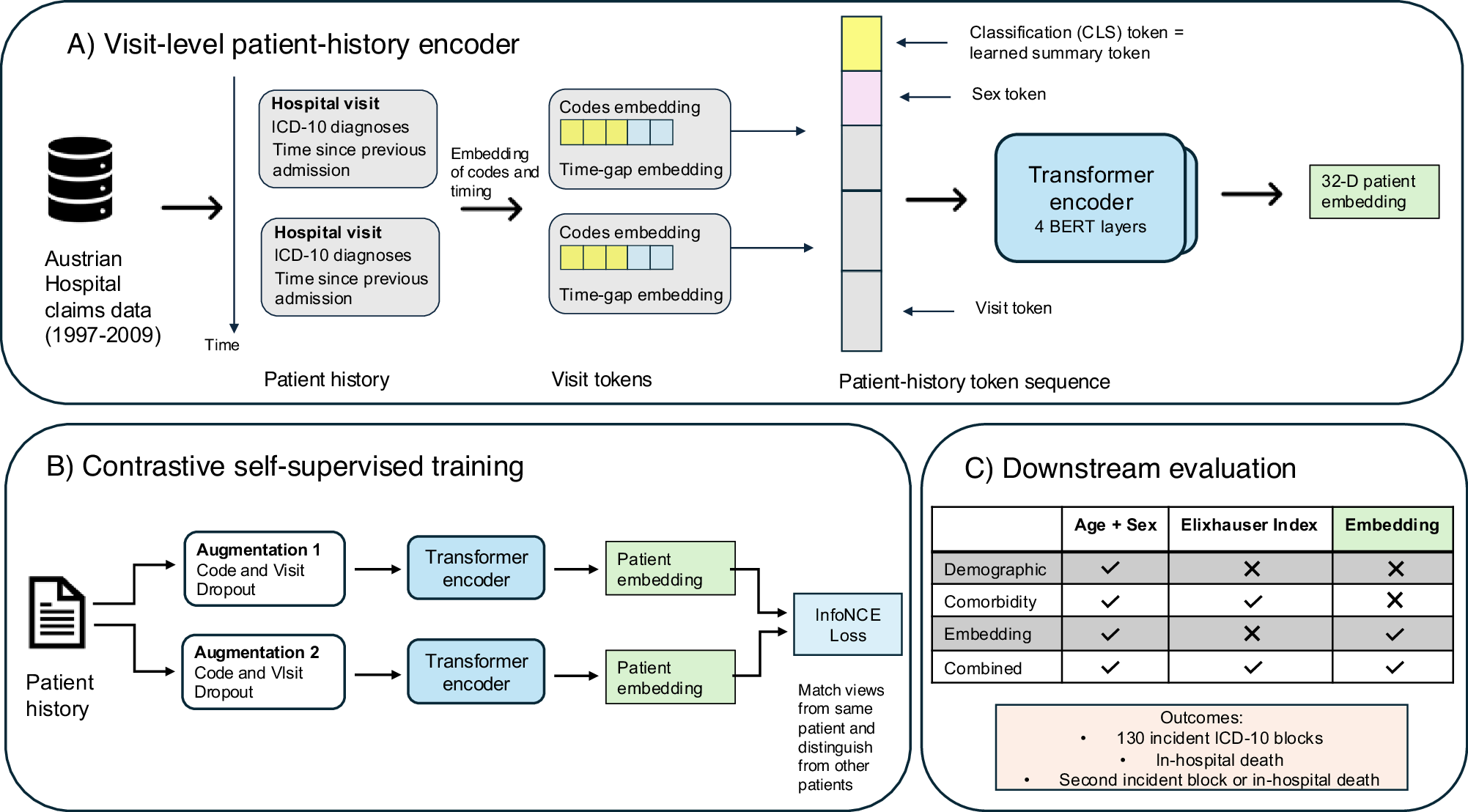
In an observational study using Austrian inpatient records from 7.4 million patients, researchers analysed 13 years of diagnosis histories. They trained a computer model to capture diagnosis sequences and gaps between admissions, then evaluated predictions in 1.7 million individuals.
The model improved prediction for 93 of 131 disease groups versus a model using age, sex and existing disease burden. The median gain was a modest 0.006 in area under the curve, a measure of how well predictions distinguished people with and without an outcome. Among patients of similar age, sex and risk under the comparison model, those assigned high additional risk had 132–183 fewer event-free days over five years than those assigned low additional risk. Event-free meant remaining alive without accumulating a second disease group not previously recorded.
Why it matters
Aging trajectories can differ even among people of similar age and disease burden. The study examined whether the timing and pace of illness accumulation could help describe those differences.
Caveats
This observational analysis assessed prediction, not causation. Its event-free outcome combined survival with newly recorded disease groups; it did not measure lifespan alone.
- Deep learning
- Incident ICD-10 disease-block outcomes
- Mental disorders
- Metabolic disorders
- Musculoskeletal disorders
- Humans
The paper
NPJ Digital Medicine, 14 Oct 2026, Open access, CC BY-NC-ND