Self-reported pain, depressive symptoms and risk for cardiovascular diseases
Abstract
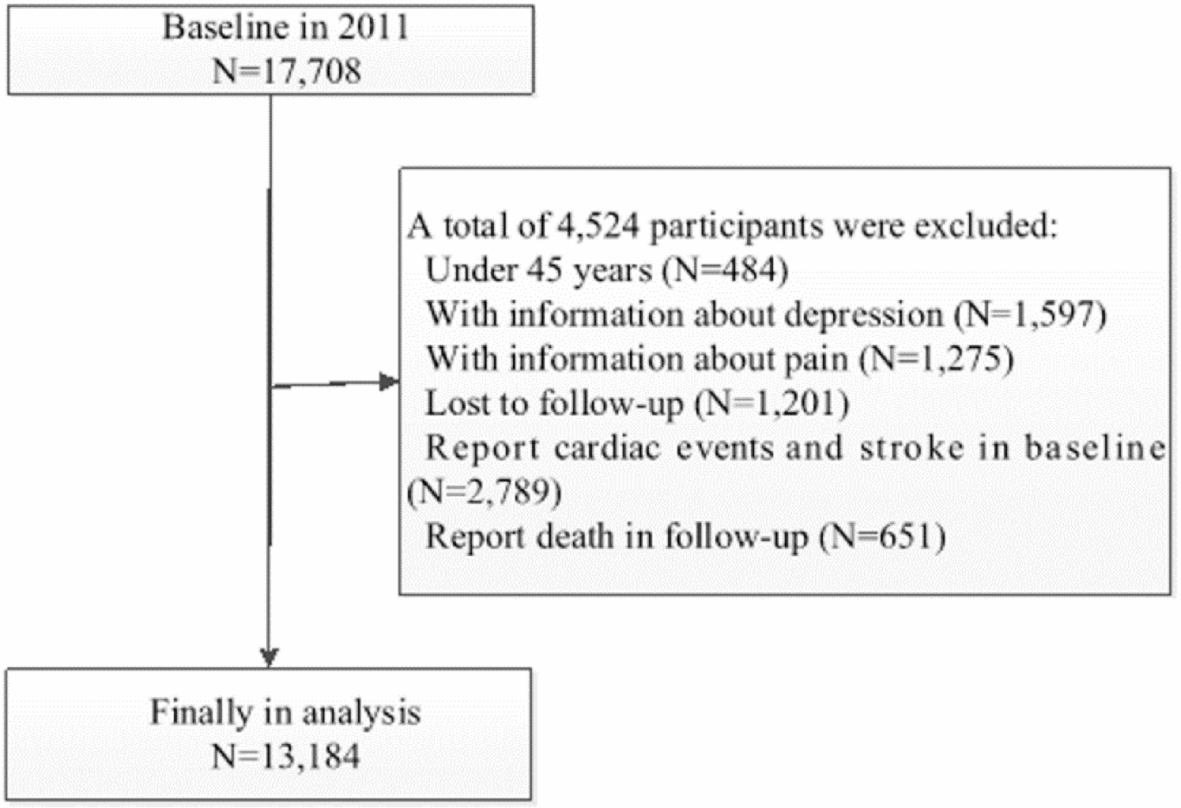
Previous studies have found that both pain and depressive symptoms are deleteriously associated with cardiovascular diseases (CVD). The aim of current study was to investigate the joint association of pain and depressive symptoms with CVD risk. A total of 13,184 participants aged 45 years or older from the China Health and Retirement longitudinal study were included in current study. Participants were divided into 4 groups according to self-reported pain and depressive symptoms status. Cox proportional hazards regression model was used to explore the associations between self-reported pain/depressive symptoms and new-onset CVD, stroke and cardiac events. During the 9-year follow-up, a total of 2,834 individuals experienced CVD (including 965 stroke and 2,168 cardiac events). Both self-reported pain and depressive symptoms were independently associated with increased risk of CVD. Self-reported pain and depressive symptoms had additive and multiplicative interactions on CVD risk. Compared to individuals without self-reported pain/depressive symptoms, the adjusted hazard ratios (95% confidence intervals) were 1.23 (1.11–1.37) for those with depressive symptoms alone, 1.33 (1.19–1.49) with self-reported pain alone, and 1.59 (1.44–1.76) for those with both self-reported pain and depressive symptoms. Similarly, individuals with both self-reported pain and depressive symptoms were also with highest risk of stroke and cardiac events. Both self-reported pain and depressive symptoms were associated with increasing risk of CVD, individually. Those with pain and depressive symptoms had the highest risk of CVD, suggesting likely synergistic effects. Our findings support the need to target both pain and depressive symptoms in research and clinical practice.
The paper
Wuxi People's Hospital; Nanjing Maternity and Child Health Care Hospital
Scientific Reports, 12 Oct 2026, CC BY-NC-ND