Cholesteryl ester transfer protein (CETP) inhibition and high-density lipoprotein particle composition: consequences for atherogenesis and neurodegeneration
Placebo-controlled
Abstract
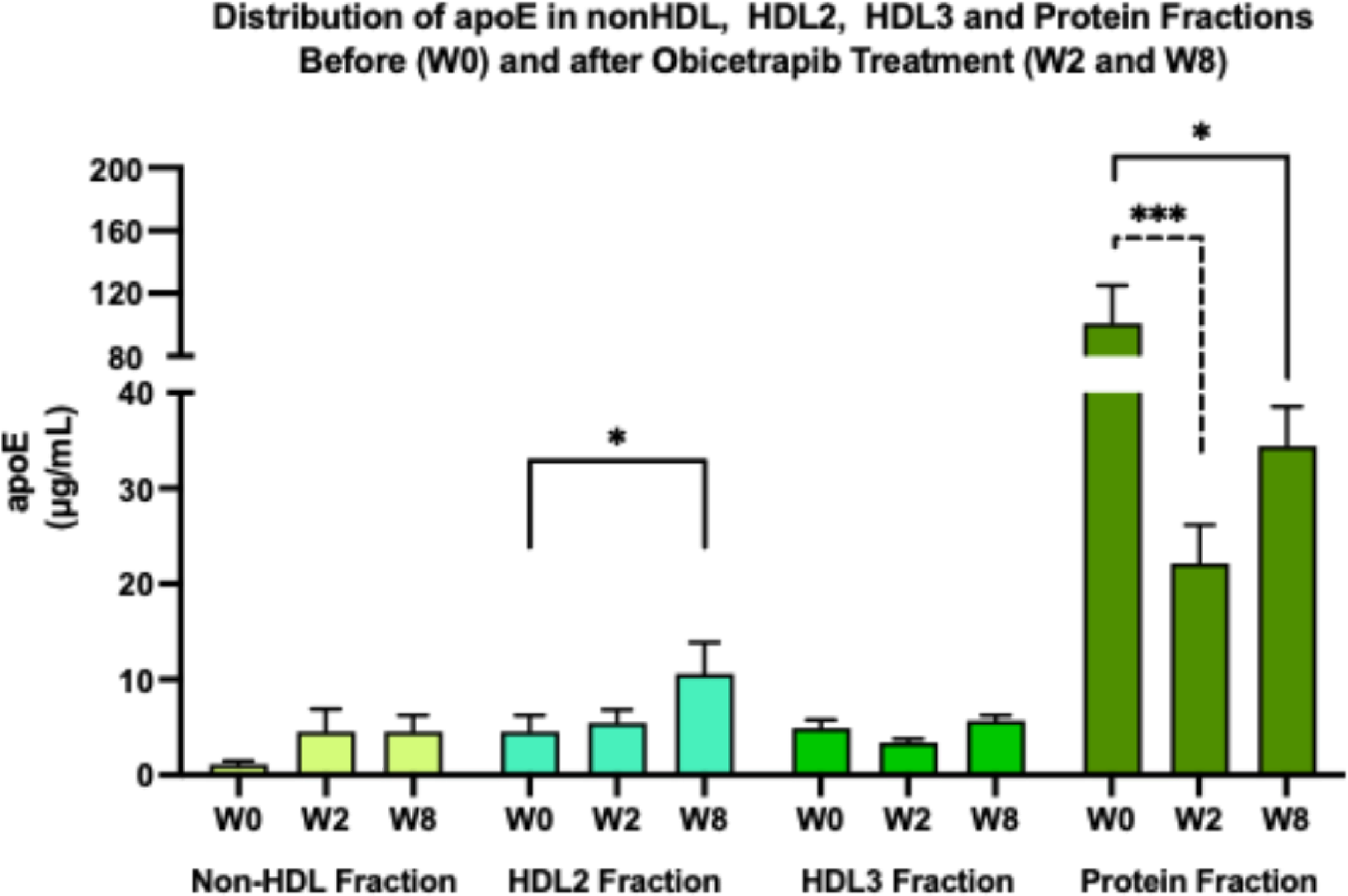
Cholesteryl ester transfer protein (CETP), required for transferring triglyceride from very-low-density lipoprotein in exchange for cholesteryl ester from high-density lipoprotein (HDL), is also involved in lipophilic antioxidant exchange. We aimed to determine the effects of the next generation potent CETP inhibitor, obicetrapib, on concentrations and plasma distributions of lipophilic antioxidants, apolipoproteins (apo), and sphingosine-1-phosphate (S1P) in an 8-week, Phase 2 trial of placebo and 2.5, 5, and 10 mg/d obicetrapib in Japanese participants (n = 12 per group). Obicetrapib robustly increased all antioxidant levels in the HDL fraction and decreased plasma levels of oxidized low-density lipoprotein. In specific analyses of the low-dose group, obicetrapib also raised HDL2 cholesterol, apoA1, S1P, apoM, and apoE. Increased levels of monomeric-apoA1 were found in the HDL2 and HDL3 fractions and these correlated with apoM and S1P. Furthermore, we analyzed the relationship between plasma and cerebrospinal fluid (CSF) lipophilic antioxidants in a proof-of-concept study of obicetrapib 10 mg/d in early Alzheimer’s disease patients (n = 13) and demonstrated that HDL2 and CSF carotenoid and tocopherol levels were increased by obicetrapib. These results offer a first insight into the mechanism of action for obicetrapib in terms of HDL metabolism and function, with implications for both atherogenesis and neurodegeneration.
The paper
Scientific Reports, 16 Oct 2026, CC BY

