Nutritional modulation of pro- and anti-inflammatory balance in egyptian women with obesity: the impact of fatty acids and amino acid consumption profiles
Abstract
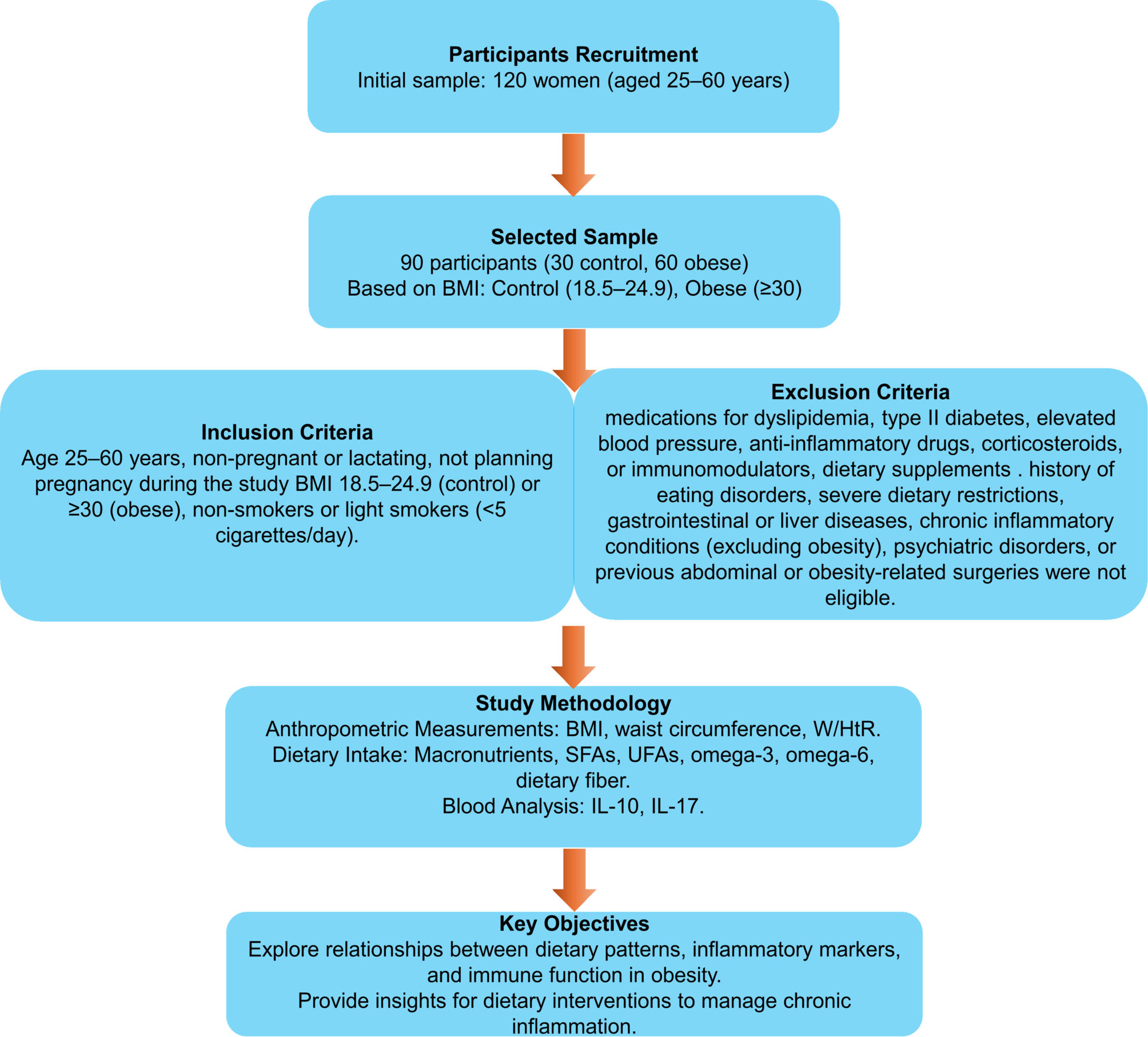
Obesity is a complex condition associated with increased levels of inflammatory markers, leading to chronic low-grade inflammation. To investigate the association between the intake of selected amino acids and fatty acids and immune dysregulation, as reflected by IL-10, IL-17, and TH17 responses, in Egyptian women with obesity. This observational cross-sectional study included 60 obese and 30 normal-weight women aged 25–60 years. Anthropometric measurements, dietary intake (3-day 24-hour recall), lipid profile, and cytokine levels (IL-10, IL-17, TH17) were assessed. Obese participants exhibited significantly higher BMI, waist circumference, and pro-inflammatory markers. BMI correlated positively with IL-17 ( r = 0.323, p ≤ 0.05) and negatively with IL-10 ( r = − 0.265, p ≤ 0.05). Branched-chain amino acids were positively associated with IL-17, while glutamine correlated positively with IL-10 ( r = 0.325, p ≤ 0.001). Total fat intake showed a positive correlation with IL-17 ( r = 0.335, p ≤ 0.001) and a negative correlation with IL-10 ( r = − 0.416, p ≤ 0.001). Saturated fatty acids exhibited pro-inflammatory associations, while unsaturated fatty acids, particularly omega-3 (EPA, DPA), showed anti-inflammatory effects. Dietary composition plays an important role in immune dysregulation in obesity. Diets rich in BCAAs and saturated fats may exacerbate inflammation in obesity, whereas higher consumption of omega-3 fatty acids appears to have a protective, anti-inflammatory effect. These findings suggest that dietary fatty acid and amino acid profiles are associated with inflammatory marker.
From the paper
- Participants
A total of 90 participants were ultimately included, providing sufficient power for correlation analyses, group comparisons, and multivariable regression models.
- Events by group
A higher frequency of animal protein intake was observed among the obese group, where 83.33% of them consumed egg and 66.67% of them consumed chicken, meat and fish ≥3times / week compared to 58.93, 62.50% in the control group respectively.
- Limitation
The cross-sectional design allows identification of associations but does not establish causal relationships between dietary intake and inflammatory status …
Quoted word for word from the full text on nature.com.
The paper
Scientific Reports, 14 Oct 2026, Open access, CC BY