Macrophage mitochondrial reprogramming in ageing-related heart failure with preserved ejection fraction: a workload–recovery framework
Abstract
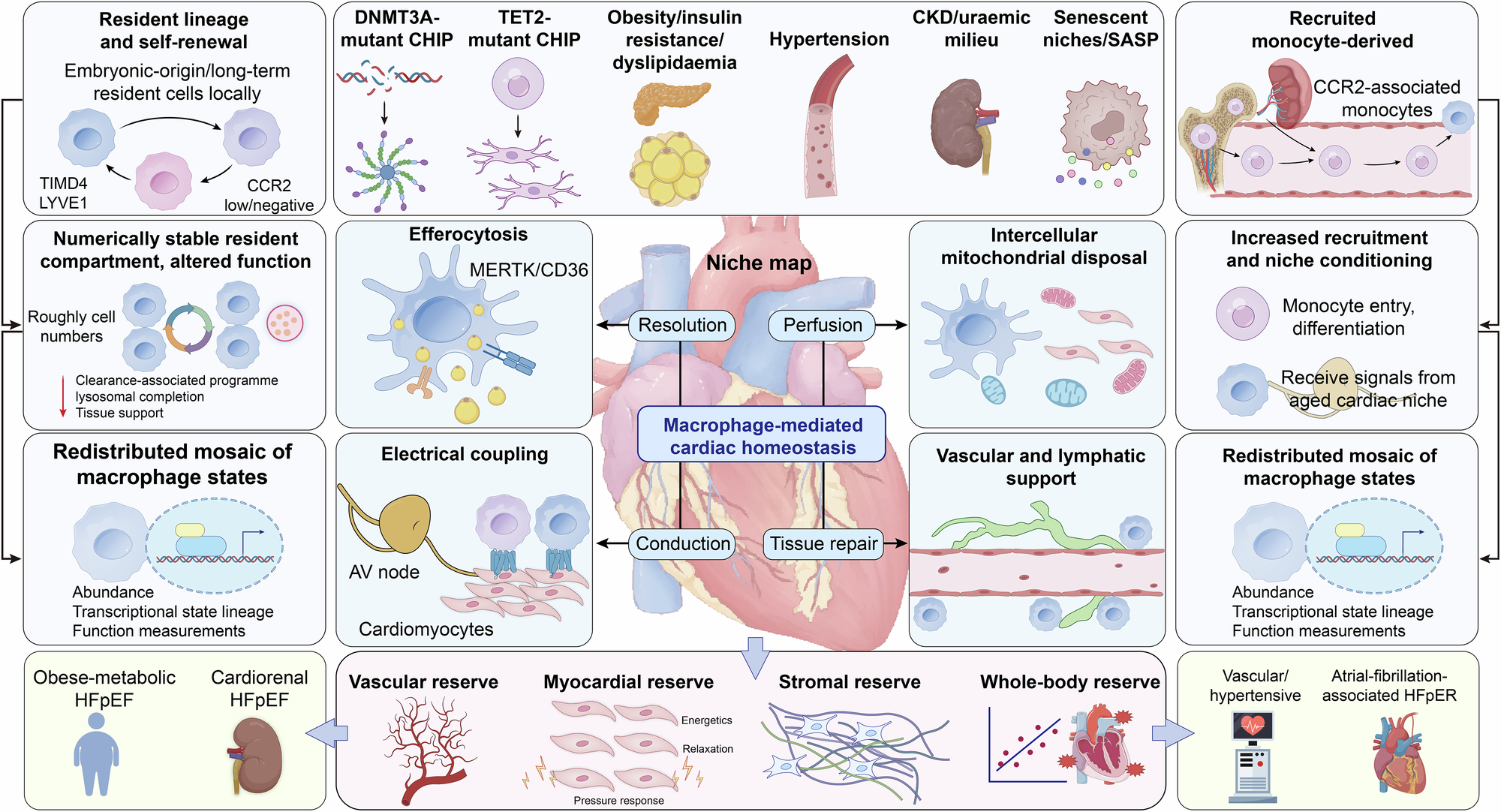
Heart failure with preserved ejection fraction (HFpEF) becomes more common with age, yet similar comorbidity burdens can lead to markedly different clinical courses. Part of that heterogeneity may lie in recovery from repeated physiological stress, not in exposure alone. Cardiac macrophages sit at this interface: they clear dying cells and cardiomyocyte-derived mitochondrial cargo, support tissue niches and help terminate inflammation. These tasks depend on metabolic flexibility, lysosomal degradation and mitochondrial quality control. With ageing, metabolic and phagocytic demand can outrun the cell’s ability to restore mitochondrial homeostasis. Incomplete restoration prolongs signalling driven by mitochondrial reactive oxygen species, mitochondrial DNA and metabolites and engages innate immunity. Dysfunction then spreads across vascular, stromal and cardiomyocyte compartments. Ageing-related modifiers enter this circuit at different nodes. Human HFpEF studies identify altered macrophage states but rarely measure mitochondrial function by cell type. We propose a testable workload–recovery framework for selected ageing-related HFpEF phenotypes and outline the readouts that would support or weaken it.
The paper
First Affiliated Hospital of Guangzhou University of Chinese Medicine
NPJ Aging, 15 Oct 2026, Open access, CC BY-NC-ND