Heat and cold death risks higher with illness and social disadvantage
Across two adult cohorts, excess heat- and cold-related mortality was more than tenfold higher with both vulnerabilities than with neither or just one.
Limit: Vulnerability definitions are unreported, preventing assessment of how accurately participants were classified
Edited by Boris Djordjevic · AgingResearch.News
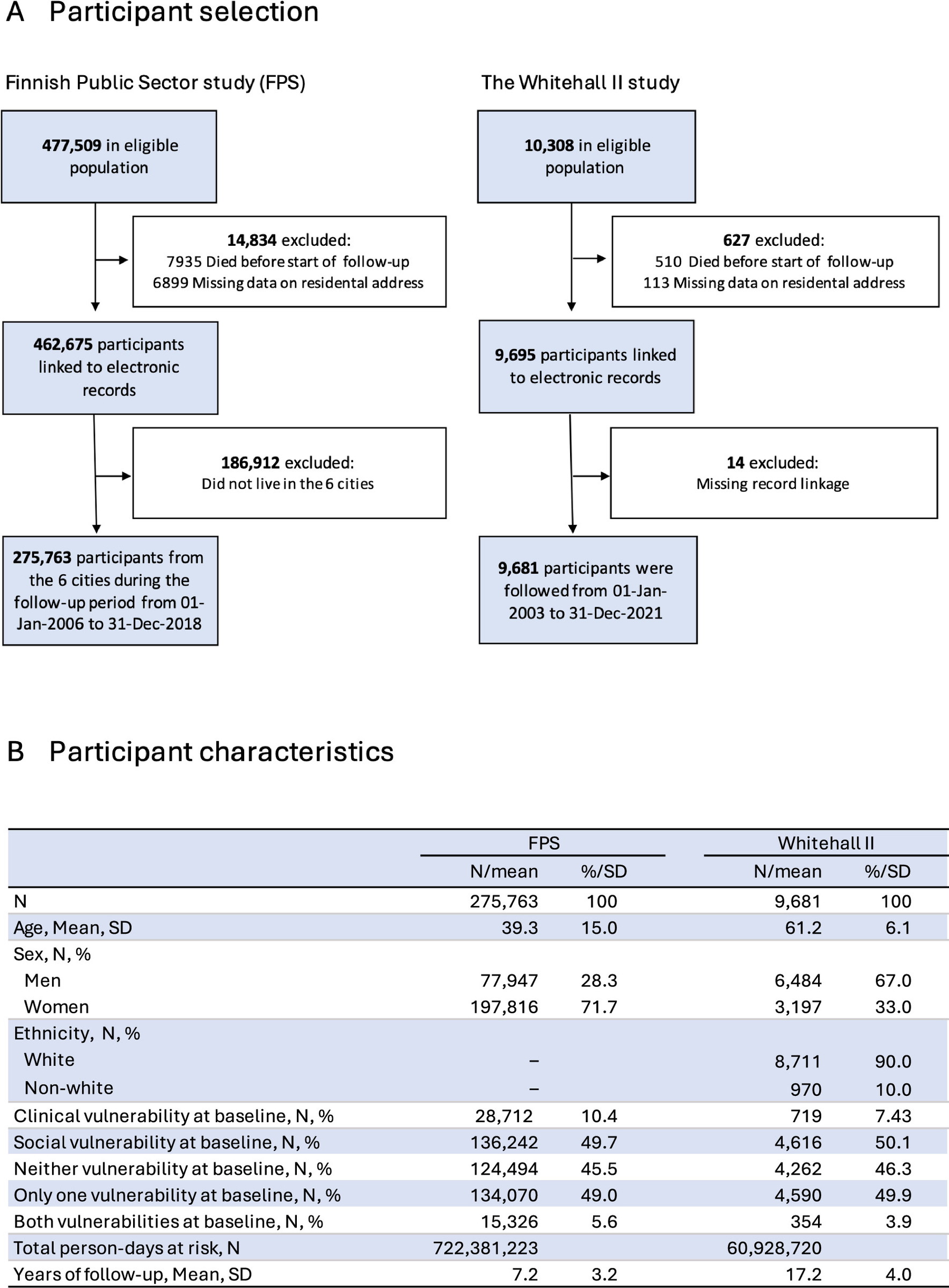
In an observational study, researchers analyzed 275,763 Finnish adults and an independent UK cohort of 9,681 adults. They examined clinical vulnerability, including pre-existing disease, and social vulnerability, including socioeconomic disadvantage. They compared deaths and emergency hospital visits during the hottest and coldest 2.5% of seven-day periods with those during non-extreme temperature periods.
Excess heat- and cold-related mortality was more than tenfold higher among people with both vulnerabilities than among those with neither or only one. This pattern appeared in both cohorts. Excess mortality differed little between people with neither vulnerability and those with just one. The researchers’ modeling suggested that future warming could increase deaths attributable to temperature across the population, particularly among people with both vulnerabilities.
Why it matters
The study addresses how existing health problems and social disadvantage combine during environmental extremes—a question relevant to protecting health as people age.
Caveats
These observational comparisons cannot establish causation. The abstract does not report participants’ ages or how clinical and social vulnerability were defined.
