Social advantage linked to less bodily wear in US adults
Age- and sex-adjusted wear scores were 2.13 at the lower end of US socioeconomic scores and 1.68 at the higher end.
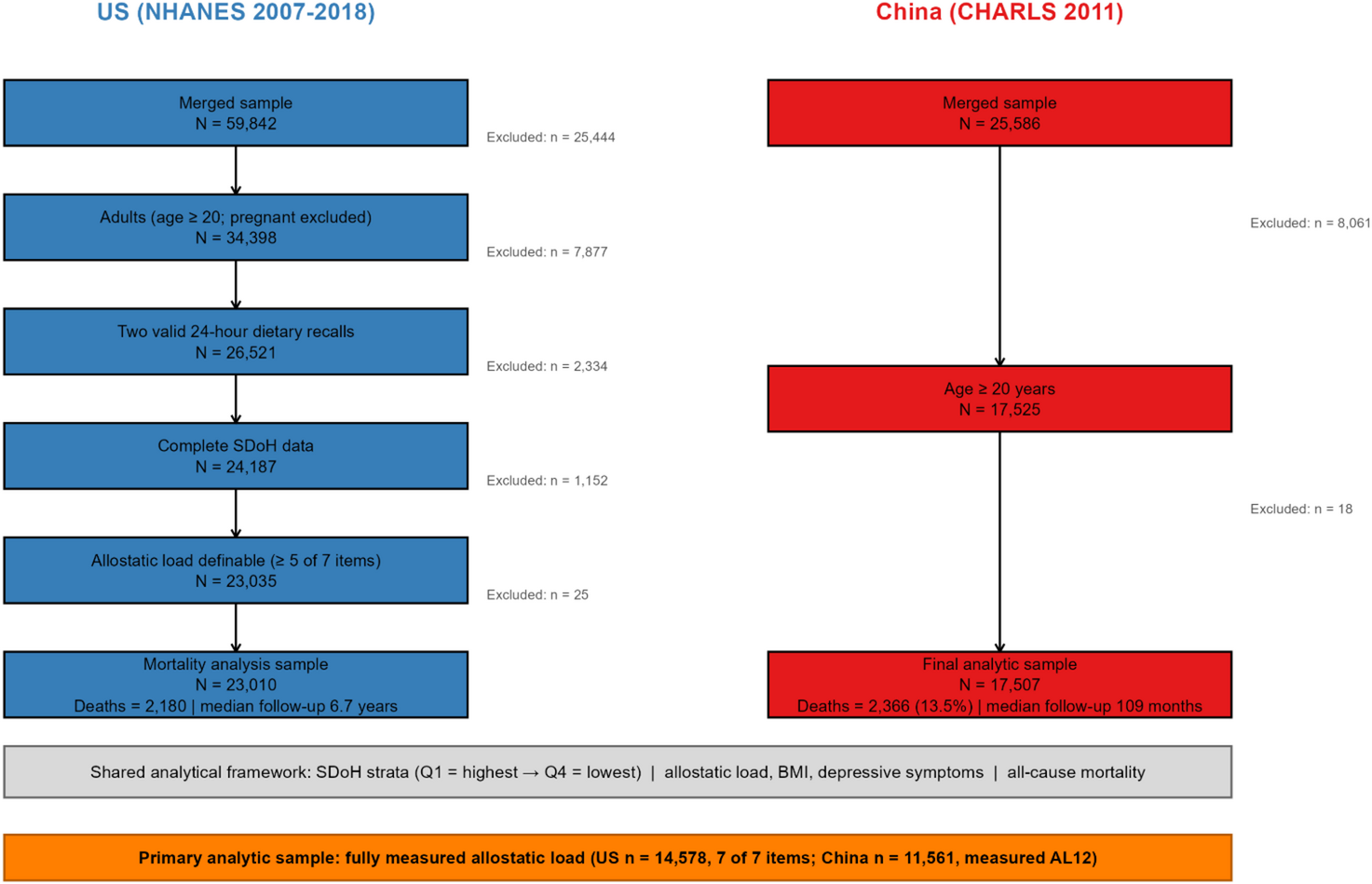
Cohort study, dose-response
Limit: Allostatic load is a score-based proxy for bodily wear
Edited by Boris Djordjevic · AgingResearch.News
The observational study analyzed data from 24,187 US adults and 17,507 Chinese adults. Researchers used US survey data from 2007–2018 and Chinese data from 2011, with Chinese follow-up extended to 2020. They assessed socioeconomic conditions using country-specific scores and physiological wear using allostatic load, a measure of accumulated strain on the body.
After accounting for age and sex, wear scores declined from 2.13 to 1.68 with higher socioeconomic scores in the US. In China, they increased from 2.91 to 3.46. Despite these opposite patterns, greater socioeconomic disadvantage was associated with higher mortality in both countries. Compared with the highest socioeconomic group, the lowest had a hazard ratio of 5.55 in the US and 1.78 in China—relative measures of the risk of death during follow-up. Higher allostatic load was also associated with mortality in both countries.
Why it matters
For equitable healthy aging across social groups, the authors argued that strategies must address structural barriers as well as individual behaviors.
Caveats
These observational associations cannot establish cause and effect. The countries used different socioeconomic scores, and the authors called for confirmation in prospective cohorts.
The paper
Foshan Maternity and Child Health Care Hospital
Scientific Reports, Oct 22, 2026, Open access, CC BY-NC-ND


