Weather and deprivation jointly linked to cardiovascular risk
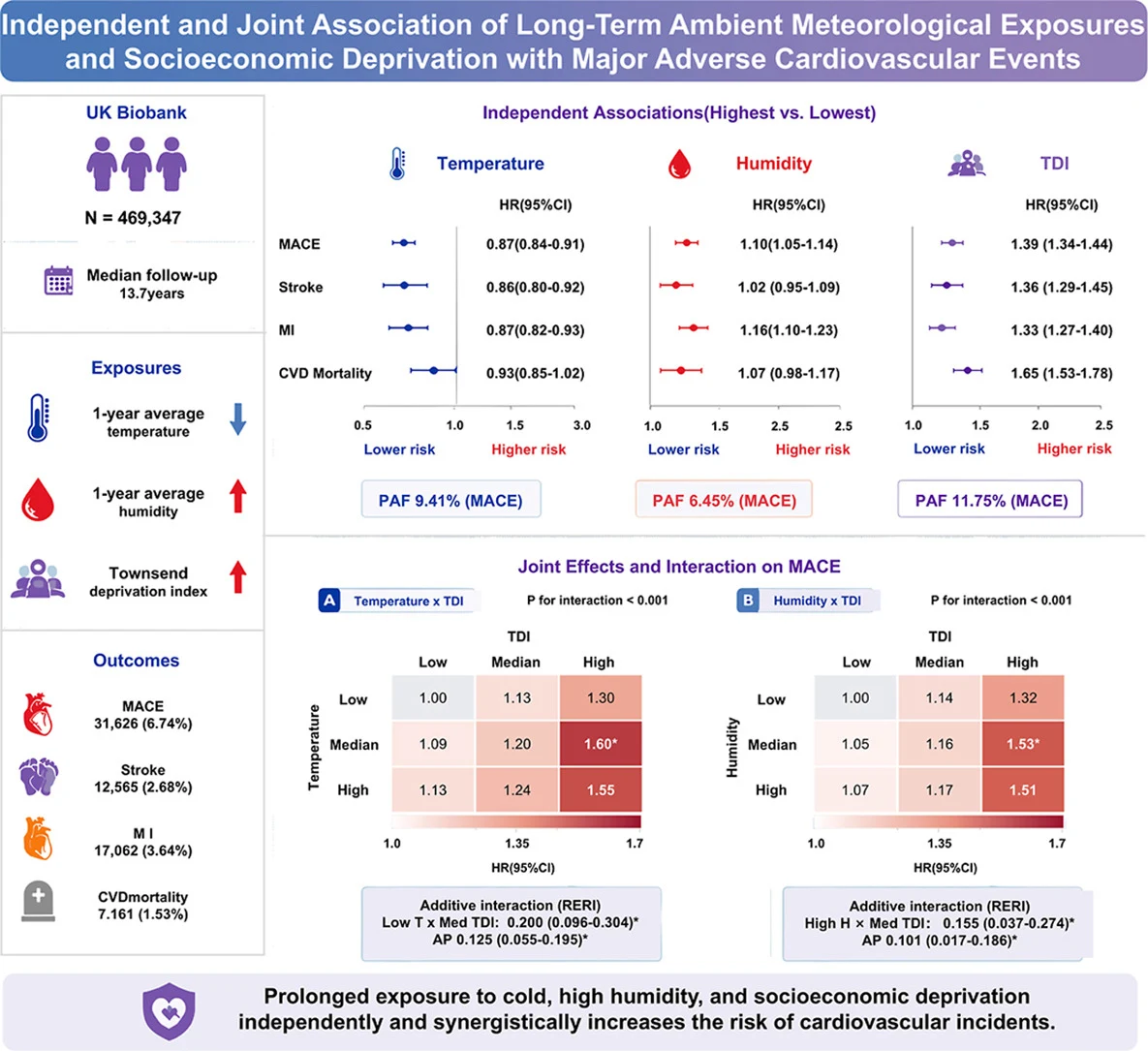
Low temperature with high deprivation was linked to higher cardiovascular risk than the joint low-risk reference group, with a hazard ratio of 1.55.
Limit: The temperature association did not persist in comparisons within assessment centers
Among 469,347 UK Biobank participants, a prospective observational study examined one-year average outdoor temperature, humidity and socioeconomic deprivation—social and economic disadvantage. Researchers recorded 31,626 major cardiovascular events over a median follow-up of 13.7 years.
Higher temperatures were independently linked to lower cardiovascular risk. Higher humidity and greater deprivation were each linked to higher risk. The researchers also examined combinations: compared with the joint low-risk reference group, low temperature with high deprivation had a hazard ratio of 1.55. High humidity with high deprivation had a hazard ratio of 1.51. Hazard ratios compare event rates over follow-up; values above 1 indicate higher rates. The deprivation association held across all analyses that tested alternative ways of analyzing the data.
Why it matters
Cardiovascular disease is an age-related health concern. The findings support considering environmental conditions and social welfare together in efforts to address cardiovascular health disparities.
Caveats
This observational study cannot establish cause and effect. The temperature association did not persist in comparisons within assessment centers, and the humidity association did not persist when the analysis allowed exposures to vary over time.
- Socioeconomic deprivation
- Ambient temperature
- Relative humidity
- Major adverse cardiovascular events
- Myocardial infarction
- Humans
The paper
Guangzhou Baiyun District Center for Disease Control and Prevention; Guangzhou University of Chinese Medicine
Environmental Pollution, Oct 19, 2026