Timed eating and exercise did not beat usual care for liver fat
For timed eating, the 12-week liver fat change was 0.4 percentage points lower than with usual care; the range of likely values included no difference.
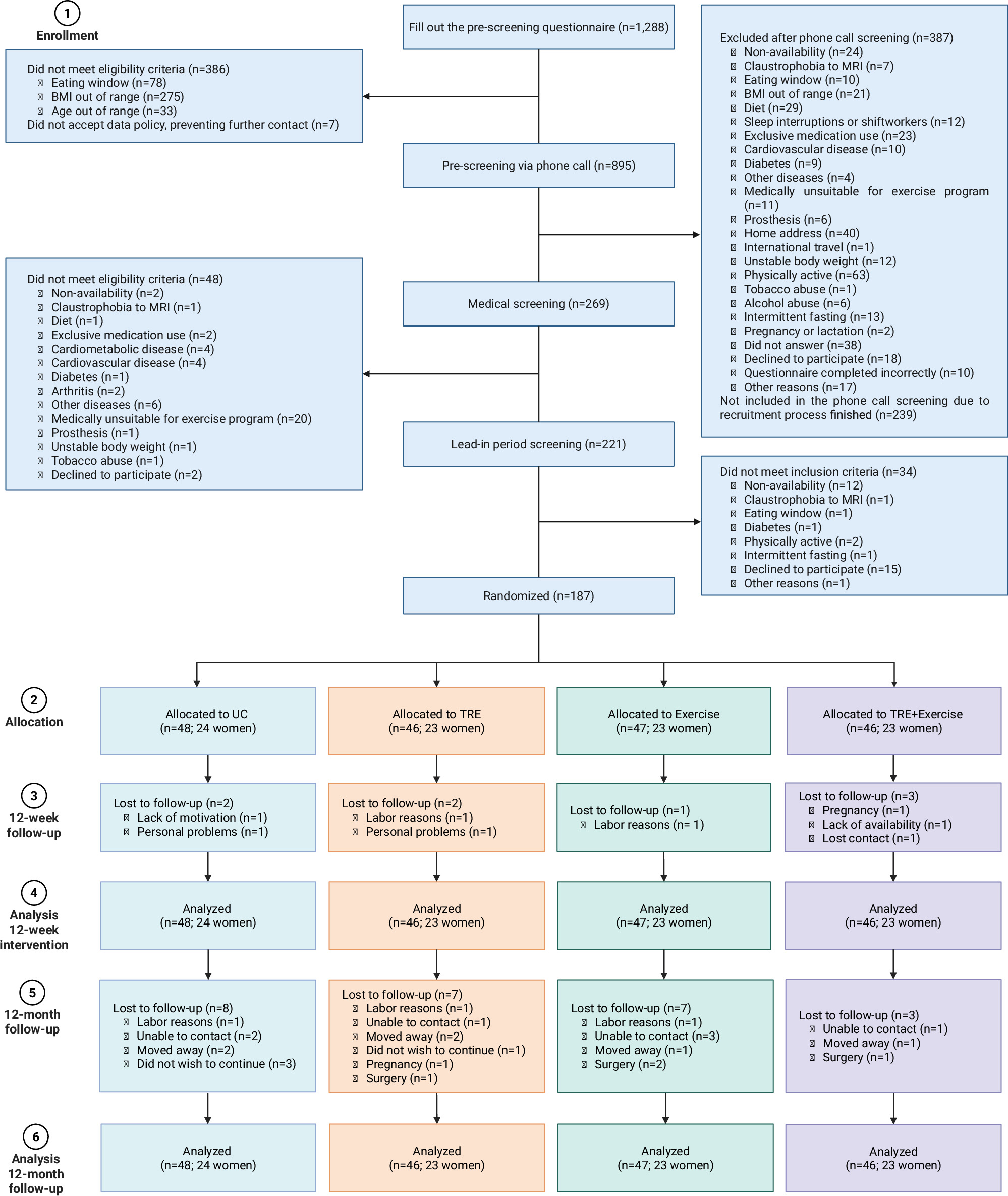
12 weeks, blinded, registered NCT05897073
In a randomised trial in Granada, Spain, 187 adults with obesity, 50% of them women, followed one of four approaches for 12 weeks. Researchers assigned them to an eight-hour eating window, supervised exercise, both, or usual care. Usual care provided education about a Mediterranean diet and physical activity.
Researchers measured liver fat using magnetic resonance imaging. Changes were 0.4 percentage points lower with timed eating, 0.8 lower with exercise and 1.1 lower with both than with usual care. The range of likely values for each comparison included no difference. The findings did not support greater liver fat reductions with any intervention than with usual care, or differences between interventions. The analysis included everyone randomised.
Why it matters
The trial addressed limited evidence for lifestyle approaches targeting liver fat and cardiometabolic health. Whether these approaches influence healthy lifespan remains an open question.
Caveats
The trial lasted only 12 weeks, leaving longer-term effects unresolved. Its findings concern adults with obesity, and the abstract did not report adverse events.
- Exercise
- Time-restricted eating + exercise
- Time-restricted feeding
- Obesity
- Intrahepatic fat fraction
- Humans
The paper
Universidad de Granada
Nature Communications, 14 Oct 2026, Open access, CC BY-NC-ND