Injectable gel improved bone repair in rats
An animal experiment found improved bone volume, mineral density and blood vessel formation in rat thighbone defects after delivery of engineered cell-released particles.
Limit: Bone volume and mineral density are stand-ins for functional bone repair
Edited by Boris Djordjevic · AgingResearch.News
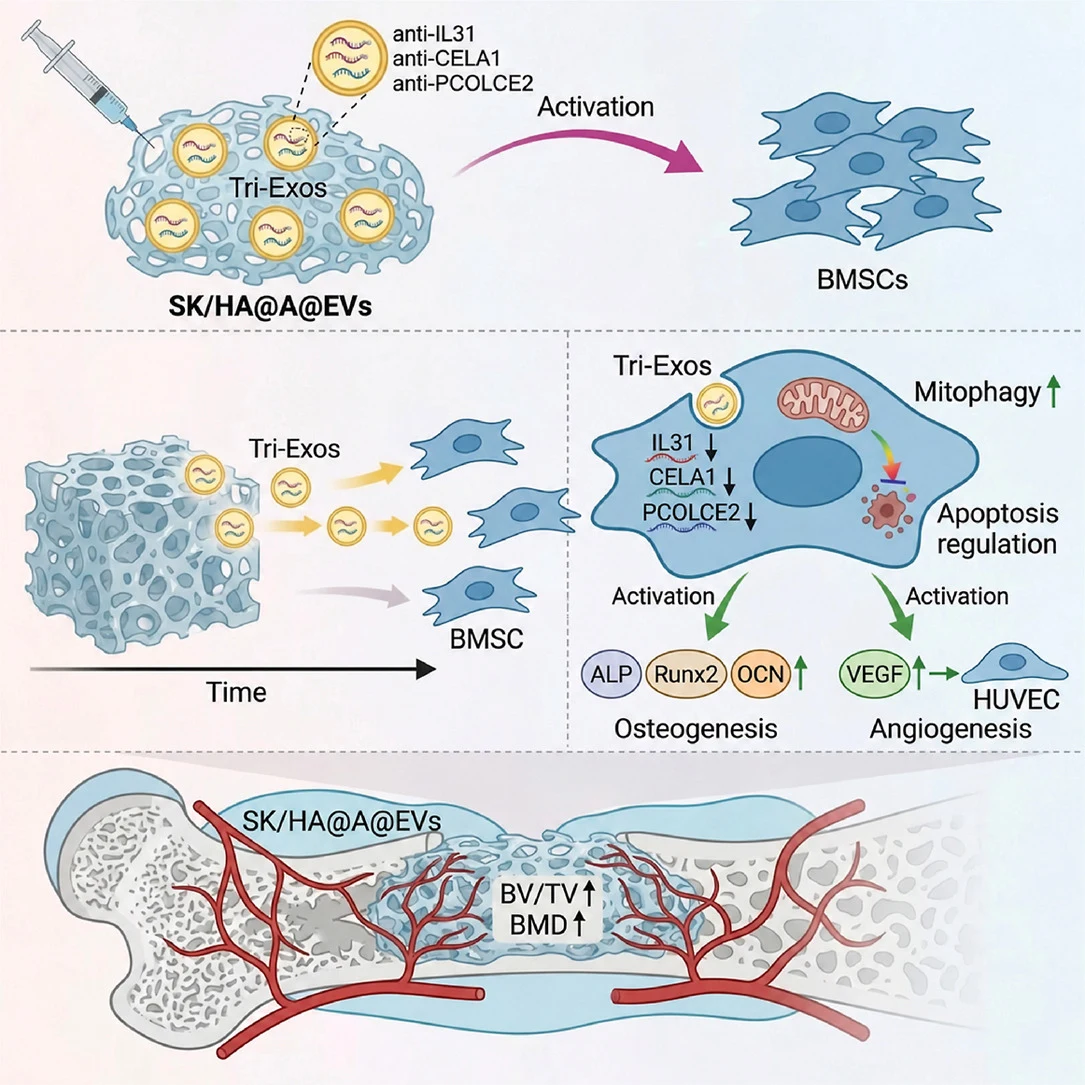
In an animal experiment, researchers tested an injectable gel in rats with defects in the femur, or thighbone. The gel carried exosomes, tiny particles released by cells, from stem cells. Researchers engineered the particles with RNA to target three genes. The gel released the particles over 30 days.
In rats, the gel improved bone volume, mineral density and blood vessel formation. Experiments in cells grown in the lab also found greater bone-forming activity in bone marrow stem cells and stronger blood vessel-forming responses in human blood vessel cells. The cell experiments also found activation of mitophagy, a process that removes mitochondria, the cells’ energy-producing structures.
Why it matters
Osteoporosis, an age-related disease that weakens bones, makes bone defects difficult to repair. The work explored a localized repair strategy addressing both bone formation and blood vessel formation.
Caveats
These were animal and cell experiments, not a test in people. The abstract does not report the number of rats or the size of the bone improvements.
The paper
Shanghai Sixth People's Hospital; Shanghai Jiao Tong University
Materials Today Bio, Oct 2026, Open access, CC BY-NC-ND