Protein helps bone marrow stem cells develop into bone cells
Experiments in bone marrow stem cells linked the protein to mitochondrial maintenance and signals that support blood vessel formation.
Limit: The supporting bone-formation experiment used only 5 mice per group
Edited by Boris Djordjevic · AgingResearch.News
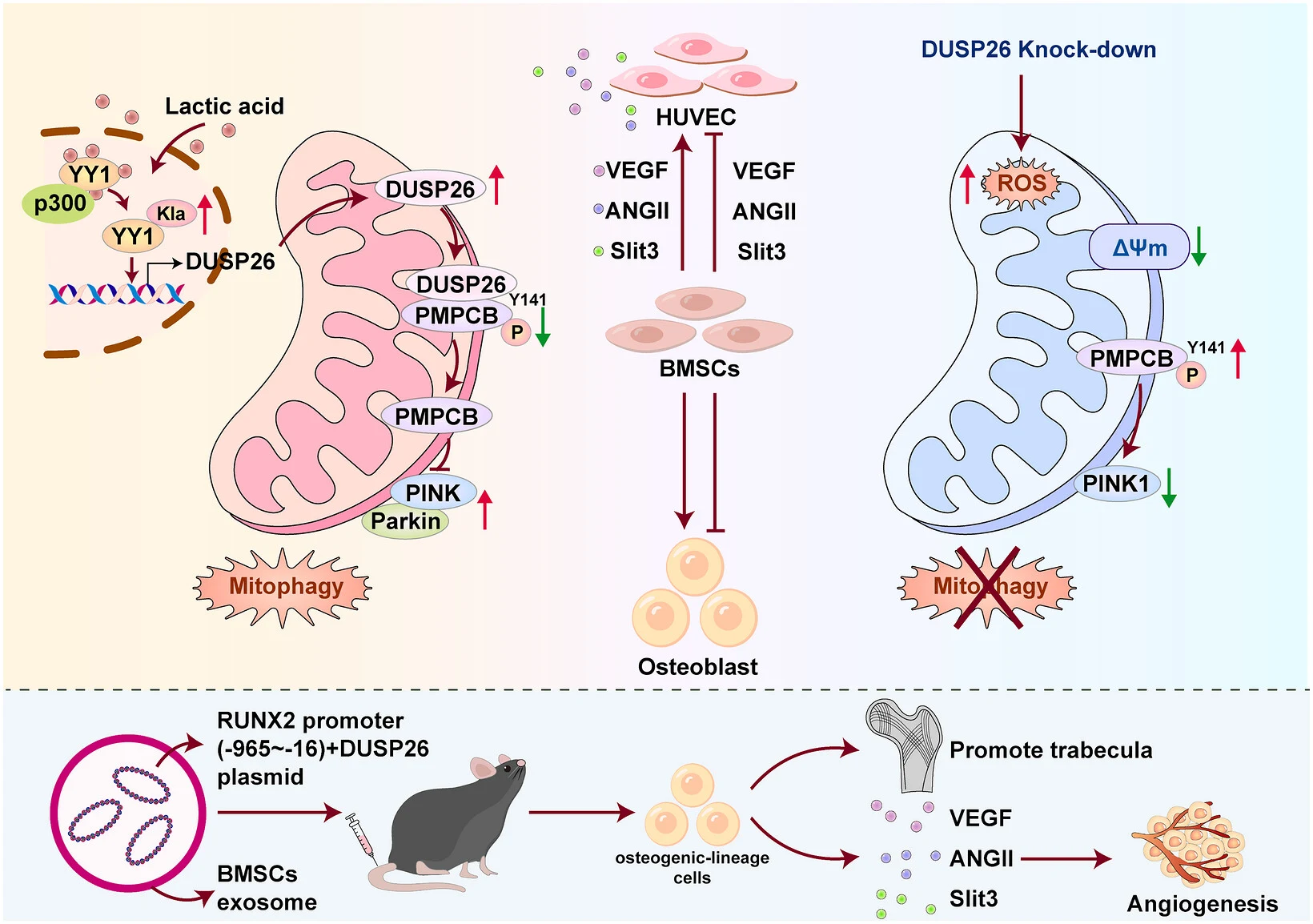
Experiments in bone marrow mesenchymal stem cells, which can develop into bone-forming cells, identified DUSP26, a protein that supported this development and mitochondrial maintenance. Mitochondria are cells’ energy-producing structures. DUSP26 levels rose as the stem cells developed into bone-forming cells. DUSP26 also enhanced the ability of fluid collected from the cells to support blood vessel formation.
Experiments supported the conclusion that lactylation, a chemical modification of the protein YY1, contributed to increasing DUSP26 gene activity. In mice, researchers delivered a DUSP26 plasmid, a DNA construct, in exosomes—small particles released by bone marrow stem cells. This approach reduced bone loss induced by ovary removal.
Why it matters
Osteoporosis is an age-related disease involving bone loss. The authors concluded that approaches targeting DUSP26 warranted further preclinical evaluation for osteoporosis.
Caveats
The intervention results came from mice, not people, and the abstract does not report the size of the bone-loss reduction. It also does not identify the species used for the stem-cell experiments.
From the paper
- Limitation
The conservation and clinical relevance of the proposed regulatory mechanism require validation in additional animal models and human samples.
Quoted word for word from the full text on advanced.onlinelibrary.wiley.com.
The paper
The Second Affiliated Hospital of Harbin Medical University
Advanced Science, Oct 28, 2026


