Chemical exposure induced an aging state in animal nerve cells
Deleting a gene reduced this response in animal experiments examining how an emerging environmental chemical affected nerve cells.
Limit: Exposure dose and duration are not reported in the abstract
Edited by Boris Djordjevic · AgingResearch.News
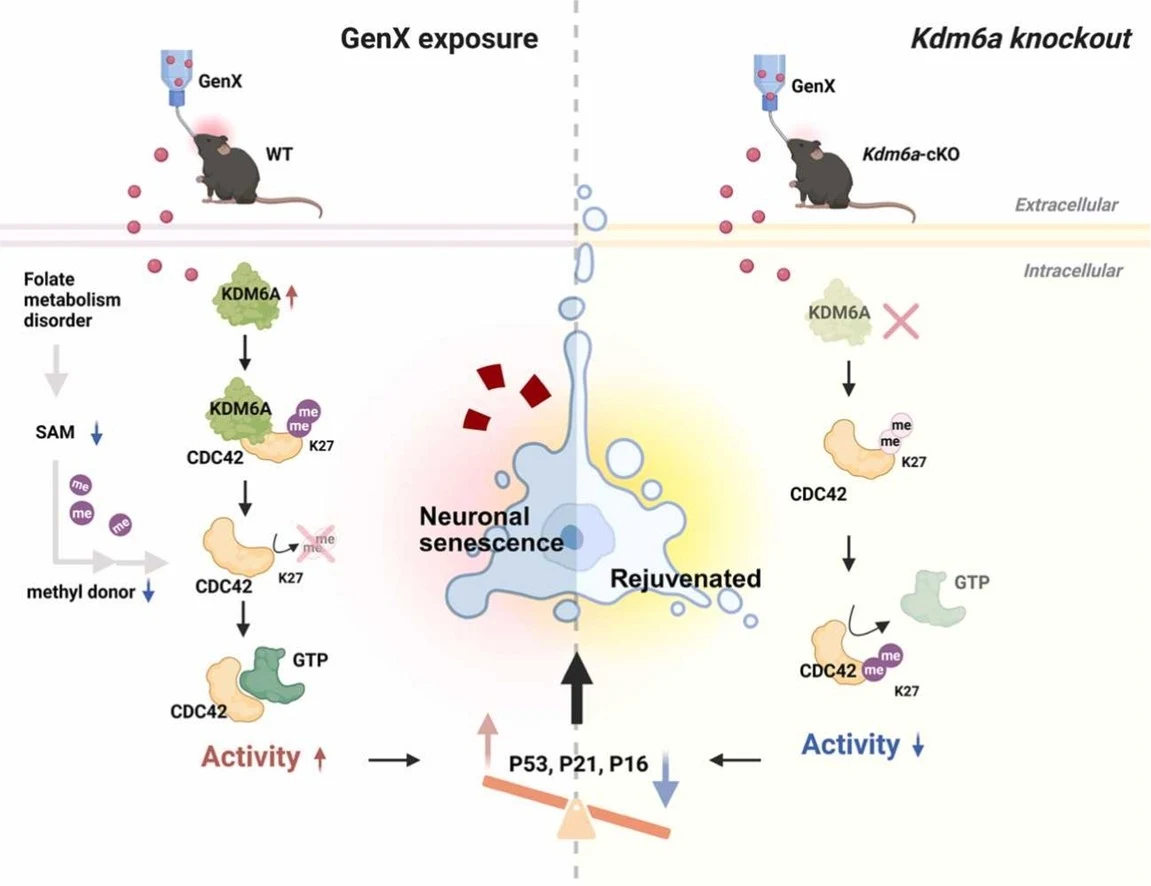
In animal experiments, the environmental chemical hexafluoropropylene oxide dimer acid induced nerve-cell senescence, an aging-related state of cell dysfunction. The chemical belongs to the per- and polyfluoroalkyl substances family. Researchers analyzed gene activity in individual cells and found that nerve-cell subtypes responded differently.
Exposure activated KDM6A, a protein that removes chemical tags called methyl groups. Deleting the gene for KDM6A reduced exposure-induced nerve-cell senescence. The deletion also increased methyl tagging of CDC42, a protein involved in cell signaling, and reduced its activity. The authors identified KDM6A’s removal of these tags as a critical step driving the senescence response.
Why it matters
Nerve-cell senescence has been implicated in age-related neurodegeneration, the progressive deterioration of nerve cells. The authors proposed inhibiting KDM6A as a potential strategy to counter age-related neurodegeneration.
Caveats
The evidence came from animal experiments, not studies in people. The abstract does not identify the animal species or report the exposure dose or duration.
- KDM6A
- CDC42
- Cellular homeostasis
- Age-related neurodegeneration
- Camk2d+ neuronal subpopulation
- CDC42 activation
The paper
Journal of Hazardous Materials, Oct 2026, CC BY-NC-ND

Comments
Be the first to comment.