Tire-wear chemical impaired learning in adult zebrafish
Over a 28-month follow-up window, exposed adult zebrafish developed behavioral deficits that the authors attributed to chronic toxic stress rather than accelerated natural aging.
Limit: Overt illness at upper exposure concentrations could explain poorer learning performance
Edited by Boris Djordjevic · AgingResearch.News
In an animal experiment, researchers examined chronic exposure to 6-PPD quinone, a tire-wear contaminant, in adult zebrafish over a 28-month follow-up window. Exposed fish had impaired spatial learning and heightened responses to confrontation. The researchers identified ABL1, a signaling protein, as a candidate target and mediator of toxicity. Giving nilotinib, a drug that inhibits ABL1, alongside the contaminant rescued movement deficits.
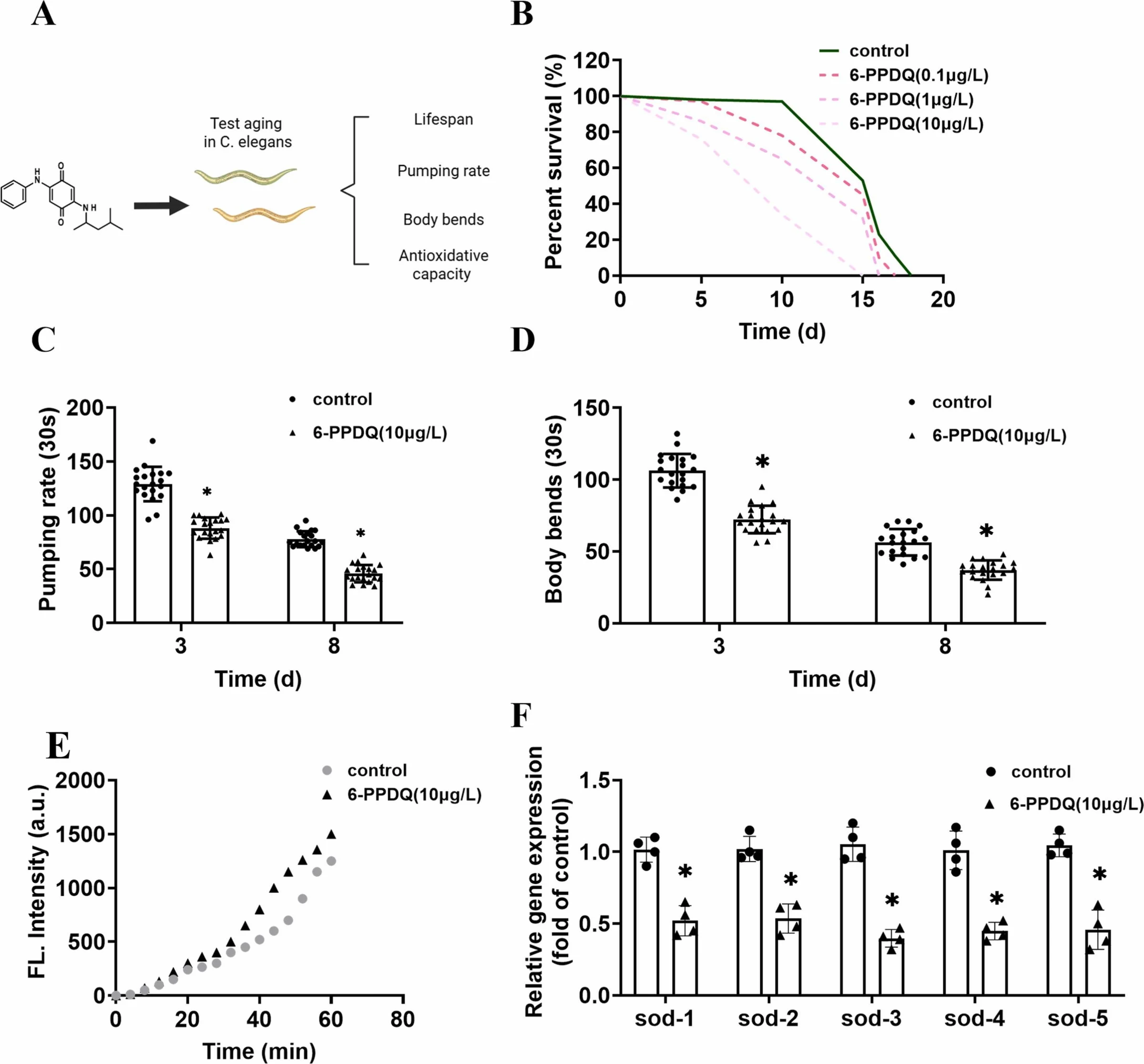
In separate experiments, the contaminant shortened survival and reduced movement in worms. Human MRC-5 cells grown in the lab developed markers associated with senescence, a state in which cells stop dividing, and a related pattern of substances released by cells.
Why it matters
The work addresses how chronic environmental exposure affects processes studied in aging, including cell senescence. The authors called for assessing long-term neurological risks from tire-wear pollution.
Caveats
These were experiments in animals and lab-grown cells, not people. Overt illness occurred predominantly at the upper exposure concentration of 10 micrograms per liter; the authors interpreted the effects as chronic toxic stress, not accelerated natural aging.
The paper
Ecotoxicology and Environmental Safety, Oct 22, 2026, Open access


