Plant compound lessened age-related decline in mice
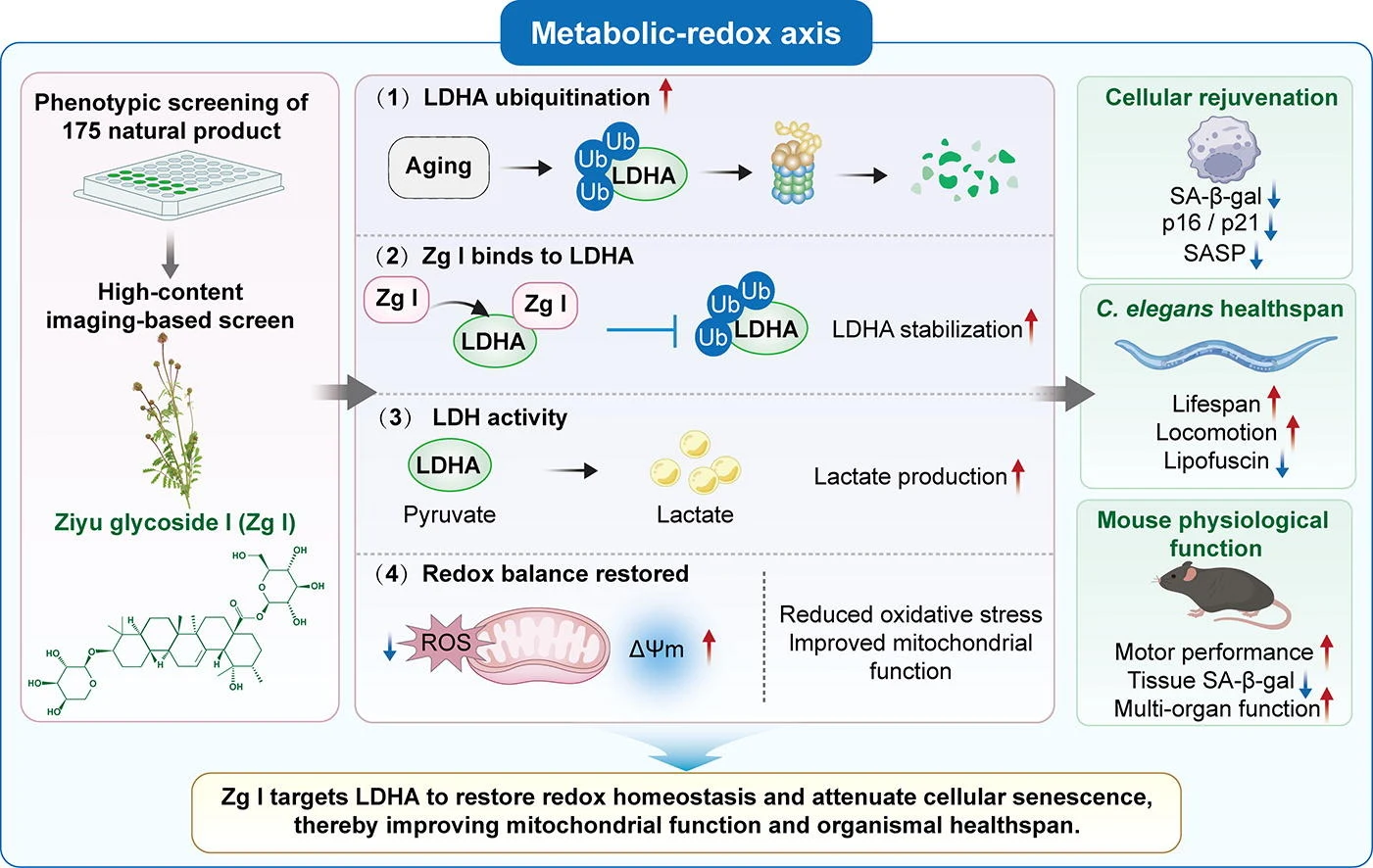
In experiments, ziyu glycoside I reduced functional decline and organ abnormalities in naturally aging mice and mice with chemically induced aging.
Limit: The abstract omits mouse numbers, doses, and treatment durations
Edited by Boris Djordjevic · AgingResearch.News
Experiments in naturally aging mice and mice with aging induced by the chemical D-galactose tested ziyu glycoside I, a plant compound. It lessened functional decline and abnormalities across several organs.
In mammalian cells grown in the lab, the compound reduced signs of senescence, a state in which cells stop dividing. It bound to and slowed the breakdown of lactate dehydrogenase A, an enzyme that helps cells produce lactate from sugar. Depleting this enzyme weakened the compound’s effects against senescence. Adding lactate reduced senescence-associated changes in cells depleted of the enzyme. In naturally aged mice, inhibiting lactate production weakened the compound’s effects on tissue senescence and injury. The compound also extended lifespan in Caenorhabditis elegans worms.
Why it matters
Senescence contributes to tissue dysfunction with age. The authors propose the pathway controlling lactate production as a potential target for interventions against age-related decline.
Caveats
Animal and cell experiments do not establish whether the compound would benefit people. The abstract does not report mouse numbers, doses or treatment durations.
The paper
Journal of Advanced Research, Nov 1, 2026, CC BY-NC-ND


Comments
Be the first to comment.