Combined pollutant exposure shortened lifespan in worms
Experiments in engineered worms found that nano-polystyrene and perfluorononanoic acid together, rather than either alone, accelerated protein clumping and paralysis.
Our read
Mechanisms- Studied:
- Experiments in engineered Caenorhabditis elegans worms
- What changed:
- Worms exposed to both pollutants had shorter lifespans than worms exposed to either pollutant alone
- The catch:
- Engineered disease-protein expression limits how well lifespan findings generalize to unmodified worms
Editor of record: Boris Djordjevic · AgingResearch.News
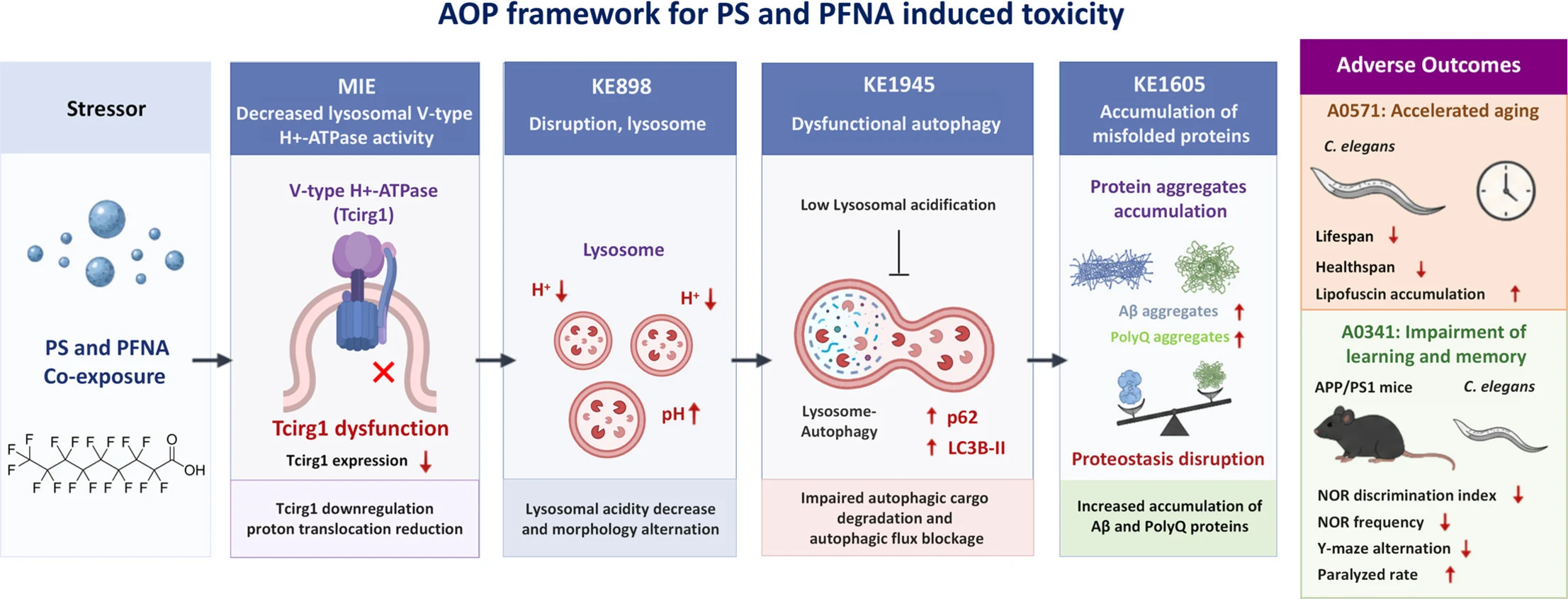
Caenorhabditis elegans worms engineered to produce amyloid beta or polyglutamine proteins underwent experiments with nano-polystyrene, perfluorononanoic acid or both. These are persistent pollutants; nano-polystyrene consists of tiny plastic particles. Combined exposure, rather than either pollutant alone, accelerated protein clumping and paralysis. It shortened lifespan and healthspan, the period of healthy life. It also impaired the acidity of lysosomes, cells’ waste-processing compartments, and disrupted cellular recycling.
In mouse BV2 brain immune cells grown in the lab, combined exposure also impaired lysosome acidity and recycling. Increasing production of Tcirg1, a protein involved in lysosome function, partially restored acidity and waste breakdown. In mice engineered as an Alzheimer’s disease model, combined exposure worsened cognitive impairment, nerve-cell loss and amyloid beta deposits.
Why it matters
The work addresses how persistent pollutants may act together to affect aging and neurodegeneration. The authors propose a chain from disrupted acid transport in lysosomes to faulty recycling, protein buildup and impaired learning and memory.
Caveats
Experiments in engineered worms, mouse cells grown in the lab and an Alzheimer’s disease mouse model leave open whether combined exposure has similar effects in people.
- Nano-polystyrene + perfluorononanoic acid
- Lysosome
- TCIRG1
- Alzheimer's disease
- Amyloid-beta deposition
- C. elegans
The paper
Journal of Hazardous Materials Advances, Nov 2026, CC BY-NC-ND

Comments
Be the first to comment.