Impact of genitourinary syndrome of menopause on sexual function
Abstract
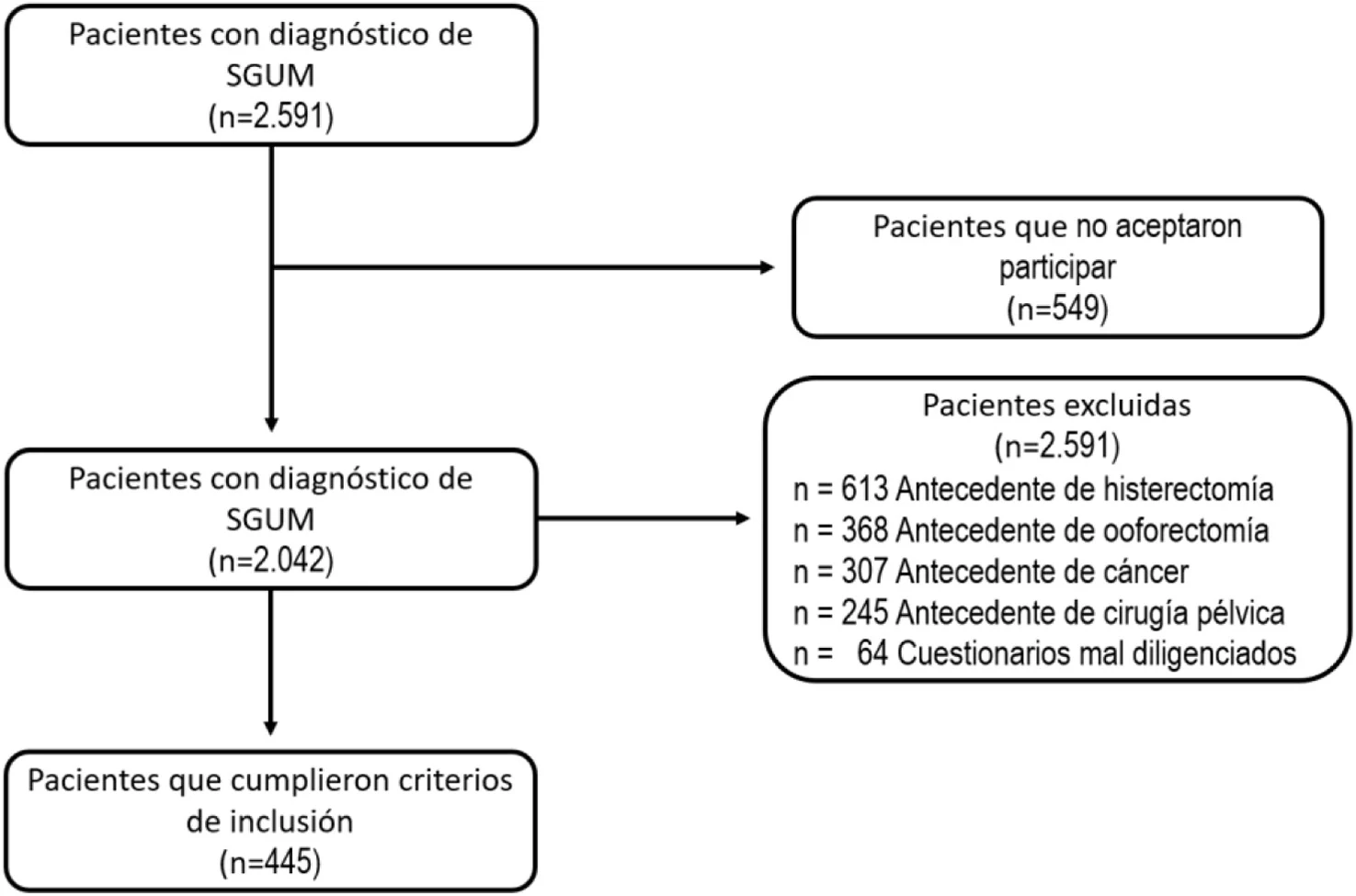
Genitourinary syndrome of menopause (SGUM) includes vulvovaginal and lower urinary tract signs and symptoms related to estrogen deficiency. To evaluate the impact of SGUM on female sexual function. Cross-sectional study in 445 women (≥ 50 years with one year or more of amenorrhea) diagnosed with SGUM, who attended outpatient gynecology consultations at three university clinics in Pereira (Colombia); between 2021 and 2024. The Female Sexual Function Index (IFSF) instrument was used. Descriptive analysis is performed. The median age was 55 years (range: 50 to 78). The mean age at menopause was 48.75 ± 3.84 years. 62.92% experienced vaginal dryness and 53.25% decreased lubrication. The frequency and severity of symptoms increased with increasing age. In the total population, the IFSF score was 23.49 ± 7.65. The percentage of women who scored ≤ 26.55 points (indicates risk of sexual dysfunction) was 69.21%. The most affected domains were desire (69.21%), followed by impaired arousal (45.61%). 9.09% had one sexual dysfunction, 67.53% two and 23.37% 3 or more, with a median of 3 sexual dysfunctions per woman (range: 1 to 5). 2/3 of women with SGUM have a low IFSF score, which is associated with impaired sexual function. A holistic, person-centered care process is suggested that addresses the medical and sexual needs of older women, involving a multidisciplinary team. Genitourinary syndrome of menopause (GUMS) incorporates vulvovaginal and lower urinary tract signs and symptoms related to estrogen deficiency. To evaluate the impact of the genitourinary syndrome of menopause on female sexual function. Cross-sectional study in 445 women (≥50 years with a year or more of amenorrhea) with a diagnosis of SGUM, who attended an outpatient gynecology consultation in three university clinics in Pereira (Colombia); between 2021 and 2024. The Index of Female Sexual Function (IFSF) instrument was used. Descriptive analysis is done. Median age was 55 years (range: 50 to 78). The average age at menopause was 48.75 ± 3.84 years. 62.92% experienced vaginal dryness and 53.25% decreased lubrication. The frequency and severity of symptoms increased with increasing age. In the total population, the IFSF score was 23.49 ± 7.65. The percentage of women who presented ≤26.55 points (indicates risk of sexual dysfunction) was 69.21%. The most affected domains were desire (69.21%), followed by alteration of arousal (45.61%). 9.09% had one sexual dysfunction, 67.53% had two, and 23.37% had 3 or more, with a median of 3 sexual dysfunctions per woman (range: 1 to 5). 2/3 of women with SGUM have a low score on the IFSF, which is associated with deterioration in sexual function. A holistic, person-centered care process is suggested that responds to the medical and sexual needs of older women, involving a multidisciplinary team.
- Genitourinary syndrome of menopause
- Menopause
- Sexual dysfunction
- Vaginal dryness
- Female Sexual Function Index
- Humans
The paper
Departamento de Sexología Clínica
Clínica E Investigación En Ginecología y Obstetricia, 1 Oct 2026, Open access, CC BY-NC-ND