Lowering a protein improved heart relaxation in aged mice
Mice given a heart-cell-targeted gene-silencing injection at 90 weeks had less inflammation and better heart relaxation when assessed at 110 weeks.
Our read
Mechanisms- Studied:
- Experiments in naturally aged mice of both sexes
- What changed:
- Lowering TRAF1 improved heart relaxation in aged mice
- The catch:
- Heart relaxation was inferred from E/A and E/e′ ratios
Editor of record: Boris Djordjevic · AgingResearch.News
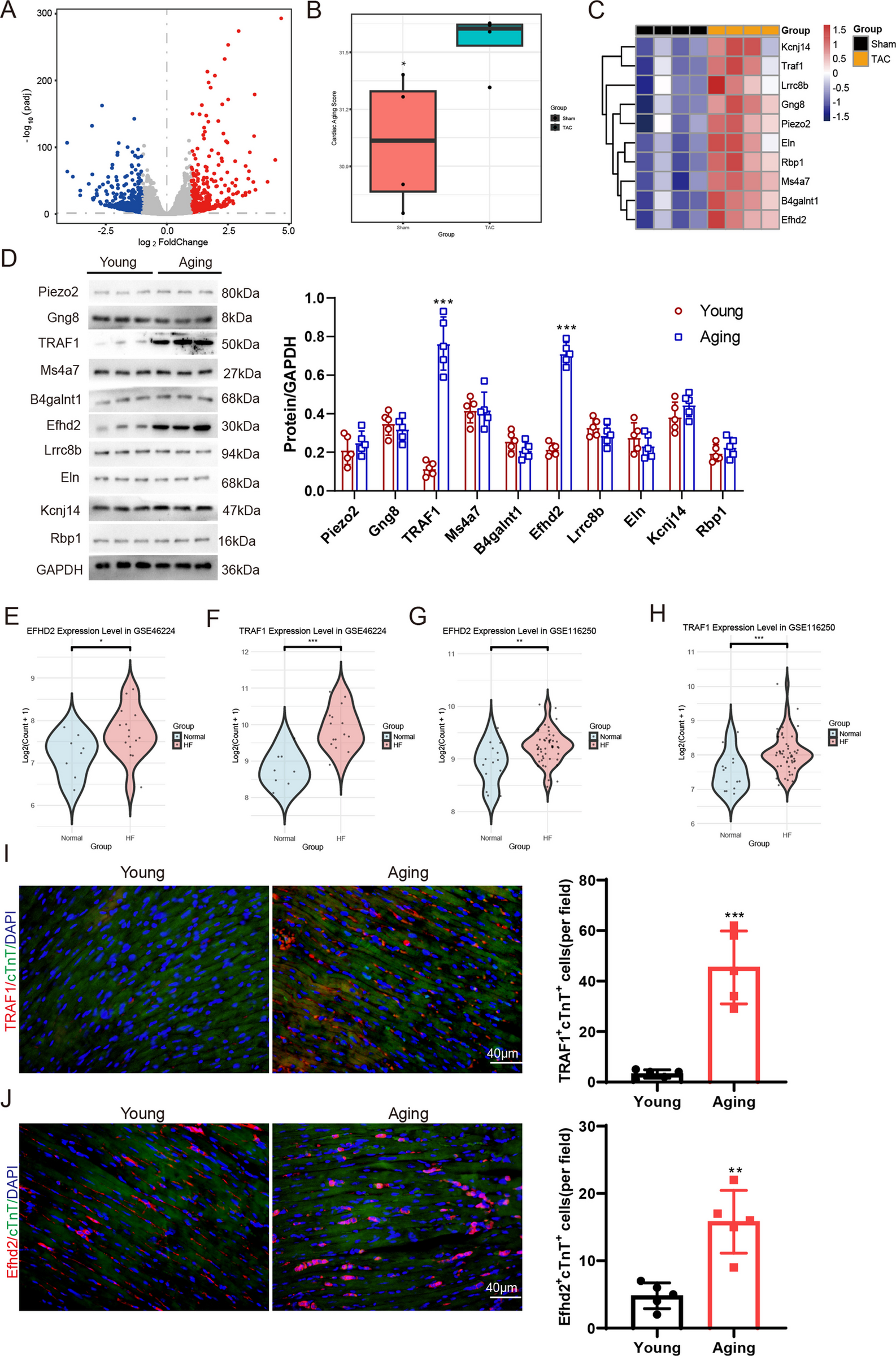
Naturally aged C57BL/6J mice of both sexes received a gene-silencing injection at 90 weeks that lowered TRAF1, a signaling protein, specifically in heart muscle cells. The animal experiment assessed their hearts at 110 weeks. Lowering TRAF1 reduced heart enlargement, inflammation and levels of reactive oxygen molecules. It improved diastolic function—how the heart relaxes and fills—but did not change ejection fraction, the share of blood pumped out with each beat.
In primary heart muscle cells treated with D-galactose in the lab, lowering TRAF1 reduced senescence, a state in which cells stop dividing, and reactive oxygen buildup. Increasing TRAF1 worsened these changes. In the cell experiments, TRAF1 promoted release of DNA from mitochondria, the cells’ energy-producing structures. This released DNA activated inflammatory signaling in macrophages, a type of immune cell.
Why it matters
Heart failure is an age-associated disease. The authors suggest that targeting TRAF1 may offer a strategy against age-related heart dysfunction.
Caveats
The heart-function findings came from a gene-silencing experiment in aged mice. They do not show whether lowering TRAF1 would help older people with heart failure.
Where the evidence stands
Inflammation
- 1,052 independent labs in 77 countries
- 206 findings against
- Funders: National Natural Science Foundation of China and others
- 384 of 4,637 findings with company ties
TRAF1
- 1 lab
Comments
Be the first to comment.