Brief enzyme inhibition enhances reprogramming in human cells
Experiments in human blood cells found that briefly inhibiting a DNA-copying enzyme enhanced their conversion into stem cells while preserving genetic stability.
Limit: Whether reprogramming slows aging was not measured
Edited by Boris Djordjevic · AgingResearch.News
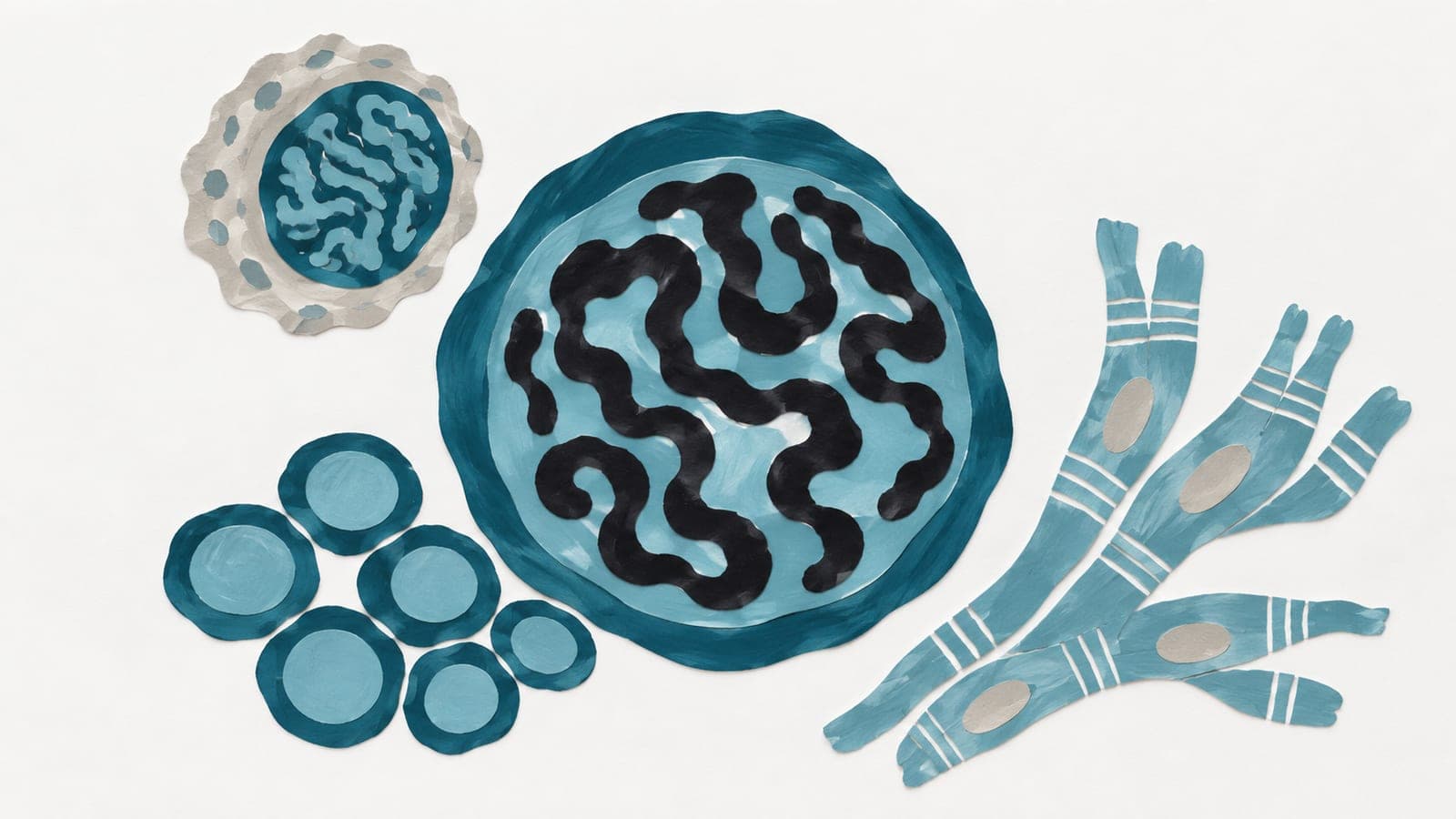
In experiments with human peripheral blood mononuclear cells—a group of blood immune cells—researchers briefly inhibited DNA polymerase alpha, an enzyme that helps copy DNA. Low-dose inhibition enhanced conversion into induced pluripotent stem cells, which can develop into many cell types.
The approach improved cell survival under reprogramming-related stress and preserved genetic stability. Treated cells showed increased access to their packaged DNA and progressed faster toward the stem-cell state. The inhibition changed how cells incorporated DNA-packaging proteins during DNA copying, without slowing copying or altering progression through the cell division cycle. Stem-cell lines produced this way maintained their ability to form different cell types and showed faster development and maturation of heart muscle cells.
Why it matters
For aging research, the work bears on how cell states might be changed while preserving DNA stability, rather than whether reprogramming slows aging.
Caveats
The evidence comes from cells grown in the lab, not people. The preprint has not been peer-reviewed, and its abstract gives no numerical size for the gain in reprogramming efficiency.
The paper
HHMI, Johns Hopkins University
bioRxiv, Oct 28, 2026, Open access, CC BY, Preprint, not peer-reviewed

