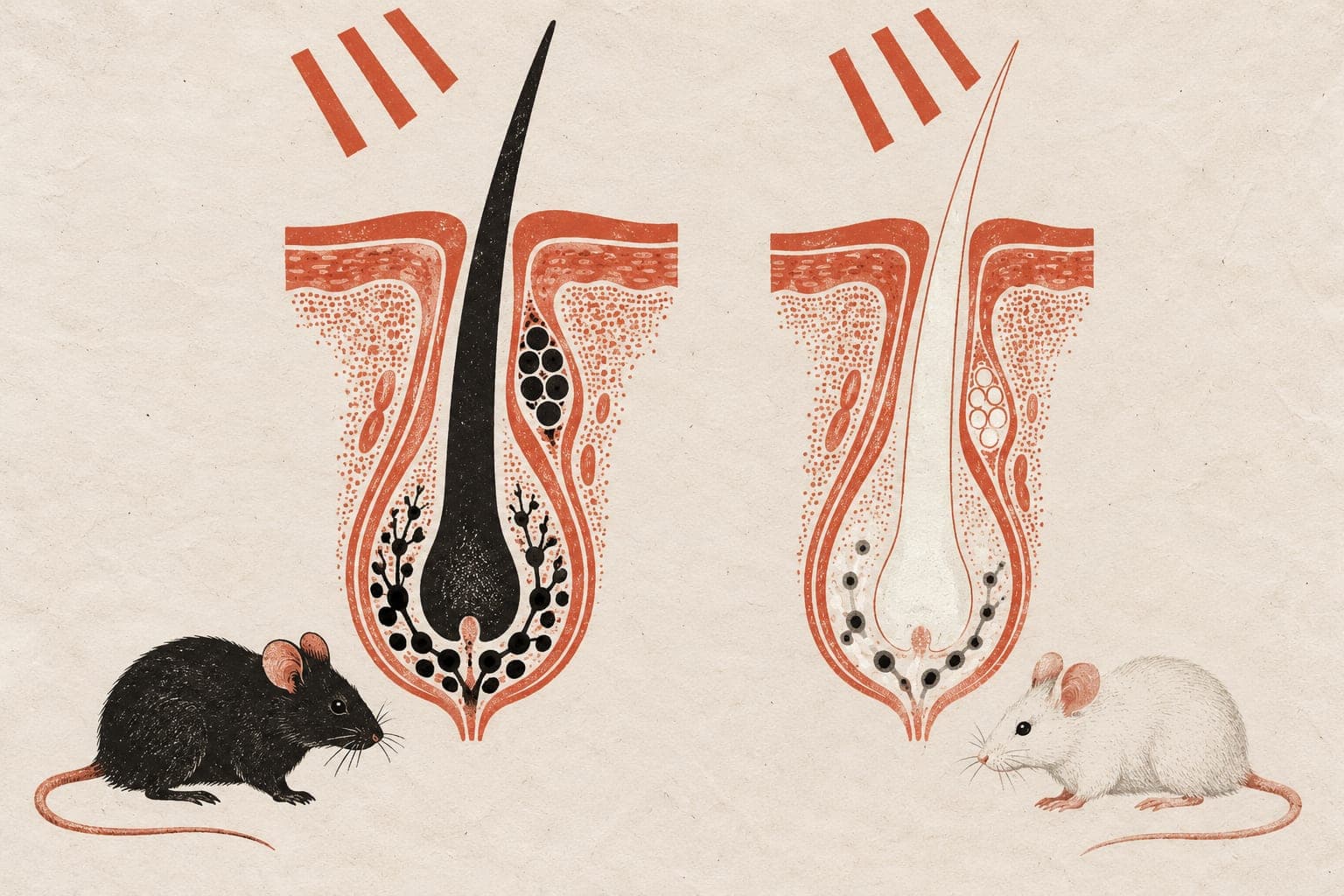
A protein promoted hair cell regeneration in newborn mice
Genetically modified newborn mice produced extra TRIM71, a protein that binds RNA, which promoted spontaneous regrowth of sound-detecting cells in the inner ear.
bioRxiv
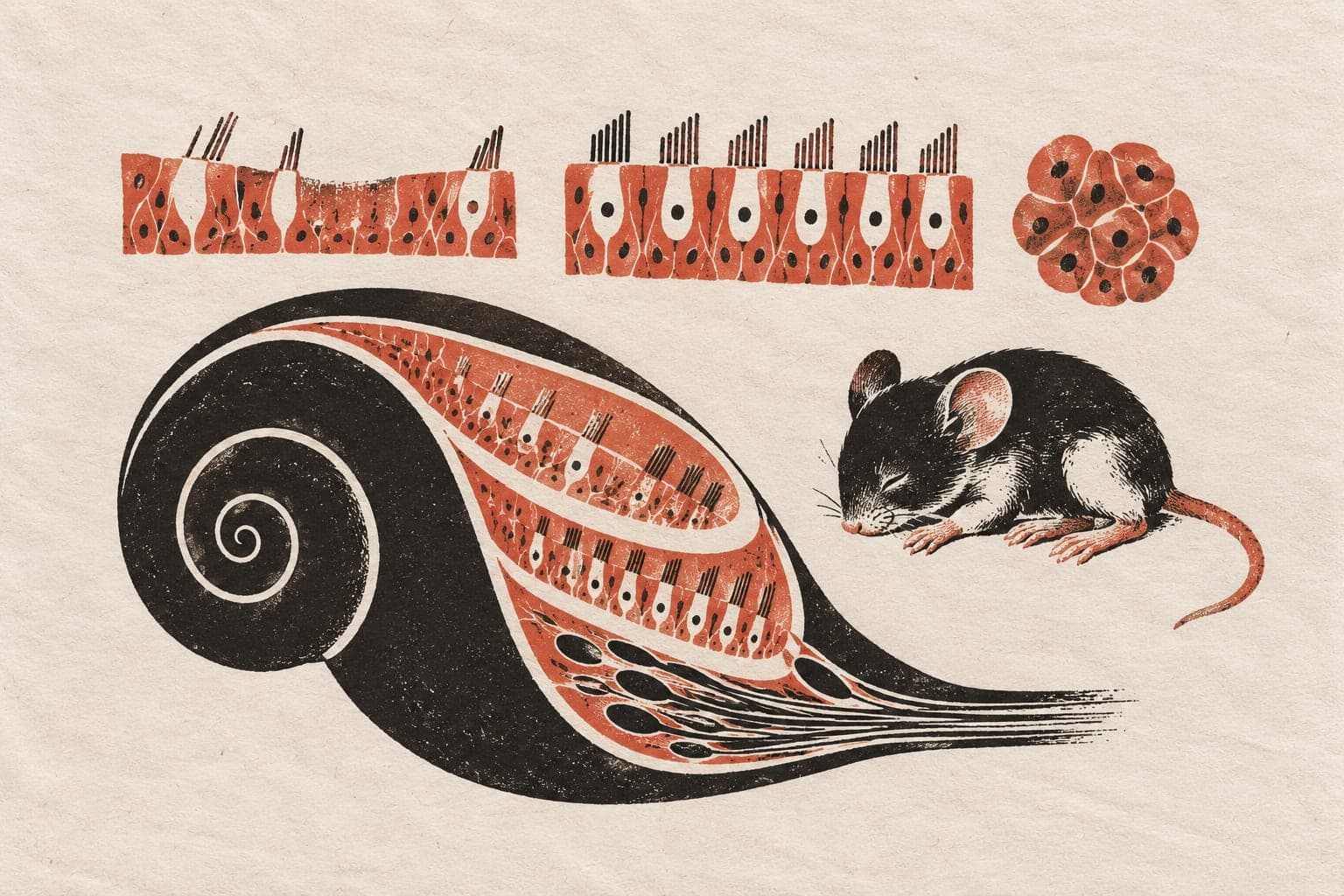
In an experiment in newborn mice, increasing TRIM71, a protein that binds RNA, promoted spontaneous regeneration of sound-detecting hair cells. These cells sit in the cochlea, the hearing organ of the inner ear. Researchers used genetically modified mice that allowed them to switch on extra production of the protein.
In cochlear organoids, three-dimensional cell models grown in the lab, TRIM71 reprogrammed supporting cells into cells resembling precursors, which can develop into specialised cells. Activating follistatin, another protein, enhanced this reprogramming. Experiments in organoids and tissue grown in the lab showed that SALL4, a protein that regulates gene activity, was required for TRIM71-induced hair cell formation. But extra SALL4 inhibited hair cell formation by keeping reprogrammed supporting cells dividing and unspecialised.
Why it matters
Supporting cells’ limited ability to change roles is a barrier to replacing lost hearing cells. Understanding barriers to tissue regeneration matters for research into maintaining tissue function during aging.
Caveats
Regeneration in newborn mice does not establish that the approach works in adult animals or people. The report is a preprint and has not been peer-reviewed.
The paper
Show 14 more authors
X. Liu, Y. Wang, R. Qiao, Y.-Y. Xuan, Q. Hu, X.-y. Ma, H. Ma, S. Dong, Y. Wang, Y. Zhang, B. Sun, J. Li, W. Kolanus, A. Doetzlhofer,Xi'an Jiaotong University
bioRxiv · 6 Oct 2026 · Preprint, not peer-reviewed