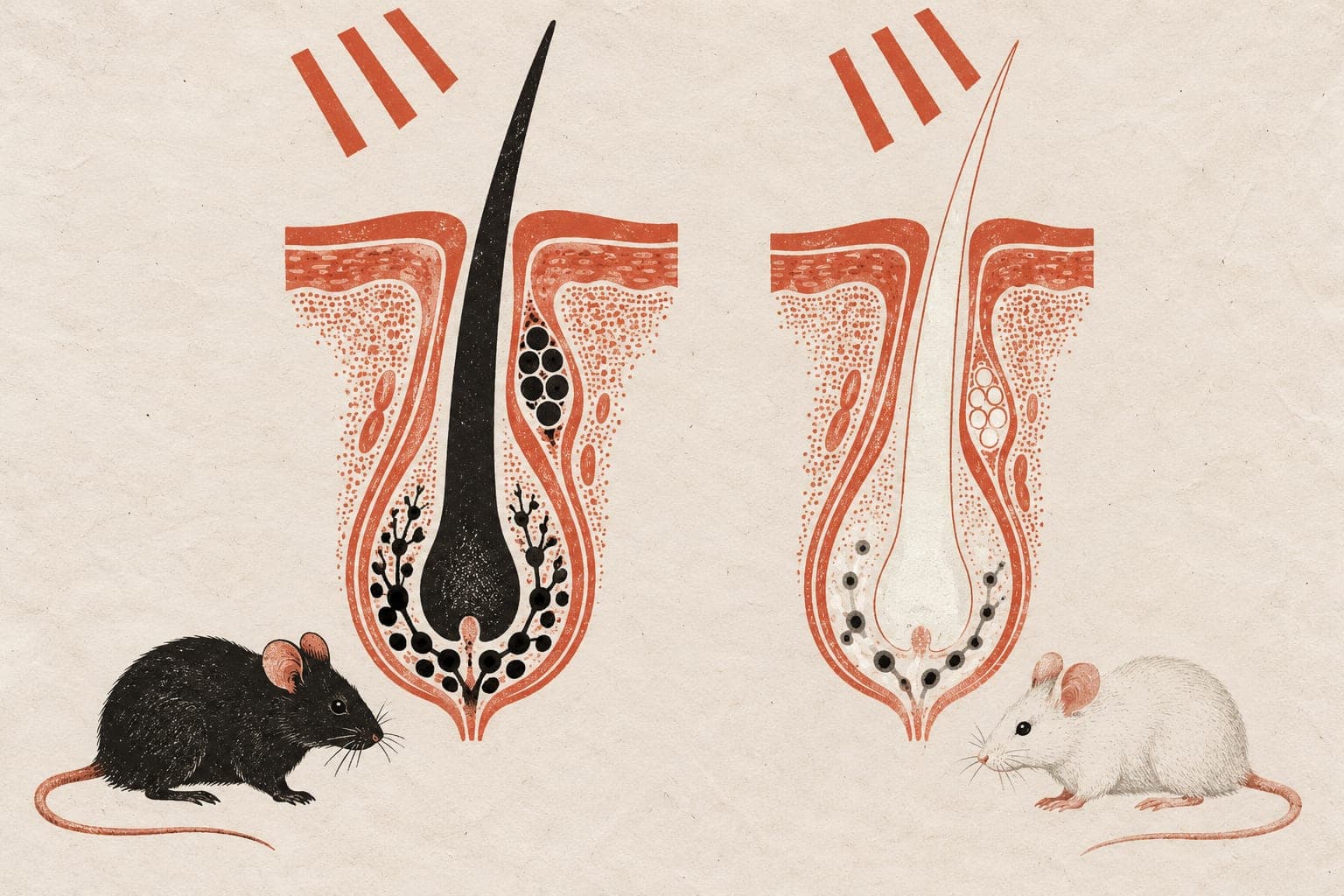
A protein preserved pigment stem cells in irradiated mice
In an experiment, mice lacking the protein developed permanent, dose-dependent hair color loss after radiation; mice with the gene intact did not.

Dose-response
Limit: The experiment measured effects of losing BRN2, not of adding it
Edited by Boris Djordjevic · AgingResearch.News
An experiment in mice tested the role of BRN2, a protein, in preserving stem cells that supply pigment-producing cells in hair follicles. Mice lacking the Brn2 gene retained these stem cells and normal pigmentation for up to 95 weeks.
After ionizing radiation, however, mice lacking Brn2 rapidly developed permanent hair color loss that depended on the radiation dose. This loss was associated with the disappearance of detectable pigment stem cells and mature pigment-producing cells. Mice with an intact gene did not show these radiation-related changes. The results indicated that BRN2 promoted stem cell regeneration by limiting their development into pigment-producing cells under stress.
Why it matters
Adult stem cells maintain tissues, making their ability to withstand stress relevant to questions about tissue maintenance during aging.
Caveats
The radiation findings came from mice lacking a gene, not a treatment study in people. This preprint has not been peer-reviewed.
- POU3F2
- Stem cell differentiation
- Stem cell maintenance
- Hair depigmentation
- Differentiated melanocyte abundance
- Mice
The paper
BRN2 preserves the melanocyte lineage following ionizing radiation
Institut Curie
bioRxiv, Oct 22, 2026, Open access, CC BY-NC-ND, Preprint, not peer-reviewed