Mouse egg cells make room before dividing unequally
Live imaging experiments in mouse egg cells revealed a local membrane collapse that created space before an unequal cell division needed for maturation.
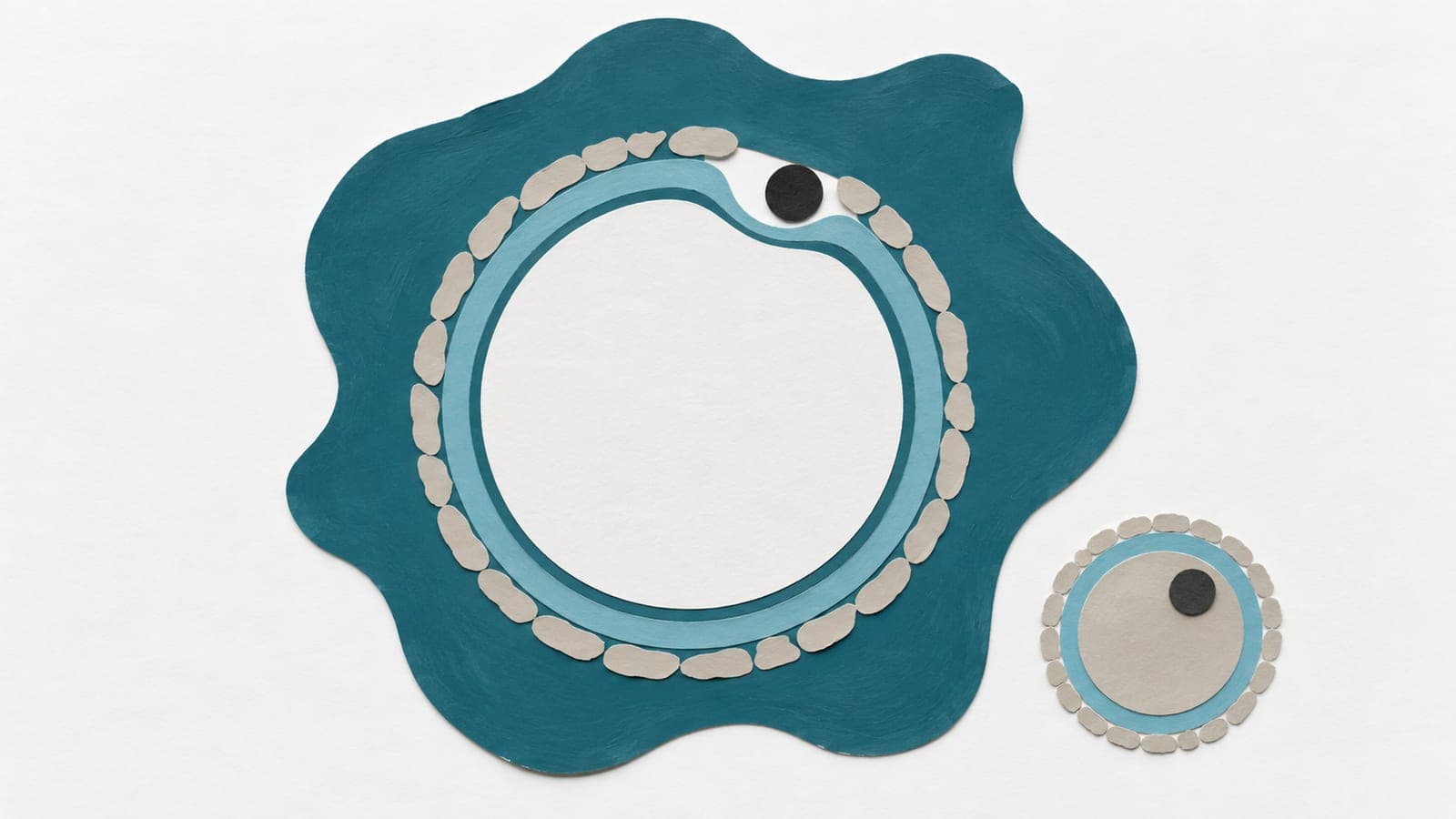
In experiments on mouse oocytes, or developing egg cells, researchers used live imaging to watch the cell membrane during maturation. Most of the surface stayed relatively stable. But one region collapsed and pulled away from the egg cell’s surrounding coat, creating a space before division. Temporary comb-like projections appeared there, then collapsed to leave an open cavity. The cell later shed its first polar body, a small cell produced during this unequal division.
The researchers found that ERK2, a signalling protein, modified ZO-1, a supporting protein beneath the membrane. This promoted ZO-1’s removal from that region. Blocking the signalling pathway prevented this removal and space formation, and impaired polar-body release. Activating the pathway restored these events in aged mouse egg cells.
Why it matters
The experiments in aged egg cells suggest that the signals controlling preparation for division may be relevant to reproductive aging.
Caveats
These mouse egg-cell experiments do not establish effects on fertility in animals or people. The paper is a preprint and has not been peer-reviewed.
The paper
Live imaging reveals oocyte membrane pre-remodeling forming permissive space for asymmetric division
China Agriculture University
bioRxiv, 16 Oct 2026, Open access, Preprint, not peer-reviewed