Cell multiplication enabled a repair-ready state in salamander hearts
Experiments in Pleurodeles waltl salamanders linked multiplication of heart-surface cells to the specialised cell state needed for regeneration after injury.
bioRxiv
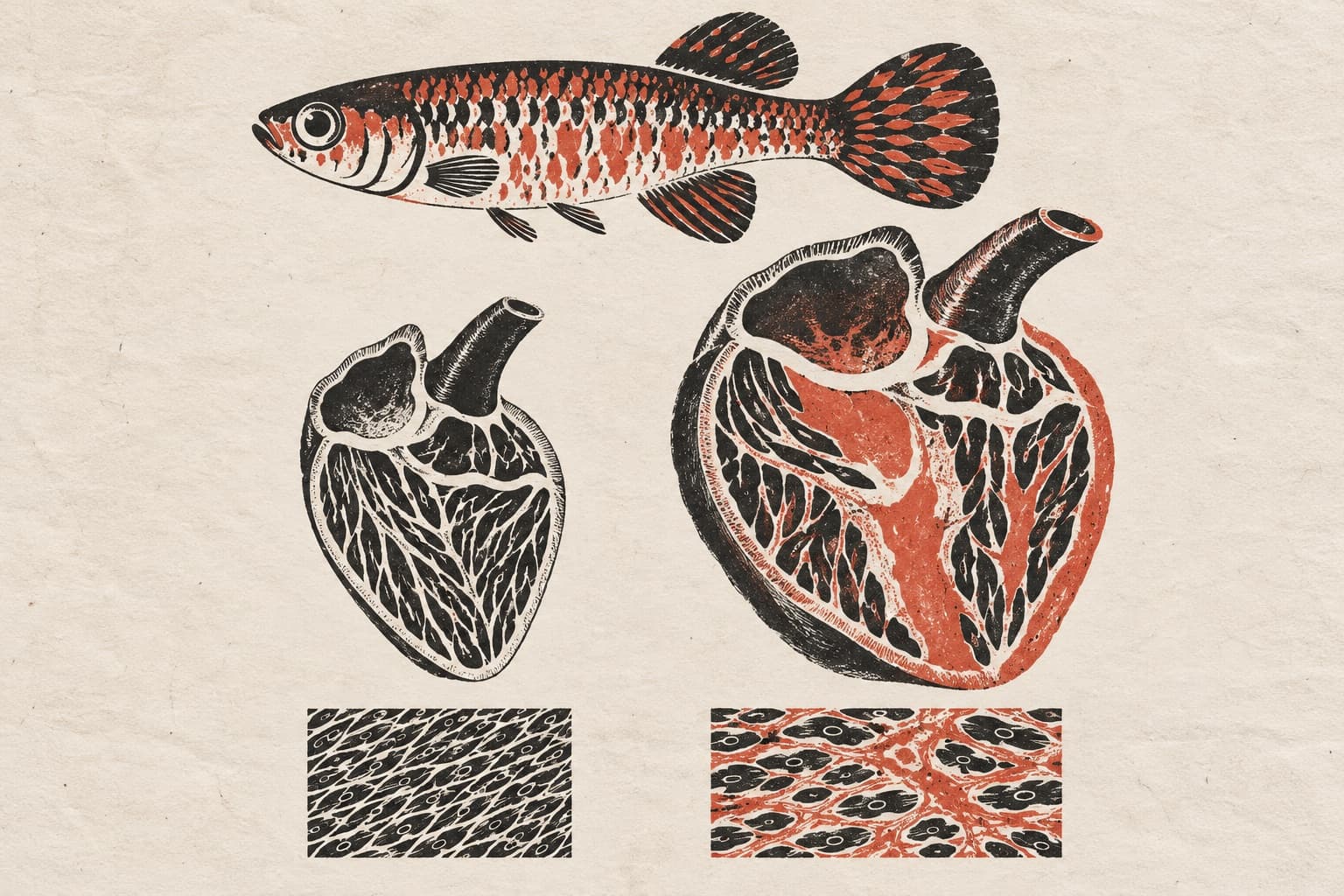
In experiments in Pleurodeles waltl salamanders, researchers used multicolour labels to track cells in the epicardium, the heart’s outer cell layer. After injury, these cells briefly multiplied before their descendants accumulated at the injury site.
The team depleted certain claudins, proteins in junctions that seal neighbouring cells together, while leaving those junctions otherwise intact. This altered the layer’s organisation and mechanical state, impaired cell multiplication and reduced cells’ ability to detach. Their descendants then failed to activate a regeneration-related pattern of gene activity or complete the transition into migrating cells. These migrating cells were needed to shape material between cells that supported outward extensions from heart-muscle cells at the injury site. The findings indicated that activation alone was insufficient for regeneration.
Why it matters
Heart regeneration is relevant to how tissues recover from damage as bodies age. This work addressed how cells acquire the capacity to contribute to that process.
Caveats
The results concern injury responses in salamanders, not aging or human heart repair. The paper is a preprint and has not been peer-reviewed.
The paper
Claudin-dependent clonal expansion couples epicardial activation to regenerative fate acquisition
Show 8 more authors
Christopher Yen, Sabrina F. Syamsul, Lea M. Vettermann, Delfina Perez, Alberto Sebastián Ceccarelli, Linda Renata Micali, Zeyu Yao, Osvaldo Chara,Karolinska Institutet
bioRxiv · 2 Oct 2026 · CC BY-NC-ND · Preprint, not peer-reviewed