Mitochondrial NAD+ import gates neuronal resilience to active SARM1
Abstract
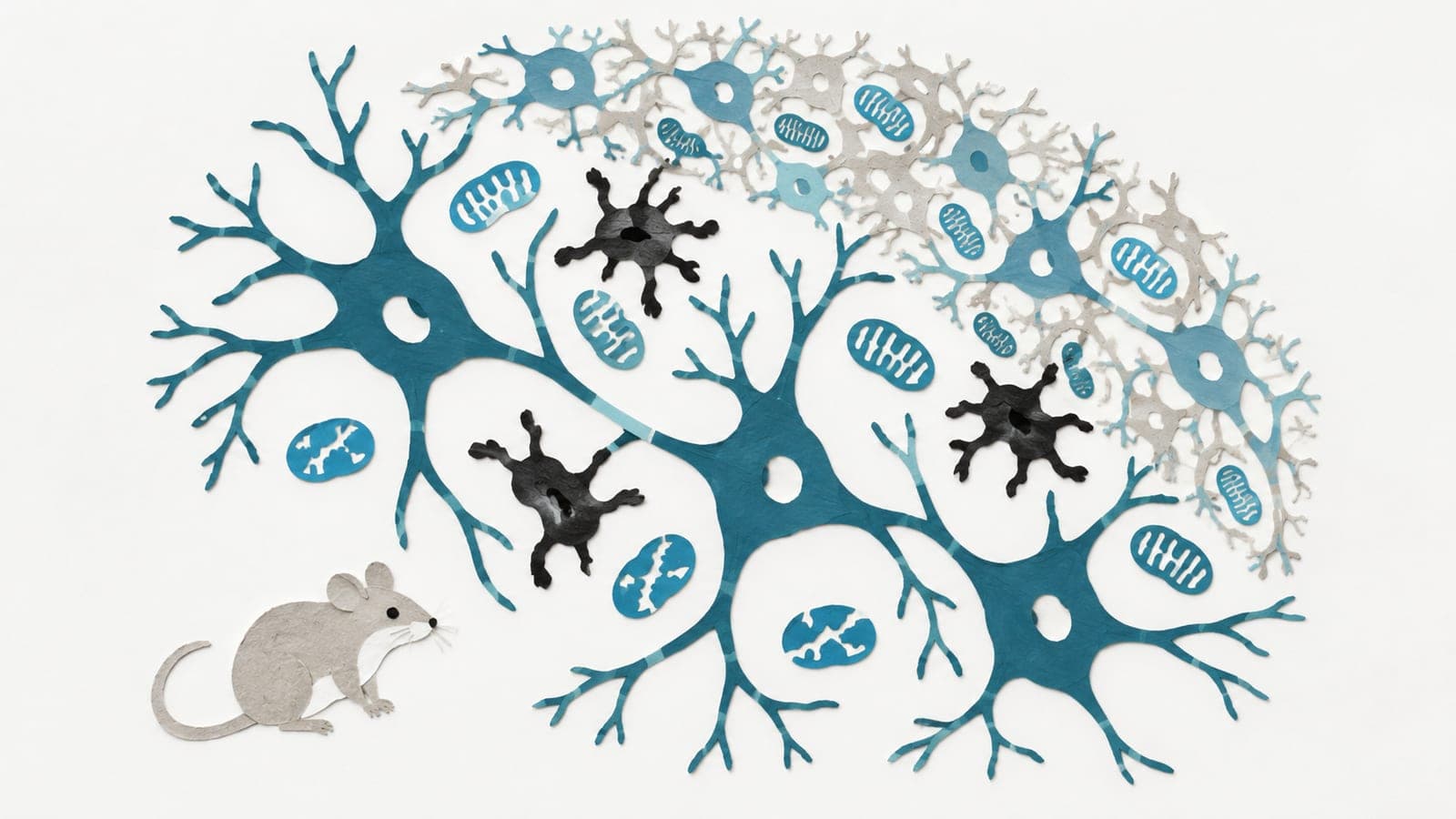
SARM1 is an inducible NADase that executes pathological axon degeneration, but how NAD+ destruction causes neuronal failure remains unclear. Because SARM1 is predicted to act outside the mitochondrial matrix, cytosolic NAD+ loss has been viewed as the critical lethal lesion. We show that SARM1 activation rapidly depletes cytosolic and mitochondrial NAD+ and collapses ATP in both compartments, revealing early, coupled metabolic failure. Enhancing mitochondrial NAD+ import through SLC25A51, the mitochondrial NAD+ transporter, preserves mitochondrial NAD+, maintains mitochondrial function, and delays axon degeneration and neuronal death despite ongoing SARM1 activity. Unexpectedly, SLC25A51 restores cytosolic NAD+-dependent metabolism, reversing a glycolytic block and increasing NAD+ synthesis during stress. Glycolytic inhibition attenuates protection, identifying cytosolic metabolic recovery as an important component of neuronal resilience. AAV-SLC25A51 improves function in a chronic SARM1-dependent neuropathy model. Thus, mitochondrial NAD+ import gates SARM1-driven degeneration by limiting coupled mitochondrial-cytosolic metabolic failure, presenting a downstream intervention point for axon preservation.
The paper
Washington University in St. Louis
bioRxiv, 11 Oct 2026, Open access, Preprint, not peer-reviewed