Age-associated immune dysfunction

Papers on age-associated immune dysfunction

18 papers2 new in 30 days

Tuesday, November 3

Research Square

Inhibiting brain neurons restored immune cell production in aged mice

In experiments in aged mice, inhibiting specific brain neurons or deleting a gene involved in inflammatory signaling improved the response to a flu vaccine.In experiments in aged mice, inhibiting specific brain neurons or deleting a gene involved in inflammatory signaling improved the response to a flu vaccine.

Bone marrow with sparse versus abundant immune cells sits beneath mice and branching neurons, with inflammation clustered above the sparse region.
Preprint: mouse studyBlood and immune system

Sunday, October 18

International Journal of Pharmaceutics

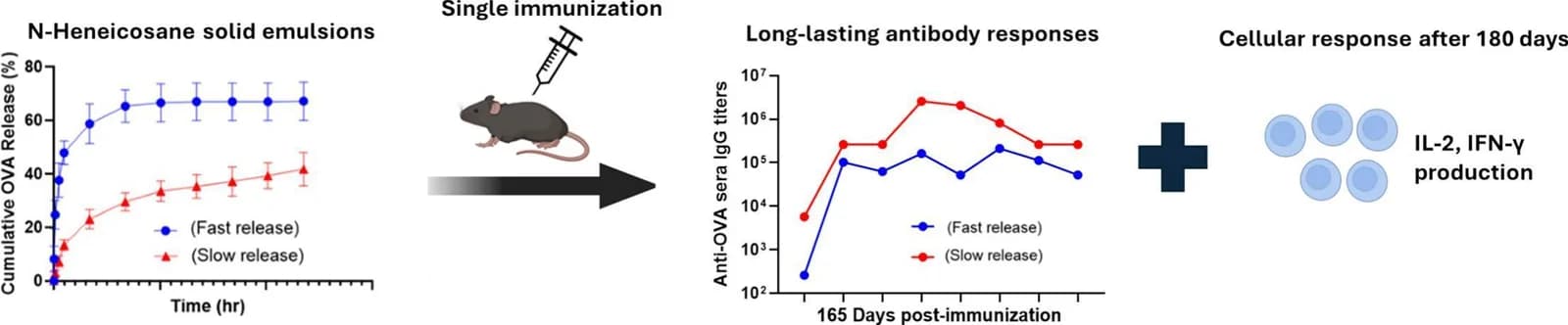
Single vaccine dose produced lasting immune responses in mice

Antibody responses persisted for 165 days after one dose, while immune cells from the spleen showed responses at 180 days.Antibody responses persisted for 165 days after one dose, while immune cells from the spleen showed responses at 180 days.

Mouse study · 5 miceBlood and immune system

Thursday, September 24

Thursday, August 20

Tuesday, July 28

Cell Press Blue

Older human lymph nodes show signs of immune cell dysfunction

An observational study of lymph nodes from 51 donors aged 18–86 mapped age-linked changes in immune cells within regions involved in antibody responses.An observational study of lymph nodes from 51 donors aged 18–86 mapped age-linked changes in immune cells within regions involved in antibody responses.

Cross-sectional · 51 peopleBlood and immune system

Friday, June 19

Tuesday, March 10

Tuesday, July 15

Friday, June 6

Wednesday, February 23

Saturday, August 28

Friday, August 13

Monday, November 30

Thursday, April 18

Friday, August 17

Thursday, May 3

Thursday, August 18

Tuesday, June 1