Method measures metabolic rates in mouse liver and muscle
In mouse experiments, a low-dose tracer method measured carbon flow through multiple chemical pathways and detected changes that standard labeling analysis missed.
Our read
Mechanisms- Studied:
- Preprint: experiments in mice
Editor of record: Boris Djordjevic · AgingResearch.News
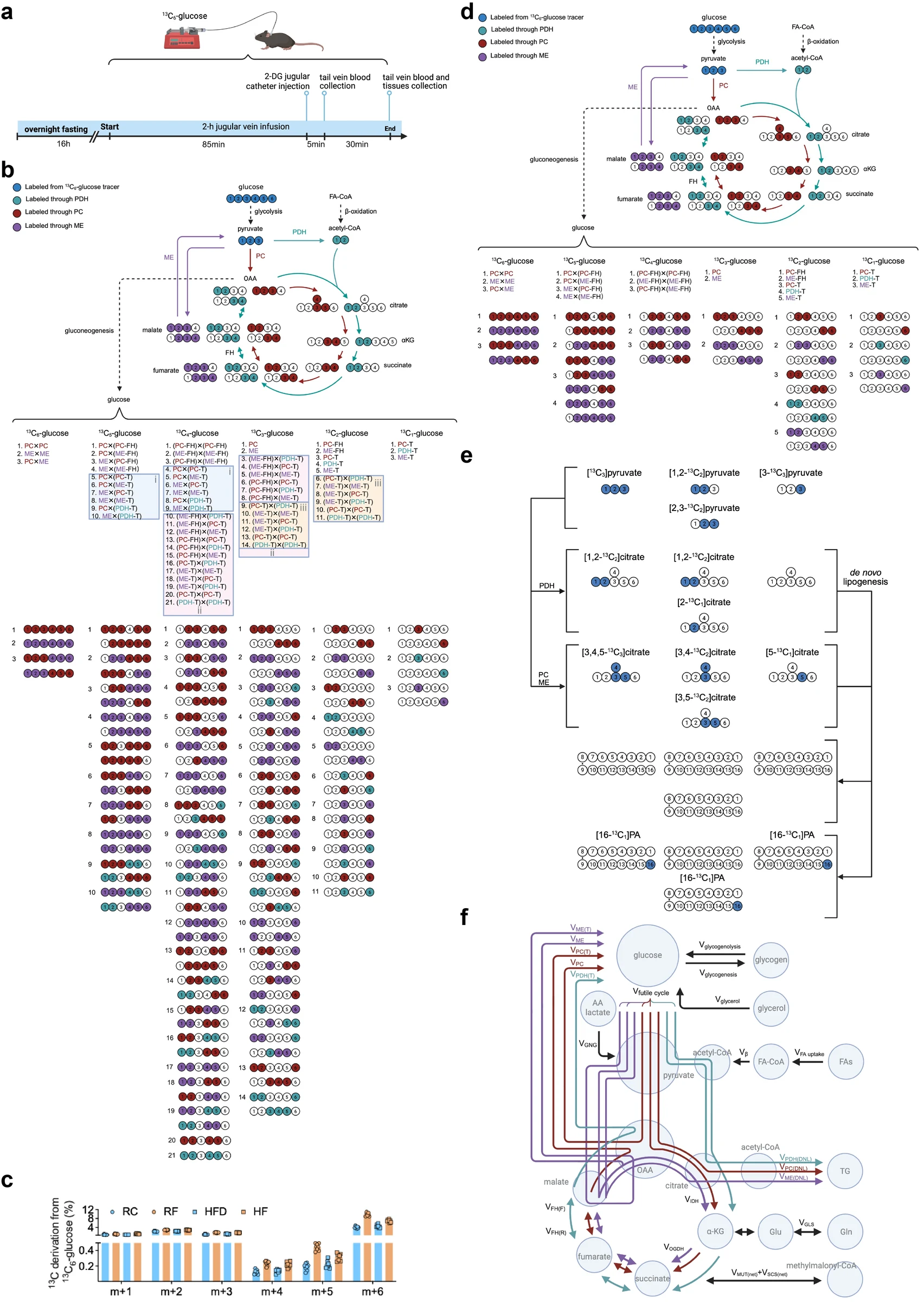
Mouse liver and skeletal muscle were studied in animal experiments using a tracing method that measured how quickly carbon moved through connected chemical reactions in both tissues at once. The researchers infused a low dose of glucose labeled with carbon-13, a trackable form of carbon, under steady metabolic conditions. They also used a second tracer to measure glucose uptake by skeletal muscle.
Their calculations corrected for dilution of the label and distinguished competing routes for carbon. They applied the method to metabolic changes triggered by fasting, a high-fat diet and two drugs, metformin and Aldometanib. The method detected small changes in metabolic rates that standard analysis of labeling patterns missed. The authors presented it as a tool for studying metabolism across organs and evaluating drugs that target metabolism.
Why it matters
Measuring carbon use across liver and muscle could help researchers investigate how metabolism changes with age and evaluate drugs that target it.
Caveats
The experiments tested the method in mouse liver and skeletal muscle under steady metabolic conditions, not in people. The work is a preprint and has not been peer-reviewed.
Where the evidence stands
Fasting
- 121 independent labs in 34 countries
- 20 findings against
- Funders: National Institutes of Health and others
- 50 of 409 findings with company ties
High-fat diet
- 175 independent labs in 41 countries
- 22 findings against
- Funders: National Institutes of Health and others
- 11 of 530 findings with company ties
The paper
Henan University
Research Square, Nov 5, 2026, Open access, Preprint, not yet peer-reviewed
Comments
Be the first to comment.