The effects of Arf4 gene knockdown on Alzheimer's amyloid β deposition: Possible role in cognitive resilience
Abstract
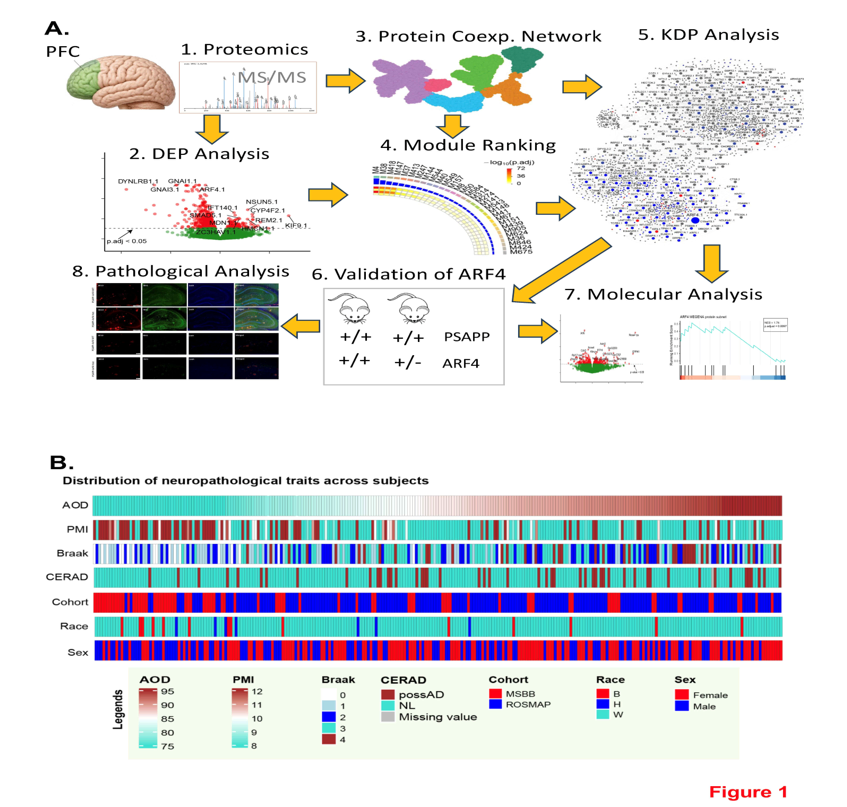
Background Studying the factors involved in cellular and cognitive resilience is a crucial step toward designing preventive and targeted therapeutic approaches for Alzheimer’s disease (AD). Methods Systematic analysis of the proteomic landscape in the advanced aging populations identified ADP ribosylation factor 4 (ARF4) as one of the key driver genes associated with resilience among the oldest-old (OO) non-demented individuals. To assess the effects of Arf4 gene knockdown in AD animal models, we generated APP KM670/671NL x PSEN1 Δexon9 (PSAPP)/ Arf4 +/− mice. Results Protein signatures and protein coexpression network modules of the oldest-old (OO) non-demented individuals were identified. Integrative protein network analysis further revealed ARF4 as a top protein driver of OO. Mouse experiments showed that Arf4 knockdown was associated with increased amyloid plaque burden and enhanced microglial activity. The consequence of Arf4 knockdown was an alteration in amyloid precursor protein (APP) localization, which led to variations in mature APP levels. Arf4 knockdown further led to transcriptomic alterations in the mouse brain; most pronounced in pathways associated with immune regulation and microglial homeostasis. Conclusion Based on the exacerbated AD pathological features and transcriptomic alterations observed in Arf4 knockdown animals, ARF4 appears to play a critical role in AD resilience and may represent a potential prognostic factor worthy of further investigation.
The paper
Icahn School of Medicine at Mount Sinai
Research Square, 14 Oct 2026, Open access, Preprint, not peer-reviewed