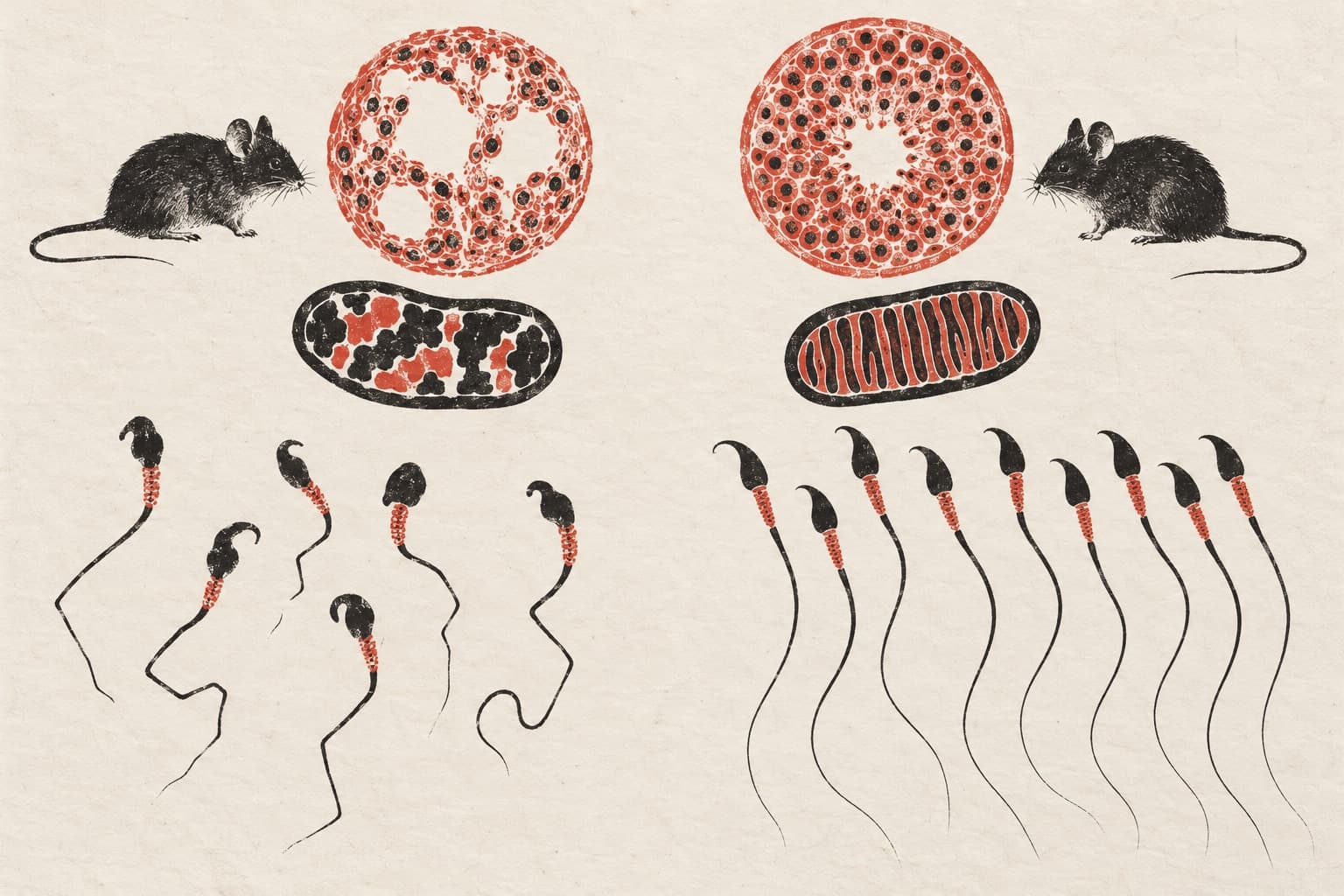
Engineered cardiac transcription factor restores vision and reduces frailty in aging mice
A genome-scale screen in retinal cells identified NKX2-5 variants that conferred oxidative resilience and improved physical function without detectable toxicity.
bioRxiv
In a new preprint, researchers tested retinal pigment epithelium cells and aging mice to discover genes that confer resistance to oxidative damage. Using an unbiased, genome-scale open reading frame screen, the team identified nine protective factors, including antioxidant genes and a regulator of epithelial-to-mesenchymal transition. Three candidates reduced transcriptomic age, notably the cardiac transcription factor NKX2-5. Domain dissection revealed that its homeodomain was dispensable, enabling the development of an engineered variant, NKX2-5ΔHD, which retained protective activity with no detectable toxicity over 14 months. Subretinal delivery of NKX2-5ΔHD restored electrophysiological and visual function in middle-aged mice, while systemic administration improved grip strength and lowered frailty scores in late-aged mice.
Why it matters
The findings show that unbiased gain-of-function screening can identify resilience factors from non-retinal lineages that mitigate oxidative damage and tissue decline during aging.
Caveats
The study was conducted exclusively in cell cultures and mice, and the results appear in a preprint that has not yet completed peer review.
The paper
Show 23 more authors
艾家和, Yi Hua Chen-Neumann, Yan Hu, Alexander Tyshkovskiy, Qiannuo Lou, Tianwei Dong, Louisa Grauvogel, Zhaoyi Chen, James C. Cameron, Ximeng Li, 新多朗 白濱, Michael Bligh, Shurong Hou, Jessica Chin, Mauro W. Costa, Jiwon Ryu, Ruchi Sharma, Matthias Mann, Kapil Bharti, Catherine Bowes Rickman, Vadim N. Gladyshev, Meredith S. Gregory-Ksander, Bruce R. Ksander,Whitehead Institute for Biomedical Research
bioRxiv · 30 Sep 2026 · Preprint, not peer-reviewed