Depp1 drives muscle loss under fasting and low oxygen in mice
The study reveals that the protein localizes to mitochondria to regulate autophagy and mitochondrial degradation during nutrient and oxygen limitation.
bioRxiv
In a new preprint, researchers studied mice to determine how low oxygen and nutrient scarcity trigger skeletal muscle loss. The authors found that hypoxia inducible factor (HIF) is necessary and sufficient to drive hypoxia-induced muscle atrophy. Using RNA sequencing of skeletal muscle from starved or hypoxic mice, they identified the gene Depp1. FoxO1 induced Depp1 expression during starvation, while HIF activation drove its expression during oxygen deprivation.
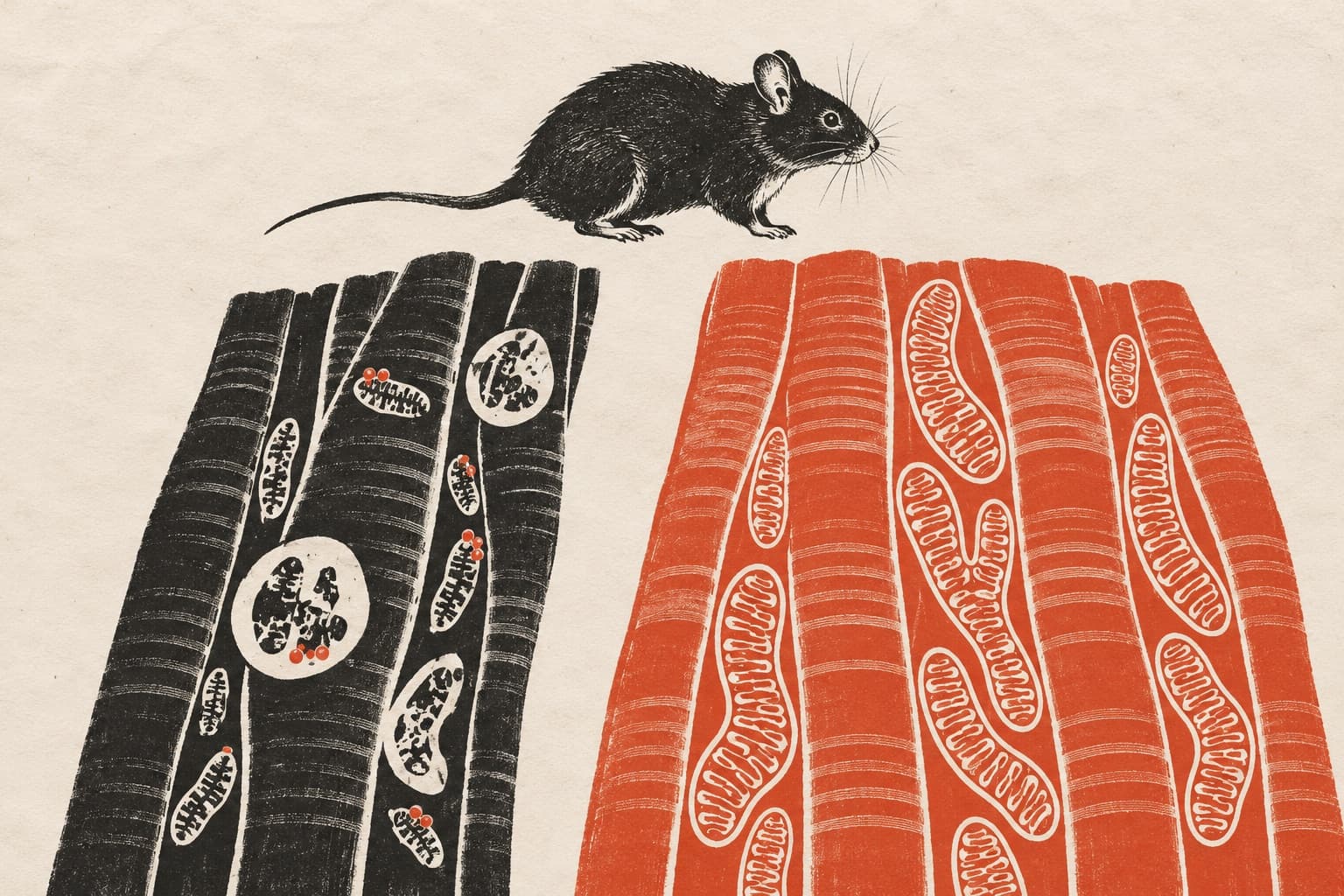
Whole-body deletion of Depp1 protected mice from muscle wasting during fasting and hypoxia. Conversely, overexpressing Depp1 directly caused skeletal muscle atrophy. Mechanistically, Depp1 localized to mitochondria and was required to activate autophagy and mitochondrial degradation in muscle tissue. The findings establish Depp1 as a shared atrogene acting downstream of both FoxO and HIF to trigger muscle breakdown.
Why it matters
Muscle loss frequently accompanies age-related metabolic stress and declining physical function. Identifying Depp1 reveals a shared mechanism through which nutrient and oxygen deprivation degrade muscle mitochondria, highlighting a potential pathway to target in muscle-wasting conditions.
Caveats
The findings are derived entirely from mouse experiments and have not yet undergone peer review as a preprint.
The paper
DEPP1 connects nutrient and oxygen availability to maintenance of muscle mass
Harvard University · Broad Institute
bioRxiv · 27 Sep 2026 · Preprint, not peer-reviewed