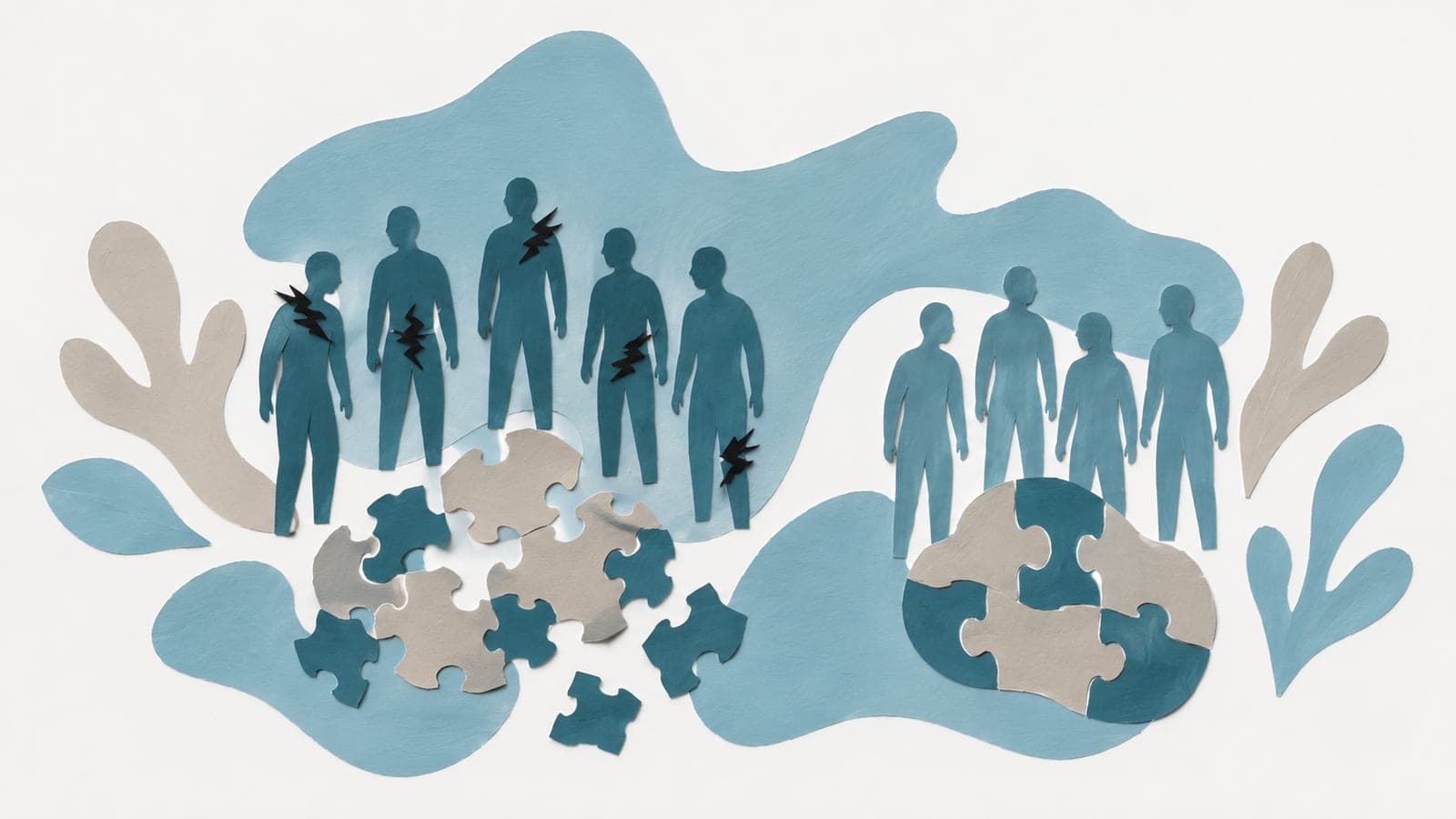
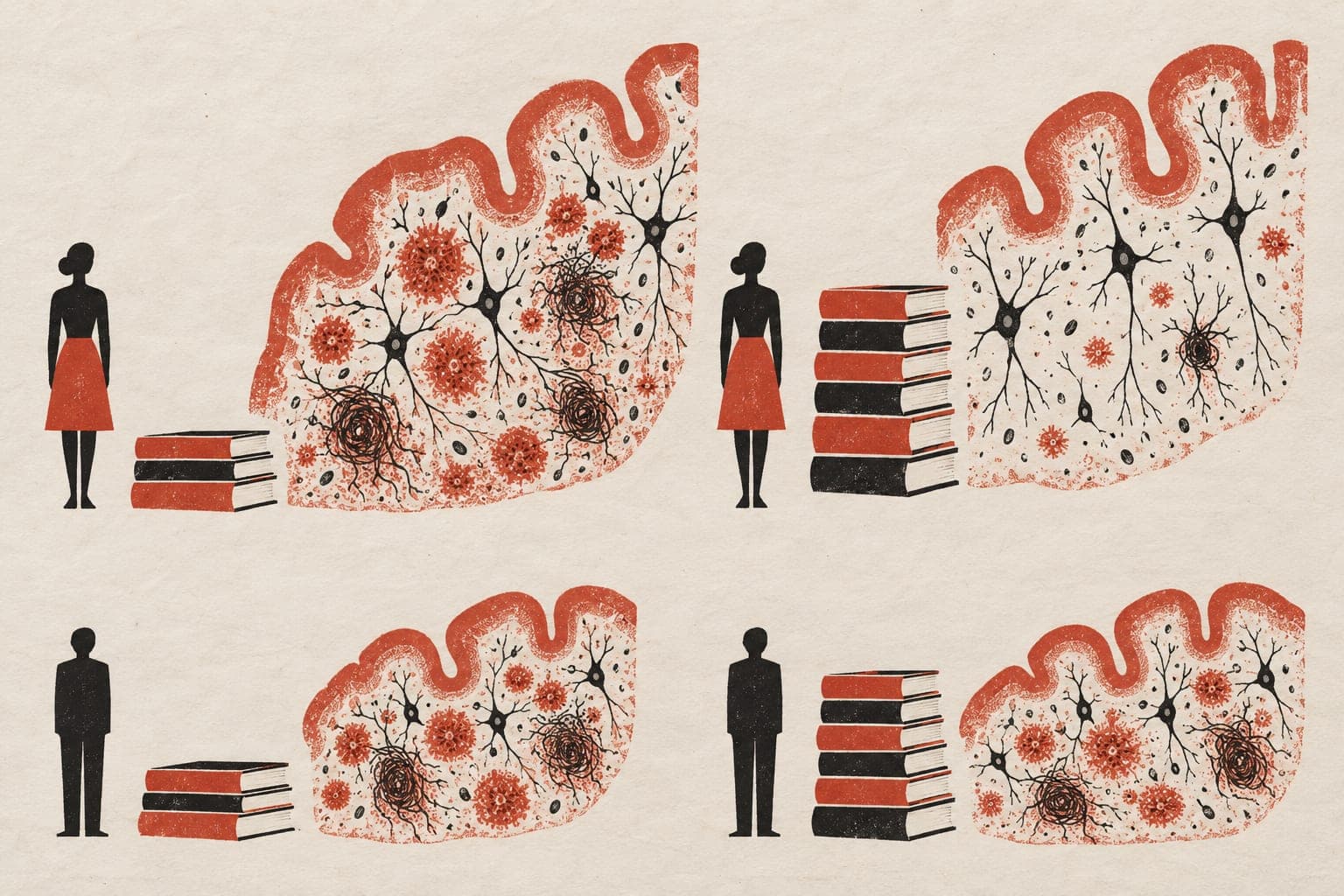
Partner-inflicted brain injury may cognitively age survivors by over a decade
Abstract
Structured Abstract Introduction More than a third of women in the United States are estimated to experience abuse by an intimate partner, and blows to the head and strangulation are common in such instances. Yet the cognitive consequences of partner-inflicted brain injuries remain poorly characterized relative to brain injuries from other mechanisms, such as athletics and military service, and study sample sizes have tended to be small. The degree to which these injuries accumulate into measurable cognitive harm, whether the harm of such injuries can be quantified in a meaningful way, and how that harm compares with better-recognized causes of repetitive head injury, has not been established. Rationale We administered ten cognitive tests, scored across sixteen domains, to 207 women with lifetime exposure to physical intimate partner violence, of whom 67% ( n = 139) reported at least one partner-inflicted brain injury. Since standardized scores are difficult to interpret clinically, we also expressed performance as cognitive age, the age at which the typical person in the general population performs equivalently. Finally, we compared women with brain injuries against women with no brain injury history from the same cohort, as this isolates injury from exposure to violence itself, since both groups experienced physical partner violence. Results Women who had sustained any partner-inflicted brain injury performed below the general population mean on 11 of the 16 cognitive abilities measured, from reasoning ( d = 0.32) to reaction time ( d = 0.80), all P ≤ 0.011. Women reporting ten or more injuries demonstrated an overall cognitive function worse than nearly 80% of the general population ( d = 0.82, P < 0.0001). Translating these deficits to cognitive age, women with ten or more brain injuries performed at a cognitive age more than two decades older than the general population on eight domains, the largest gaps being for simple attention (28.1 years, 95% CI [14.9, 41.4]; d = 0.78, P = 0.0002) and reaction time (27.8 years, 95% CI [18.1, 37.4]; d = 1.08, P < 0.0001). On psychomotor speed they also performed over a decade older than women exposed to physical intimate partner violence who had never sustained a brain injury (11.3 years, P = 0.033). After adjustment for eleven covariates, cognitive ability declined as injury count rose in six domains: psychomotor speed, reaction time, processing speed, motor speed, global cognition and verbal memory (partial r = −0.14 to −0.22, all P < 0.05), and 14 of the 16 coefficients were negative (two-sided sign test P = 0.004). We excluded scores flagged as invalid by the cognitive assessment per convention, yet observed that these flags fell disproportionately on the most impaired women, who scored 11 to 13 points lower ( d = 0.60 to 0.84, all P < 0.001) on every domain the assessment did accept as valid. Conclusion Women experiencing partner-inflicted brain injuries demonstrated cognitive aging of over 20 years, and yet, the true cognitive harms of such injury are likely more severe than those reported here. These results are particularly grave because partner-inflicted injuries may compromise the very cognitive capacities women must rely on to leave abusive relationships, care for their children, sustain employment, navigate legal proceedings, and remain safe post-violence. Taken together, these findings underscore partner-inflicted brain injury as a major, under-recognized source of cognitive harm, potentially affecting more women than brain injury in professional football or the military while lacking comparable clinical recognition and care. Summary Abstract More than a third of women in the United States are estimated to experience abuse from an intimate partner, in which blows to the head, strangulation, and therefore brain injuries are common. Among 207 survivors of such physical violence, two-thirds reported a partner-inflicted brain injury. These women performed substantially worse than the general population across most cognitive measures, including memory and reaction time. Cognitive performance declined as injury count increased. Translated into cognitive age, survivors with the most partner-inflicted brain injuries performed over two decades older than the general population, and a decade older than survivors with no history of brain injury. Importantly, the cognitive assessment discards scores it judges unreliable, yet these came primarily from the most impaired women, suggesting that the true harm is likely greater than reported here. Such cognitive deficits may limit these women’s capacity to live to their potential, including keeping safe from abuse. These findings underscore partner-inflicted brain injury as a major, under-recognized source of cognitive harm, potentially affecting more women than brain injury in professional football or the military while lacking comparable clinical recognition and care.
The paper
University of Oxford; Harvard University
medRxiv, 27 Sep 2026, Open access, Preprint, not peer-reviewed