Blood protein test identifies Alzheimer’s-linked gene variant
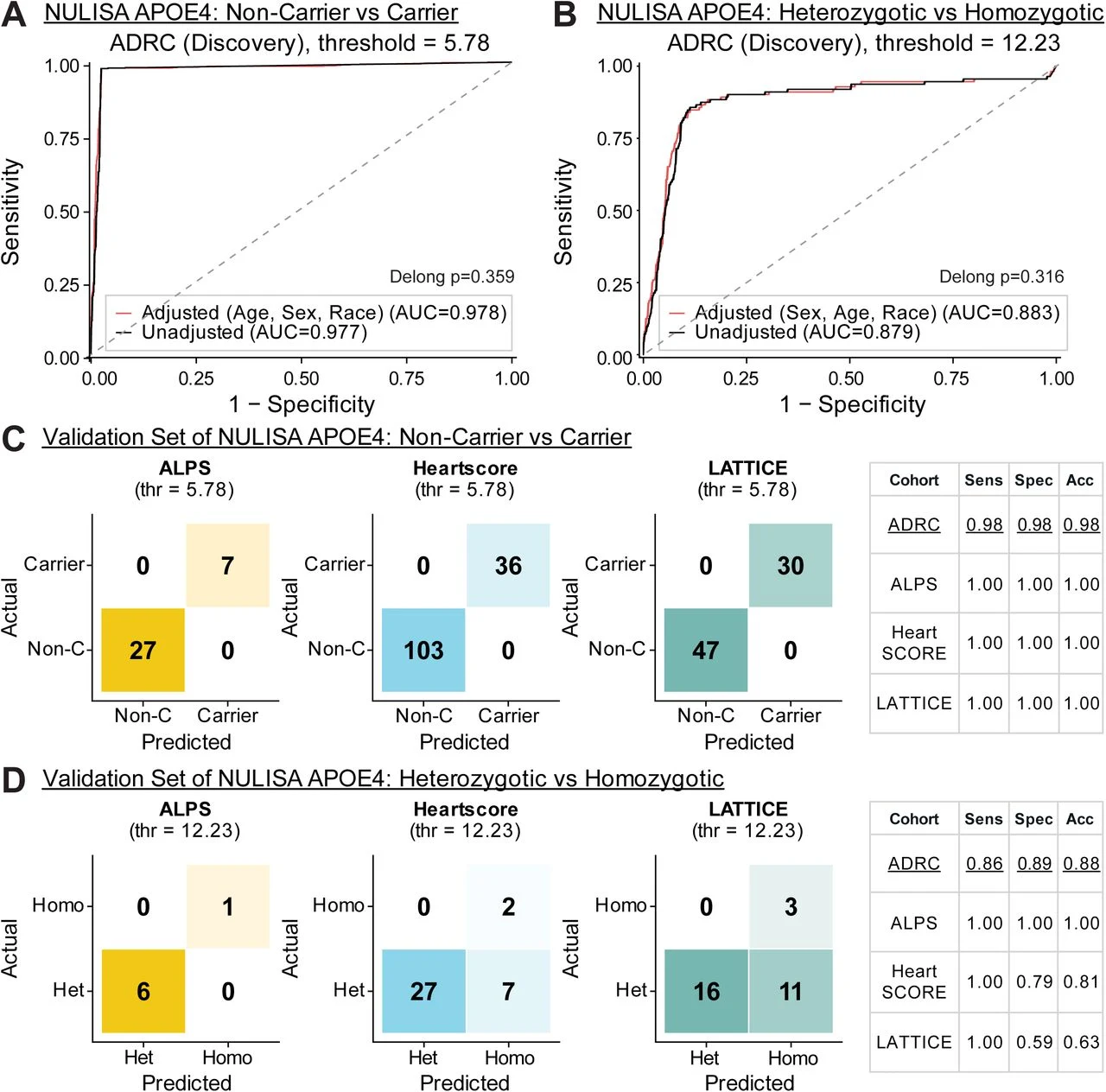
Compared with DNA tests, blood protein measurements scored 0.977 in one cohort and 1.000 in three others for separating variant carriers from non-carriers.
Independent replication
In people from four cohorts, this observational study compared blood levels of APOE4, a form of a fat-carrying protein, with DNA tests for the corresponding Alzheimer’s risk variant. Researchers set blood-test thresholds in one cohort and checked them in the other three.
The scores measure how well a test separates carriers from non-carriers; 1.000 indicates perfect separation. The blood test also distinguished people with one copy of the variant from those with two. Carrier status identified by either method showed similar associations with testing positive for amyloid, a protein linked to Alzheimer’s disease. Both methods also showed similar links to higher dementia-severity ratings and worsening ratings over time.
Why it matters
Alzheimer’s disease is an age-related disorder influenced by genetics. The study addresses whether blood protein measurements could offer a scalable alternative to DNA testing for assessing inherited risk and prognosis.
Caveats
This observational study assessed variant classification and disease-related associations, not whether using the test improves care. The findings are from a preprint that has not been peer-reviewed.
From the paper
- Participants
A total of 1,658 participants were included from four cohorts: ADRC (n=1,408), ALPS (n=34), HeartSCORE (n=139) and LATTICE (n=77) (, Supplementary Table S4).
- Result
In ADRC, among 739 participants with complete covariate and Aβ data, genotype-defined APOE ε4 carriers were associated with higher odds of Aβ positivity (odds ratio [OR]=4.19; 95% CI: 2.95-6.01), after adjustment for age, sex, and race.
Results, Plasma APOE4 proteotype shows genotype-like associations with Aβ positivity
- Limitation
Sample sizes for APOE ε4 homozygotes were small in external cohorts, particularly ALPS and HeartSCORE, limiting the precision and stability of heterozygous-versus-homozygous classification estimates.
Quoted word for word from the full text on medRxiv.
The paper
Clinical utility of plasma APOE proteotyping for Alzheimer's disease risk and prognosis
University of Pittsburgh
medRxiv, 11 Oct 2026, Open access, CC BY, Preprint, not peer-reviewed