Dementia study builds research base in northeastern Nigeria
An observational study screened 1,044 community residents and enrolled 102 hospital participants aged 55 or older to support research on cognitive aging.
Our read
AI & data- Studied:
- Preprint: cohort study of 1,044 adults aged 55 years or older
- What changed:
- Among screened community older adults, 36.3% screened positive for cognitive concern
- The catch:
- Cognitive screening scores were influenced by low education rather than cognitive impairment
- Why it’s aging research:
- It measures an outcome that worsens with age.
Editor of record: Boris Djordjevic · AgingResearch.News
In northeastern Nigeria, an observational cohort study screened 1,044 community residents and enrolled 102 hospital participants, all aged 55 or older. Community participants averaged 69.4 years of age, and 56.4% were women. Hospital participants averaged 73.5 years, and 57.8% were men. Recruitment ran from August 2025 through February 2026.
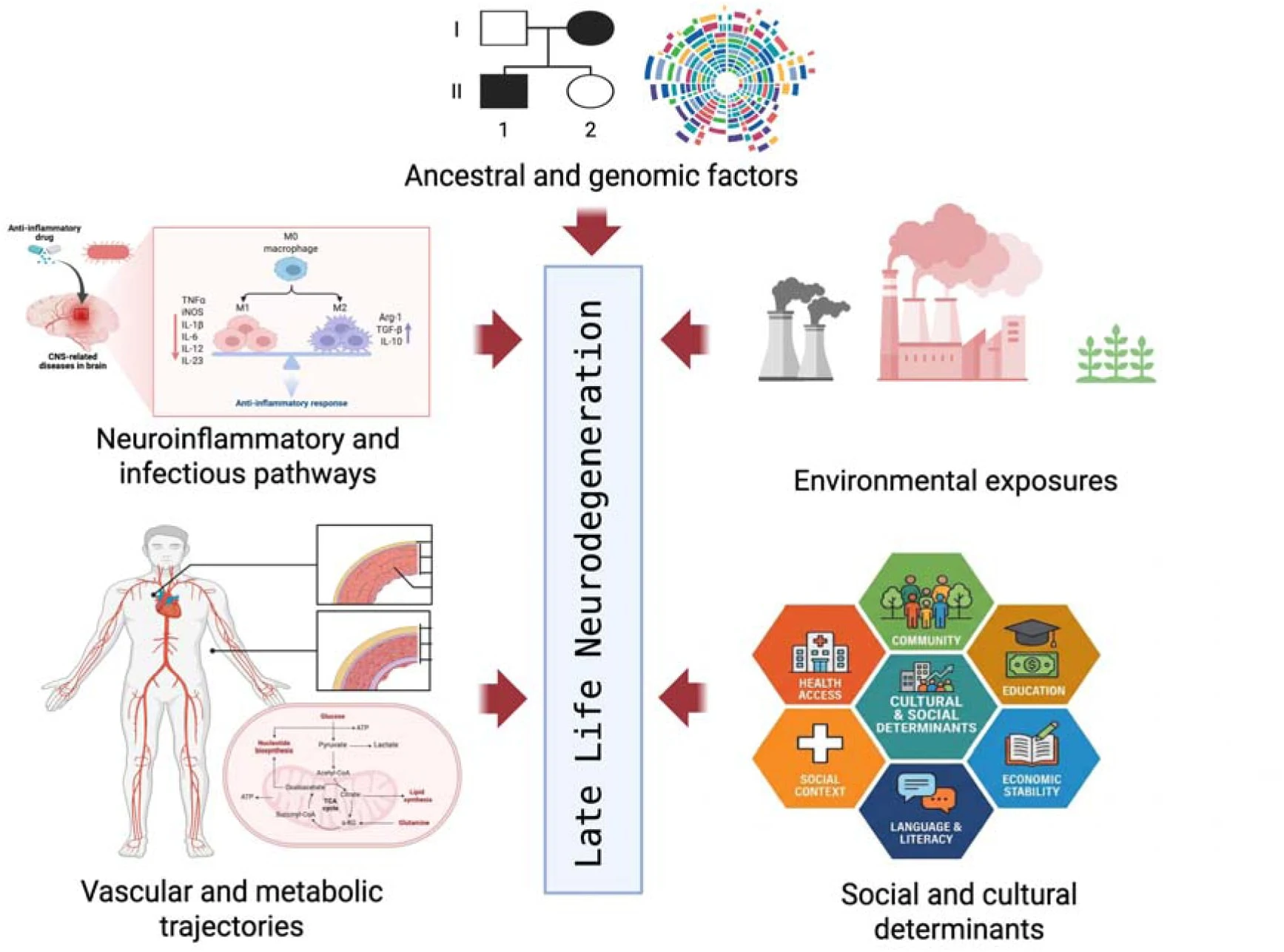
In the community group, 379 people (36.3%) screened positive for cognitive concern using word recall and clock drawing. Hospital participants included people with dementia or mild cognitive impairment, a decline in memory or thinking. Researchers assessed cognition, daily functioning, health and environmental exposures. They collected blood from 809 community participants and all 102 hospital participants. The project combines baseline assessments with annual follow-up. Planned analyses include gut microbes, retinal images and brain scans to investigate markers associated with healthy aging and cognitive outcomes.
Why it matters
Dementia research in sub-Saharan Africa remains limited despite population aging. The authors aim to use these resources to investigate population-specific risks and resilience in cognitive aging.
Caveats
These baseline screening results do not establish dementia diagnoses or links between exposures and later decline. The preprint has not been peer-reviewed, and its community sample covered adults aged 55 or older in four Damaturu wards, excluding people unable to communicate in Hausa, Kanuri or English.
From the paper
- Participants
The SAHEL Clinical arm enrolled 102 participants between September 2025 and February 2026 at FNPHM …
- Limitation
First, the cross-sectional nature of the current data precludes assessment of incidence, temporal relationships, and within-person cognitive change; follow-up at 12-month intervals is underway and will provide longitudinal observations.
Quoted word for word from the full text on medRxiv.
- Resources: datasets, atlases and tools
- Dementia
- Mild cognitive impairment
- Cognitive impairment
- Alzheimer's disease
- Humans
The paper
Study of Ancestry, Health, Environment, and Late-Life Neurodegeneration (SAHEL)
Yobe State University
medRxiv, Sep 24, 2026, Open access, CC BY, Preprint, not yet peer-reviewed

Comments
Be the first to comment.