Royal jelly increased stem cell activity in aged mice
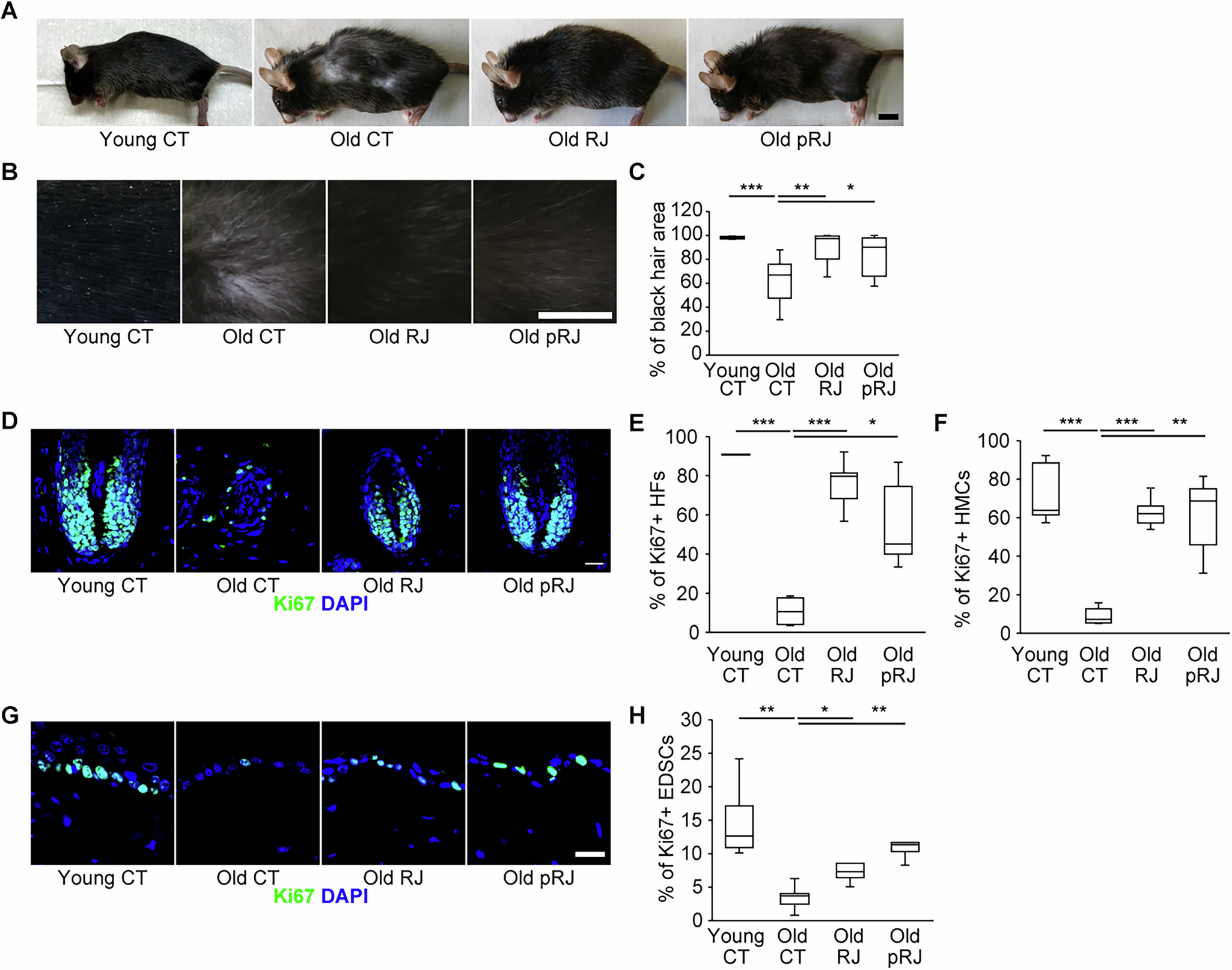
Male mice fed a diet containing 5% royal jelly for three months showed increased cell division in aging skin and brain.
Our read
Interventions- Studied:
- Experiments in mice (Randomized, sample size calculated, dose-response)
- In the record:
- One of 14 papers on royal jelly on record: 3 with results in people, 6 in animals.
Editor of record: Boris Djordjevic · AgingResearch.News
Male C57BL/6J mice aged 21 months received diets containing 5% royal jelly for three months in an animal experiment with random group assignment. Compared with aged mice on control diets, they had more dividing stem cells and related immature cells in skin and brain. They also showed less hair thinning and graying, and more immature nerve cells in a brain region. Brain cell division remained below levels in young mice.
Royal jelly also increased a group of macrophages—immune cells associated with tissue repair—in aged skin. In a separate mouse experiment, disrupting the gene for Chi3l1, an immune-regulating protein, in liver cells reduced these macrophages in the liver. The authors suggested that Chi3l1 helps mediate royal jelly’s age- and tissue-dependent effects on immune cells.
Why it matters
Age-related declines in stem cell activity can be targets for nutritional interventions. These findings suggest that immune regulation deserves attention when investigating how food components affect aging tissues.
Caveats
The gene-editing experiment tested Chi3l1’s role in liver immune cells, not whether it was needed for the skin and brain effects. Investigators were not blinded during experiments or analysis.
Where the evidence stands
Royal jelly
- 12 independent labs in 6 countries
- 3 findings against
- 2 trials, 2 with no results posted
- Funders: National Natural Science Foundation of China and 8 more
- 4 of 25 findings with company ties
- 1 of 2 trials sponsored by its developers
10-hydroxy-2-decenoic acid
- 3 independent labs in 2 countries
- Funders: Centre Scientifique et Technique du Bâtiment and others
The paper
Shiga University of Medical Science
npj Aging, Jul 24, 2026, Open access
Comments
Be the first to comment.