Bilobetin eased infection-driven immune aging in mice
In experiments with nonlethal influenza infection, middle-aged mice—but not young mice—were susceptible to lasting immune deterioration.
Our read
Interventions- Studied:
- Experiments in mice
Editor of record: Boris Djordjevic · AgingResearch.News
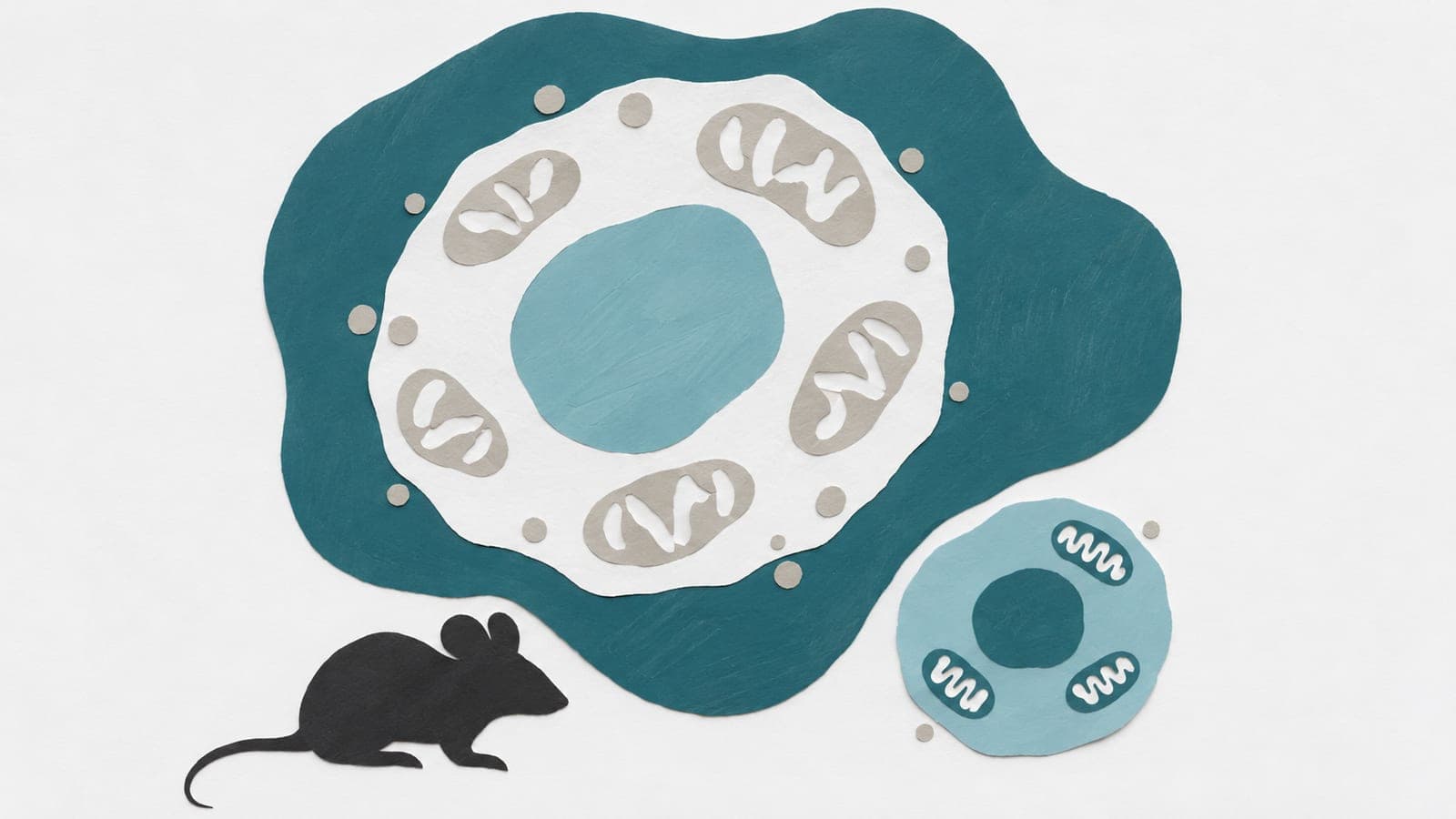
Middle-aged mice developed lasting inflammation and accelerated immune aging after nonlethal influenza A infection in an animal experiment. Young mice did not show the same susceptibility. The researchers identified deep senescence in blood-forming stem cells as a major contributor to the decline. Senescence is a state in which cells stop dividing.
The affected stem cells had more signs of aging and malfunctioning mitochondria, the structures that supply cells with energy. The researchers identified a self-reinforcing cycle between mitochondrial disruption and persistent antiviral signaling that sustained stem-cell aging. Screening identified bilobetin, a natural compound that restored mitochondrial function, dampened abnormal antiviral signaling and eased both stem-cell aging and wider immune-system aging.
Why it matters
Blood-forming stem-cell aging offers a possible link between an acute infection and longer-lasting immune decline. The findings point to mitochondrial function as a potential target for limiting that decline with age.
Caveats
The experiments used nonlethal influenza infection in mice, so they do not show whether bilobetin would ease infection-related immune aging in people.
Where the evidence stands
Inflammation
- 1,054 independent labs in 77 countries
- 207 findings against
- Funders: National Institutes of Health and others
- 392 of 4,664 findings with company ties
Cellular homeostasis
- 75 independent labs in 17 countries
- 1 finding against
- Funders: National Institutes of Health and others
- 11 of 85 findings with company ties
Comments
Be the first to comment.