Prediabetes subtypes linked to different long-term diabetes risks
Adults meeting all three prediabetes criteria had an adjusted hazard ratio of 15.3 for diabetes compared with those with normal blood sugar.
Paper by Choe HJ, Choi W, Chang HH et al.
Limit: Diet was not accounted for and could influence diabetes progression
An observational cohort study followed 7,186 Korean adults aged 40–69 for up to 20 years. Researchers tested blood sugar every two years. They classified prediabetes using fasting blood sugar, blood sugar after a glucose drink, or glycated hemoglobin, a measure of longer-term blood sugar.
Meeting one, two or three criteria was linked to adjusted hazard ratios of 3.10, 7.33 and 15.3, respectively, compared with normal blood sugar. Hazard ratios compare the rate of developing diabetes over follow-up. Insulin is a hormone that helps regulate blood sugar. Low measures of its release or the body's responsiveness to it were also linked to higher diabetes risk. Having both impairments carried the greatest risk. Even people with normal blood sugar had higher risk if either measure was low rather than high.
Why it matters
For adults followed from midlife, better risk assessment may help guide earlier targeted intervention for those at high risk of type 2 diabetes.
Caveats
This observational study cannot establish cause and effect. Its findings may not apply to people outside the Korean population or the starting age range of 40–69.
From the paper
- Participants
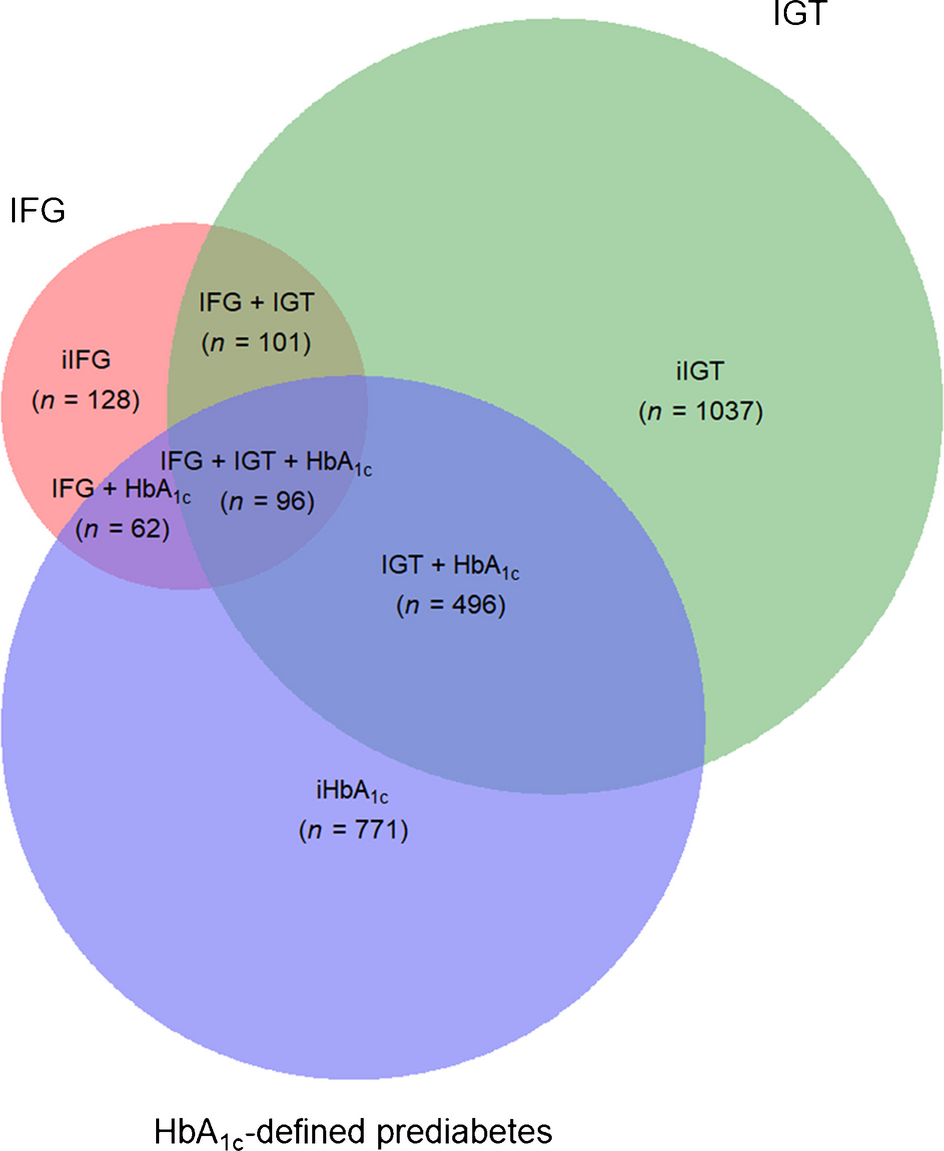
A total of 7186 participants (aged 40–69 years) without diabetes were included, of whom 2691 (37.4%) met at least one criterion for prediabetes: IFG (n=387; 14.4%), IGT (n=1730; 64.3%) or HbA1c-defined prediabetes (n=1425; 53.0%), with overlap across categories (Table 1, Fig. 1 and ESM Fig. 1).
Results, Baseline characteristics according to prediabetes subtype
- Follow-up
We analysed 7186 Korean adults aged 40–69 years from the community-based Korean Genome and Epidemiology Study, who were followed for up to 20 years with biennial (every 2 years) oral glucose tolerance tests and HbA1c.
- Result
Compared with normoglycaemia, the adjusted hazard ratios (aHRs) were 5.84 (95% CI 5.03, 6.79) for IFG, 4.60 (95% CI 4.17, 5.07) for IGT, and 4.68 (95% CI 4.22, 5.19) for HbA1c-defined prediabetes.
Quoted word for word from the full text on link.springer.com.
- Prediabetes
- HbA1c-defined prediabetes
- Impaired fasting glucose
- Impaired glucose tolerance
- Type 2 diabetes
- Humans
The paper
Prediabetes subtype-based stratification reveals distinct long-term risks for type 2 diabetes
Choe HJ, Choi W, Chang HH et al.
Diabetologia, Oct 17, 2026