Two cleanup proteins help reset cell lifespan in yeast
A laboratory test designed to assess many samples identified proteins involved in selective cell cleanup as factors in lifespan resetting during reproductive-cell formation.
Limit: Cells nearing senescence could escape the traps, leaving their full lifespans unobserved
Edited by Boris Djordjevic · AgingResearch.News
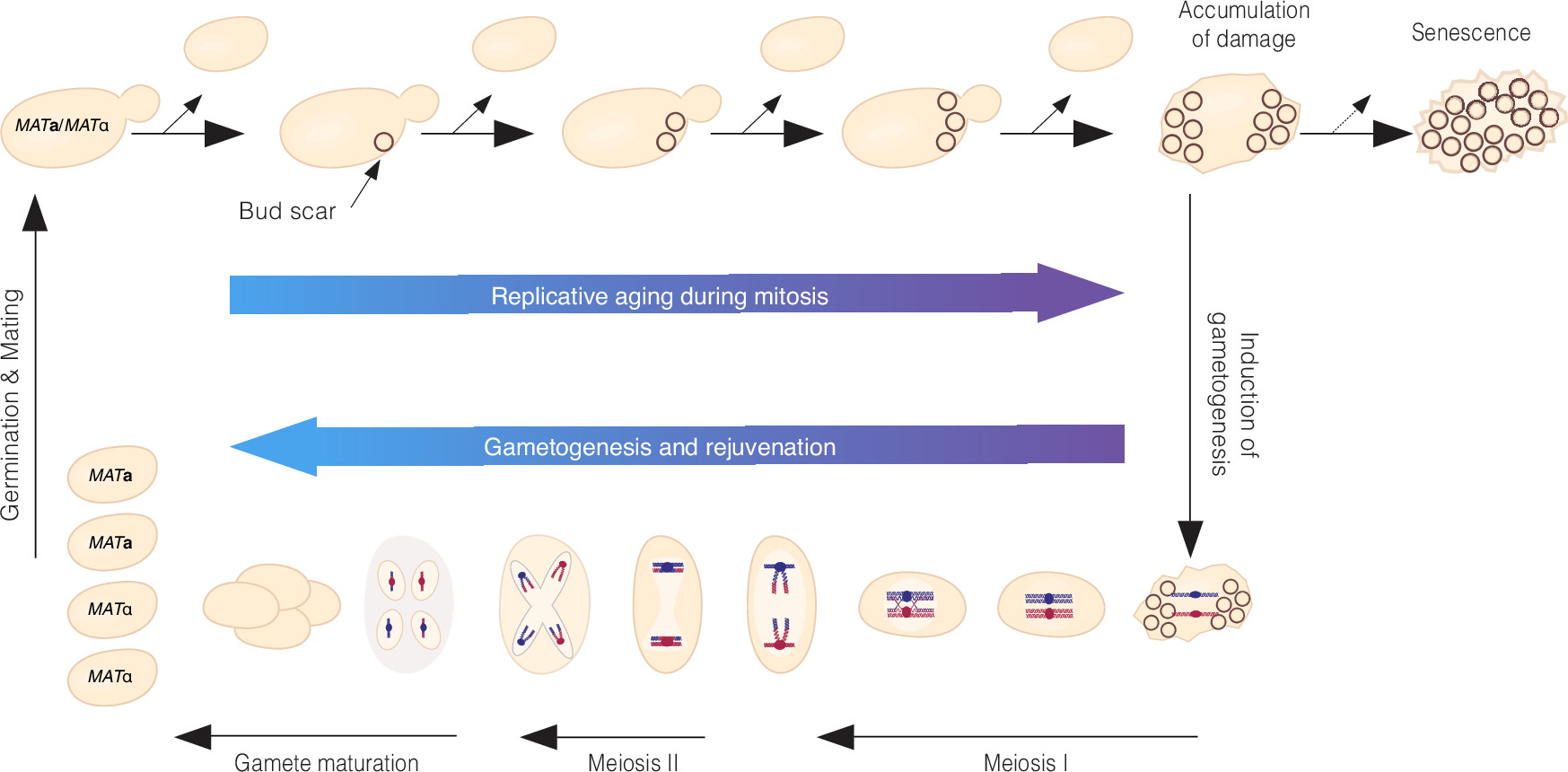
In experiments in Saccharomyces cerevisiae yeast cells, researchers developed a test to study lifespan resetting during reproductive-cell formation. The test measured replicative lifespan: how many times a cell can divide. During ordinary growth, mother cells retain age-associated damage while producing young daughters. Forming reproductive cells naturally resets lifespan, even when the precursor cells are old.
The test sensitively measured a wide range of reproductive-cell lifespans, with results consistent with established mutant strains. The researchers also identified Atg39 and Atg40 as factors in lifespan resetting. These receptor proteins participate in selectively breaking down parts of the endoplasmic reticulum, a membrane network inside cells. The authors said the method would enable systematic searches for other molecular factors involved in this natural reset.
Why it matters
Yeast’s natural reproductive lifespan reset offers a way to investigate which cellular processes allow cells to overcome limits imposed by prior aging.
Caveats
The findings came from yeast-cell experiments, not studies of aging in people. The abstract does not quantify how much either protein affected lifespan resetting.
The paper
University of California, Berkeley; Qb
Nature Communications, Sep 29, 2026, Open access

