Gut bacterium reduced artery plaque area in mice
Introducing the bacterium reduced blood cholesterol in mice fed a Western diet for eight weeks.
Limit: The conference abstract did not report the mouse sample size or numerical effect sizes
Edited by Boris Djordjevic · AgingResearch.News
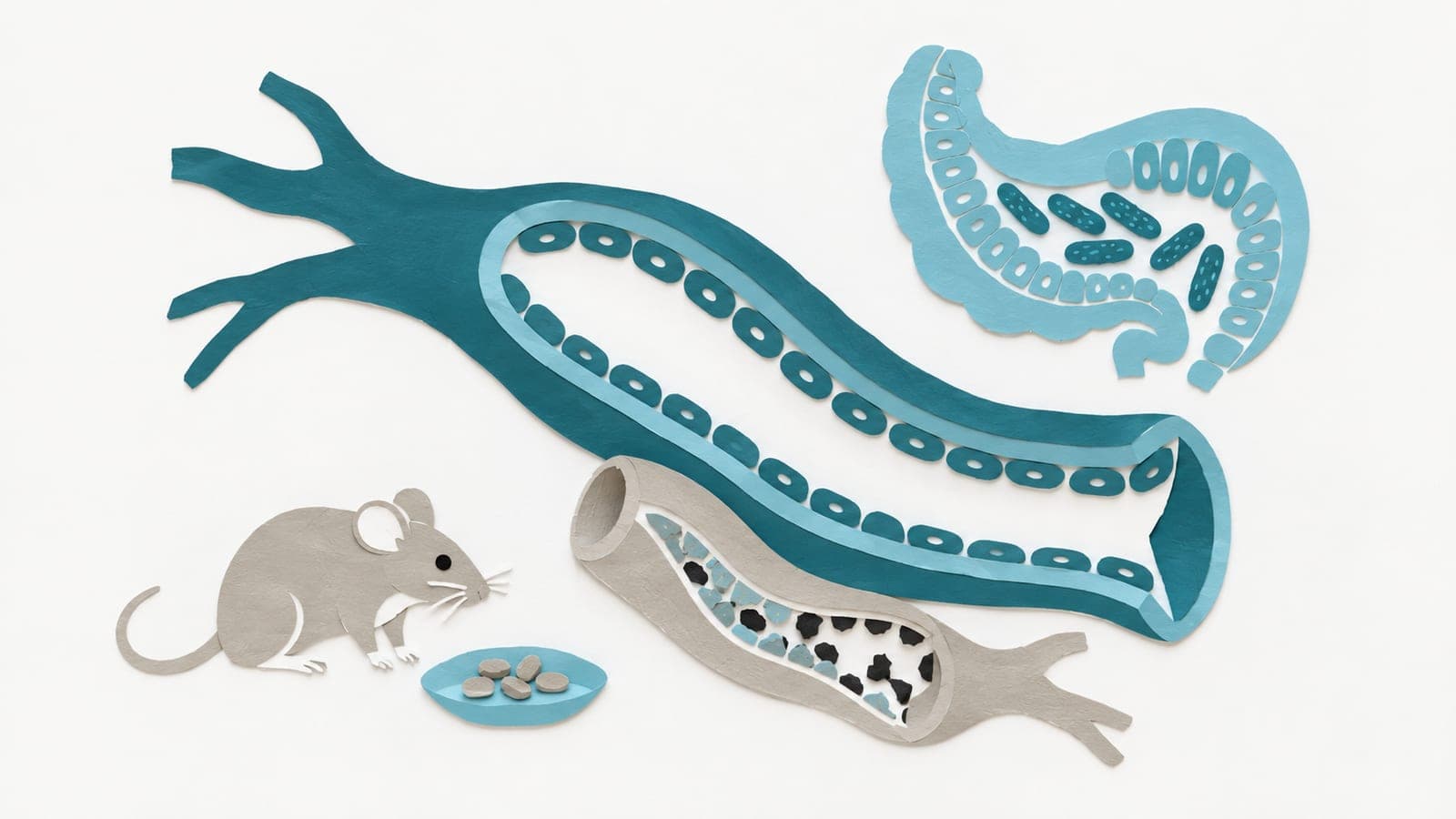
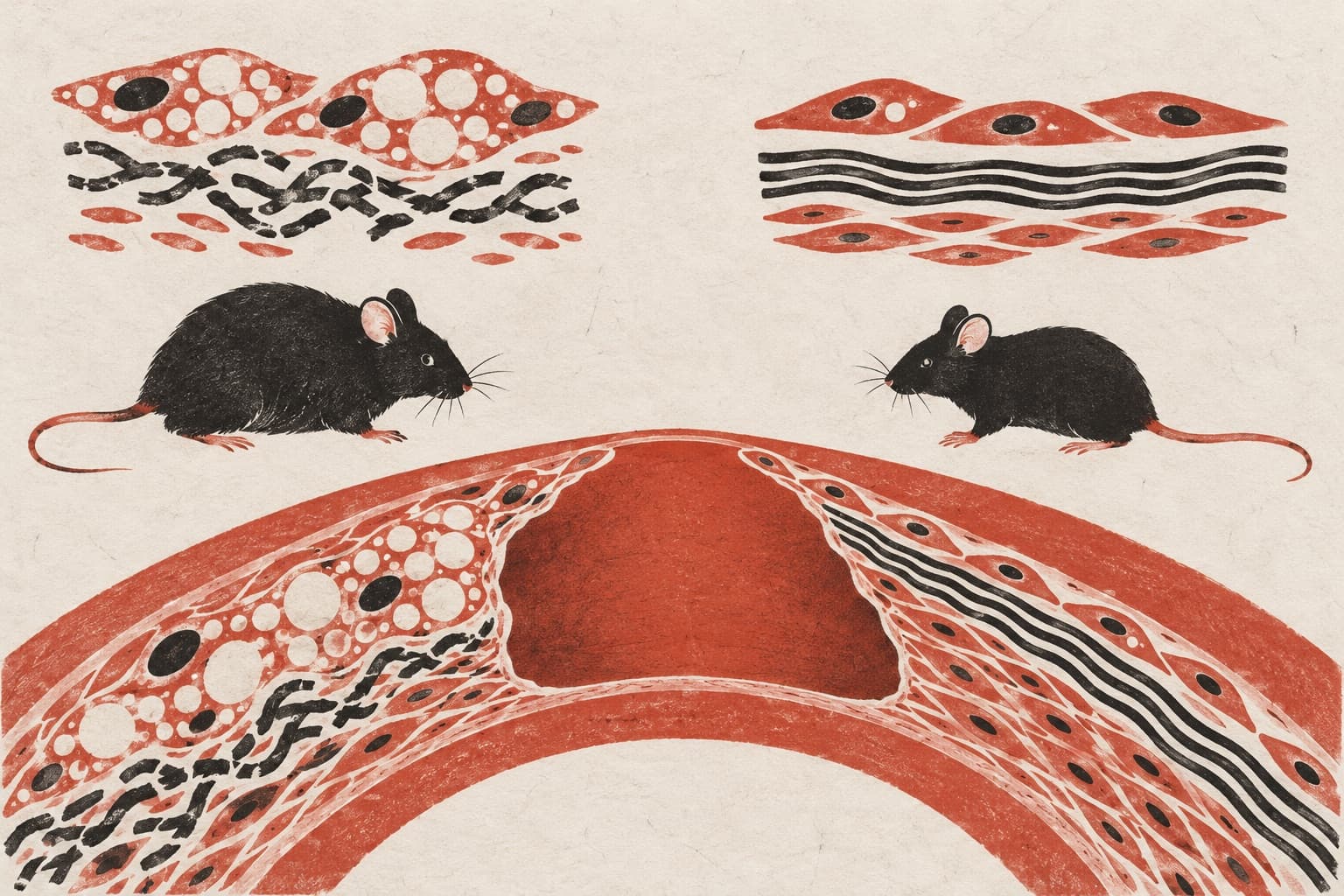
In an animal experiment, researchers introduced the gut bacterium Eubacterium ramulus into mice prone to atherosclerosis, the buildup of fatty plaques in arteries. The mice ate a Western diet for eight weeks. Bacterial colonization reduced blood cholesterol and the area occupied by lesions in the aorta, the body’s main artery.
These effects were associated with reduced signs of senescence, a state in which cells stop dividing, in the aorta and cells lining blood vessels. The researchers reported reductions in markers of cell-division arrest, inflammation and DNA damage. They also found reduced activity of an enzyme used to detect senescence.
Why it matters
Atherosclerosis is a major concern in aging populations. The findings suggest gut cholesterol metabolism may be a target for strategies aimed at vascular health with age.
Caveats
The colonization experiment was in mice, so it does not establish benefits in people. This conference abstract did not report the mouse sample size or numerical sizes of the main effects.
The paper
Center for Translational and Experimental Cardiology (CTEC)
ESC Congress 2026 Abstract, Oct 26, 2026
Presented at ESC Congress 2026