A protein reduced inflammation and lung injury in mice
Mice lacking SerpinE3 had worse lung injury after inflammation was induced, and giving them the protein alleviated it.
Limit: The abstract reports neither the protein dose nor treatment duration
Edited by Boris Djordjevic · AgingResearch.News
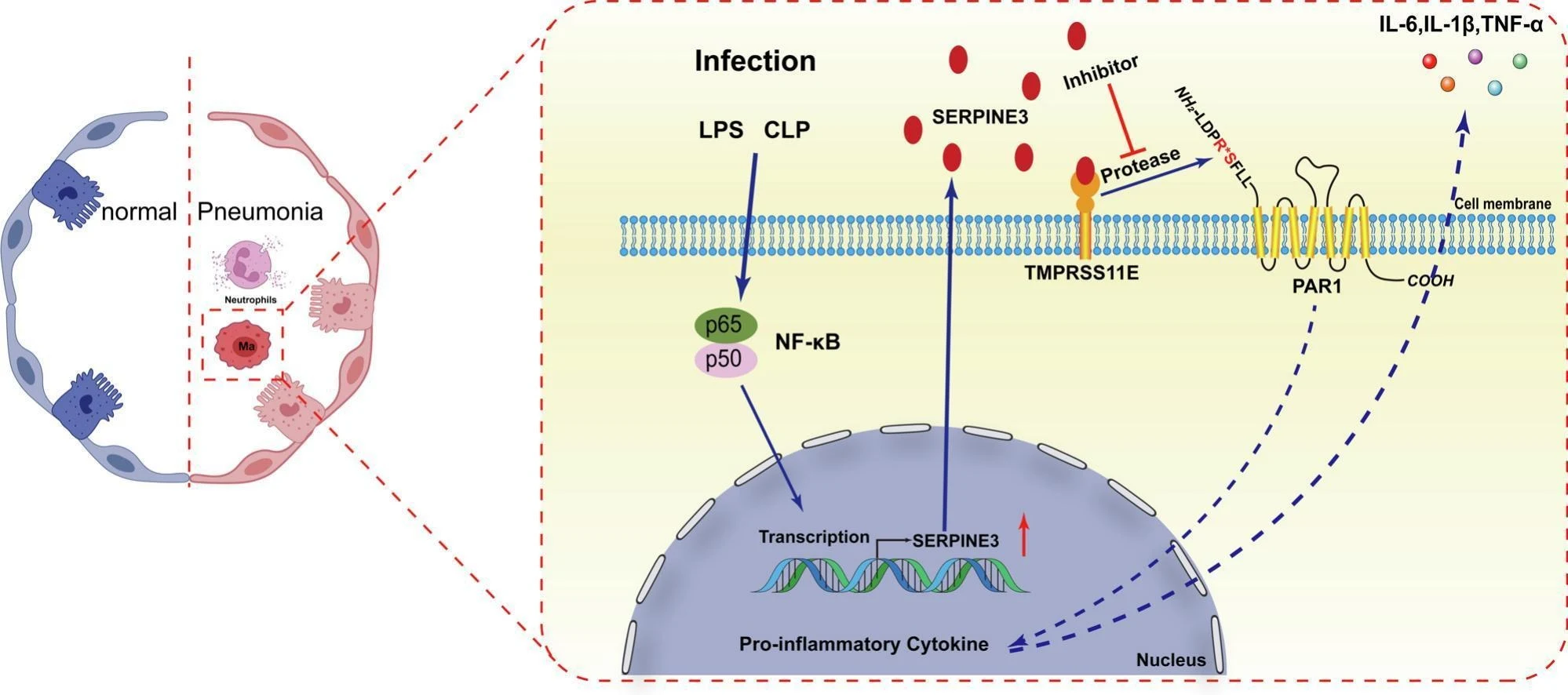
In experiments in mice, researchers tested SerpinE3, a protein that inhibits enzymes outside cells, in a model of inflammation and acute lung injury. Giving the protein reduced inflammation and lung injury. Mice genetically engineered to lack SerpinE3 had worse lung injury, and giving them the protein alleviated it. Aged mice lacking SerpinE3 also developed a spontaneous buildup of inflammatory cells in their lungs.
In laboratory tests, SerpinE3 directly inhibited TMPRSS11E, an enzyme known to worsen inflammation and lung injury during infection. The authors concluded that SerpinE3 likely limits inflammatory lung injury by inhibiting this enzyme.
Why it matters
The study points to a possible role for SerpinE3 in keeping lung inflammation in check with age.
Caveats
The treatment results came from mouse experiments, not a clinical trial. The abstract does not report the protein dose or how long it was given.
The paper
SerpinE3 is a novel endogenous regulator of inflammation via TMPRSS11E inhibition
Biochimica et Biophysica Acta Molecular Basis of Disease, Oct 28, 2026


