Model estimates four-year frailty risk in adults with arthritis
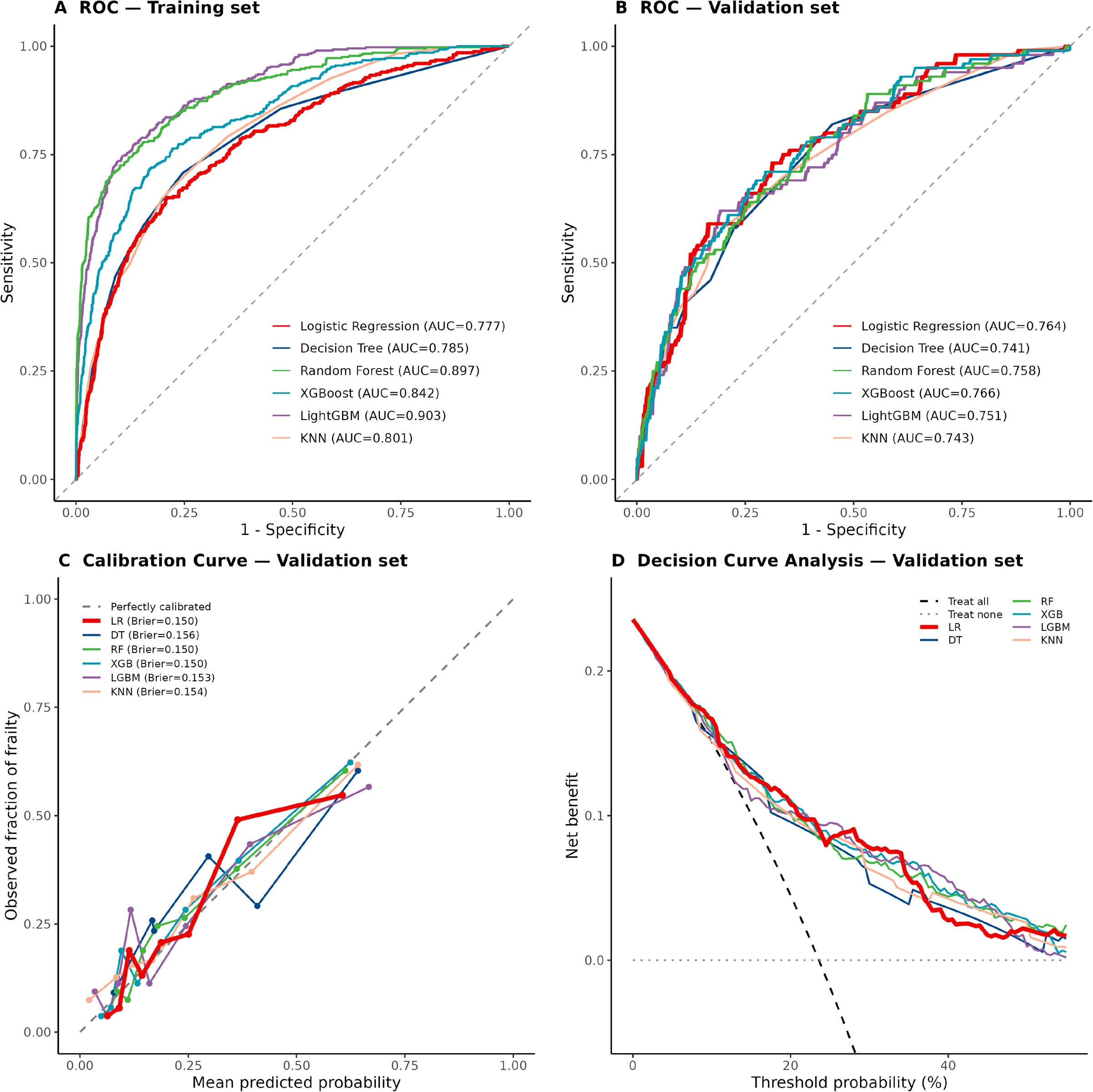
The model scored 0.764 in distinguishing who developed frailty in internal validation, versus 0.747 in a separate Korean cohort.
4 years, independent replication
Limit: Prospective clinical impact on patient care was not measured
Edited by Boris Djordjevic · AgingResearch.News
A retrospective observational study used data from 2,126 Chinese adults aged 45 or older who had arthritis and were not frail at their first survey. Researchers tracked new frailty over four years and compared six prediction methods. The selected model used 10 routinely available factors, including age, pain, grip strength and arthritis medication use.
Researchers tested the model in a separate Korean cohort without refitting it. They adjusted its baseline risk estimate because frailty occurred less often there. Performance scores measured the area under the curve, which summarizes how well predictions distinguished people who developed frailty from those who did not. The researchers also developed an online calculator that estimates an individual’s probability of becoming frail within four years.
Why it matters
For adults aging with arthritis, the work addresses how to identify vulnerability before frailty develops.
Caveats
This observational prediction study did not establish whether using the calculator improves care; the authors call for prospective evaluation before community use. The model was developed for initially nonfrail adults aged 45 or older with arthritis, not younger adults or people without arthritis.
The paper
Nantong Health College of Jiangsu Province (Nantong Health Vocational College); The First Affiliated Hospital of Zhejiang Chinese Medical University (Zhejiang Provincial Hospital of Chinese Medicine)
The Journal of International Medical Research, Oct 27, 2026

